


Every child grows at their own pace. Some shoot up quickly, while others take a little longer to catch up. It’s common to hear phrases like “late bloomer” or “they’ll grow eventually.” And in many cases, that’s true.
However, growth is more than just genetics or timing—it’s a complex biological process influenced by hormones, nutrition, sleep, and overall health. When growth slows significantly or doesn’t follow expected patterns, it may signal something deeper than natural variation.
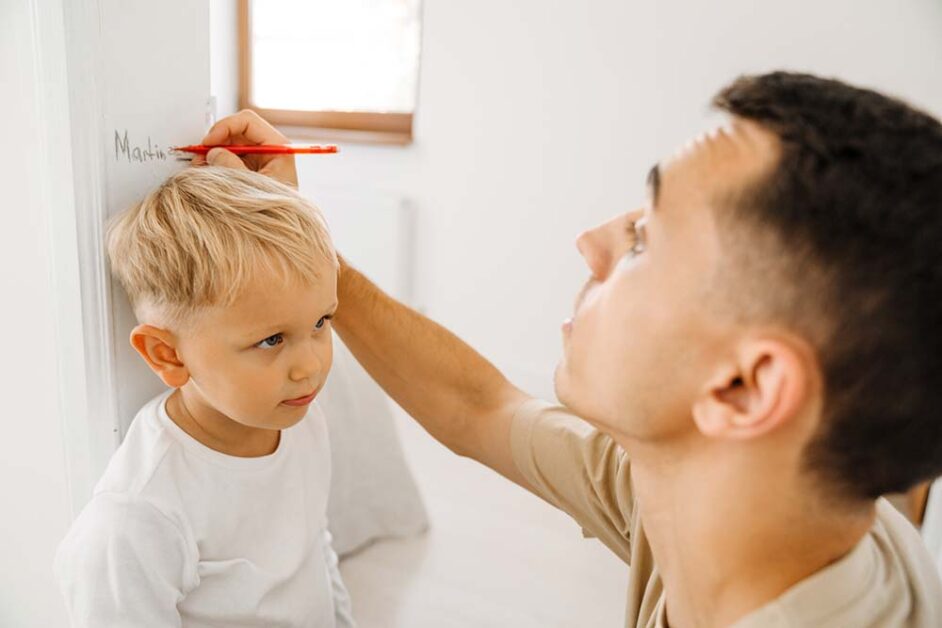
How Growth Really Works
Height development in children is primarily driven by a hormone called human growth hormone (HGH), produced by the pituitary gland. This hormone doesn’t act alone—it triggers the production of another important factor called IGF-1, which directly stimulates bone growth.
Bones grow from areas called growth plates, located at the ends of long bones. These growth plates stay active through childhood and teenage years, enabling bones to gradually increase in length as the child develops. Once they close—usually after puberty—further height increase is no longer possible.
This is why childhood and early adolescence are such critical windows for growth.
When Growth Slows Down
Not all growth patterns are the same, but pediatricians look for consistency. A child who is growing steadily—even if they are shorter than average—may still be perfectly healthy.
Concerns usually arise when:
- Growth rate slows significantly over time
- A child drops percentiles on growth charts
- Height is far below what family genetics would predict
- Physical development seems delayed compared to peers
These patterns may indicate an issue with hormone production, particularly growth hormone deficiency.
What Is Growth Hormone Deficiency?
Growth hormone deficiency (GHD) occurs when the body does not produce enough HGH to support normal development. This can be present from birth, develop later due to medical conditions, or appear without a clear cause.
Children with GHD often grow more slowly than expected. Over time, this can lead to noticeable height differences and delayed physical development.
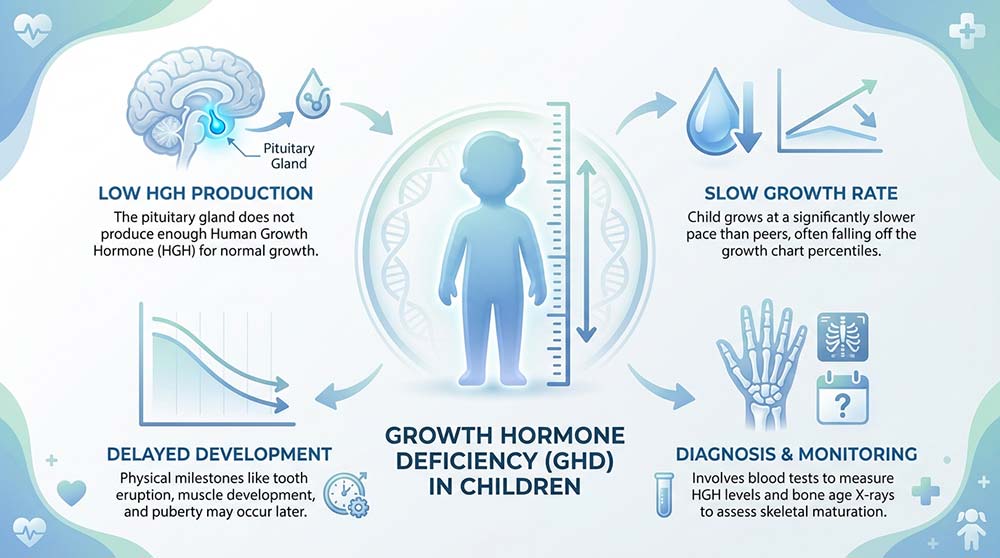
Understanding this condition early is important because treatment—when appropriate—relies heavily on timing.
The Importance of Early Evaluation
One of the biggest misconceptions about growth is that it can always be corrected later. In reality, growth potential is limited by biology.
Growth plates gradually close during late puberty. Once closed, no treatment can increase height. This makes early identification of growth issues especially important.
A proper evaluation typically involves:
- Reviewing long-term growth patterns
- Blood tests to assess hormone levels
- Imaging (like bone age X-rays) to evaluate development
These steps help determine whether a child is simply growing at their own pace or may benefit from medical support.
Beyond Height: The Bigger Picture
Growth delays aren’t just about stature. They can also affect:
- Confidence and self-esteem
- Social interactions
- Participation in sports or activities
- Emotional well-being
Children who perceive themselves as physically different from their peers may develop feelings of frustration or heightened self-awareness. Addressing growth concerns can sometimes improve both physical and emotional development.
The Role of Lifestyle in Growth
While hormones play a key role, everyday habits also have a major impact on growth.
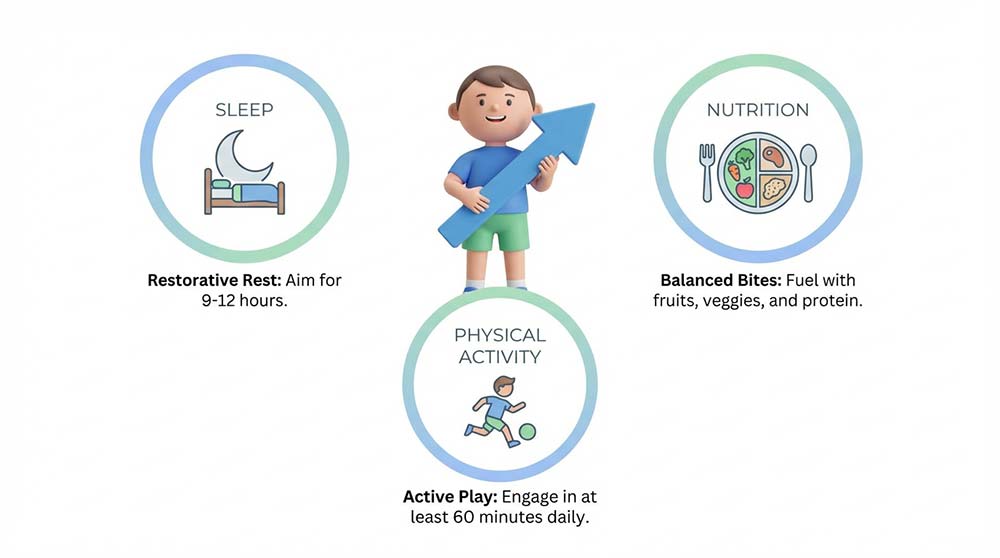
Sleep
Deep sleep is when the body releases the most growth hormone. Irregular or inadequate sleep can disrupt this natural growth process.
Nutrition
Children need sufficient calories and nutrients to support development. Protein, calcium, vitamin D, iron, and zinc are especially important for bone growth.
Physical Activity
Regular movement and weight-bearing exercise help strengthen bones and support healthy development.
Even in cases where medical treatment is needed, these foundational habits remain essential.
Understanding Treatment Options
When growth hormone deficiency is confirmed, treatment may involve replacing the missing hormone through medically supervised therapy. This approach aims to restore normal growth patterns—not to create excessive or unnatural height.
If you’re looking to better understand how this works, including when it may be appropriate, this detailed resource on HGH for children explains the process, expectations, and medical considerations involved.
When Should Parents Take Action?
Parents often wonder whether to wait or seek help. While some children do catch up naturally, it’s worth consulting a specialist if:
- Growth has noticeably slowed over time
- A child consistently remains among the shortest in their age group
- Puberty appears delayed
- A pediatrician raises concerns about growth patterns
An evaluation doesn’t always lead to treatment—but it does provide clarity and peace of mind.
Final Thoughts
Growth is a complex and highly individual process. While differences in height are often normal, consistent patterns of slow growth should not be ignored.
The key is not to assume—but to understand. With the right information and timely evaluation, parents can make informed decisions that support their child’s health, development, and confidence over the long term.
✍️ Guest Write with Us
At TrendVisionz, the digital venture of Nuteq Entertainment Pvt Ltd, we welcome contributors who share our passion for storytelling, digital marketing, and innovation. Whether it’s an article, case study, or industry insight that educates, inspires, or entertains — we’d love to feature your perspective.
- Explore our work: Nuteq Entertainment | TrendVisionz | Author Profile
- Read our newsletters: Transforming Lives | BizTech Chronicle | Nuteq Newsline | Growth Catalyst
- Guest Contributions: BizCatalyst360 | Praja Today
- Books: Go Mindfulness: Practices for Professionals Coached
- Join the community: LinkedIn Group – Digital Marketing & Content Creation World
- Connect with me: LinkedIn | Twitter | #StoryforBusiness
- Share your review: Leave your review on Google — your feedback helps us grow.
Follow me on Twitter or LinkedIn. Check out our website.
How to Contribute:
Send your pitch or draft to Editor: anujmahajan@trendvisionz.com


