

Fast fashion taught us to buy with our eyes. And nowhere has that habit cost us more than in breathable activewear. What looks perfect online rarely survives an Indian summer workout. Most activewear that appears premium on a screen turns heavy, sticky, and uncomfortable within minutes of heat and sweat.
As a fashion and lifestyle creator, I spend a lot of time tracking what actually works, not just what sells. Activewear fabrics are where the gap between marketing and reality is widest. Brands invest heavily in visuals, but rarely explain what the fabric actually does to your body at 38 degrees.
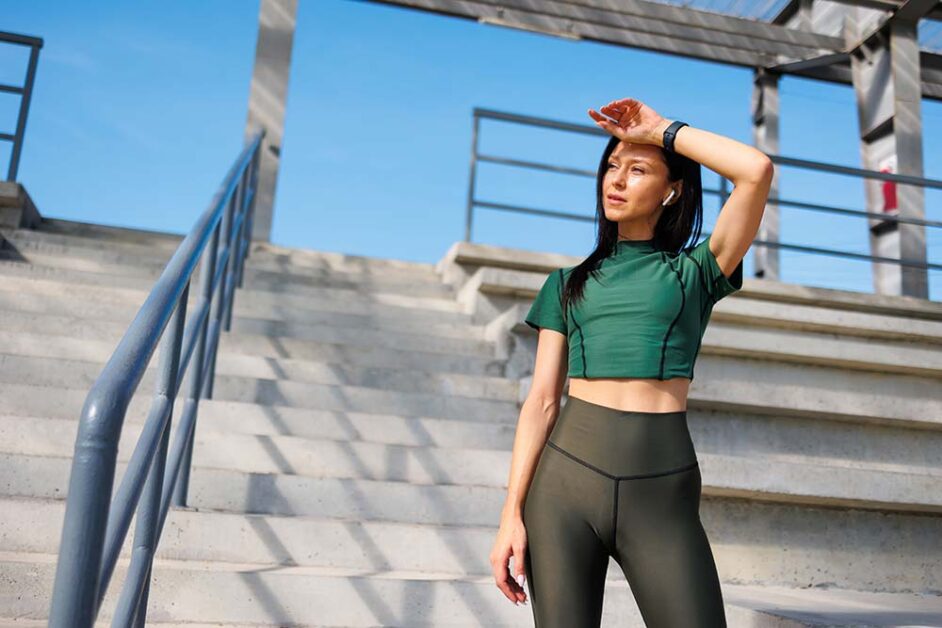
Few explain how moisture wicking fabric performs when sweat and humidity combine. Cooling fabrics for summer are rarely the ones with the loudest packaging. Most people still choose based on appearance, not performance, and that shows the moment the workout begins. The best fabric for workout clothes is rarely the one that looks the best online.
In this article, I break down which breathable activewear fabrics actually perform in Indian summers, why most fail in real conditions, and how to choose based on activity, not appearance.
Also Read:
- Linen Luxe Meets Utility: Why Pocketed Linen Aprons Are the Ultimate Home Essential
- Linen in Summer: How Bollywood Celebs Are Redefining Sustainable Fashion
What Actually Makes Activewear Breathable
Breathable activewear allows airflow, wicks sweat away from the skin, and dries quickly to prevent heat buildup during workouts.
At 26, balancing corporate life, travel, and fitness, I’ve learned that what you wear during workouts directly affects how you perform and recover. Not all breathable activewear is created equal. Breathability is a technical property, not a marketing word, and most brands fail to explain what it actually does to your body during a workout.
Breathable fabric manages both airflow and moisture transfer simultaneously — allowing heat to escape, moving sweat away from skin, and drying fast enough to prevent discomfort during physical activity in warm conditions.
What makes a fabric truly breathable for workouts?
A breathable fabric 1manages both airflow and moisture simultaneously. It allows heat to escape, wicks sweat away from skin, and dries fast enough to prevent the damp, heavy feeling that slows you down mid-session.
Airflow vs Moisture-Wicking — Two Different Things
Most people treat these as the same thing. They are not. Airflow is about ventilation — how freely air moves through the weave. Moisture-wicking is about sweat transport — how fast the fabric pulls moisture away from skin and pushes it outward to evaporate. A fabric can do one without doing the other. Natural fabrics like cotton and linen offer reasonable airflow but absorb sweat rather than moving it. Synthetics reverse this — they wick efficiently but can feel less breathable in still, humid air. In Indian summers, you need both working together.
Why Cotton Fails in Heat
Cotton is comfortable. Nobody debates that. But comfort and performance are different standards. Cotton absorbs up to 27 times its weight in moisture — which means once you start sweating, it holds that sweat against your skin. Fabrics that breathe in casual settings stop breathing the moment they are saturated. That is the cotton problem. It becomes dead weight mid-session — heavy, clingy, and slow to dry. For sweat friendly clothing in real Indian heat, cotton is the worst starting point regardless of how soft it feels in the store.
Once you understand what breathability actually does, picking the right fabric becomes a practical decision, not a guesswork exercise.
Synthetic Fabrics That Perform Best in Indian Heat
Synthetics dominate the breathable activewear market for a reason. They are engineered for performance — not comfort in the traditional sense, but functional comfort under sweat and heat. Moisture wicking fabric technology exists almost entirely within this category.
Is polyester or nylon better for gym wear?
Polyester wins for high-sweat gym sessions — it wicks faster and costs less. Nylon is softer, more durable, and better for runs or yoga. For Indian summers, a polyester-nylon blend gives you both. That is why polyester vs nylon gym wear is the most searched activewear comparison in India right now.
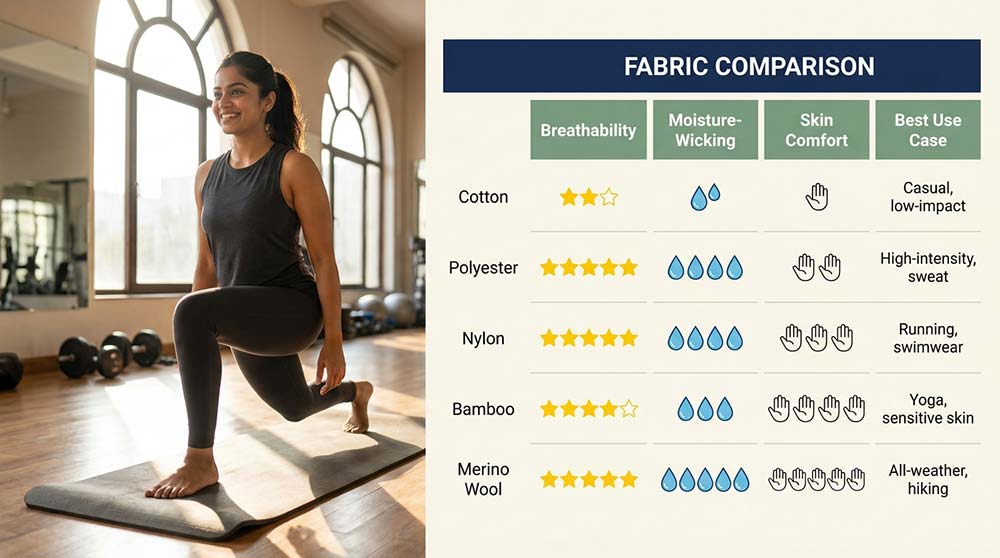
Polyester and Nylon — When to Pick Which
The choice comes down to what your session looks like. For gym training, polyester is the practical pick — it pulls sweat away fast, dries quickly, and holds its shape under repeated washes. For outdoor runs or yoga, nylon’s softer hand-feel and added durability make it the better call. If you are building an activewear wardrobe across activewear fabrics India has on offer, start with Decathlon’s Domyos polyester range for gym use and Nike Dri-FIT or Puma DryCell for running. Both deliver quick dry workout clothes at accessible price points without compromising on wicking performance. A spandex component of 8-12 percent in either fabric adds the stretch and shape retention that pure synthetics cannot provide alone.
For most Indian consumers, a polyester or nylon blend from a mid-range brand delivers more than enough performance for daily use.
Natural and Semi-Natural Fabrics Worth Considering
Synthetics perform. But not everyone wants petroleum-derived fabric against their skin for an hour. Natural and semi-natural options have earned a real place in breathable activewear — particularly for low-to-mid intensity activity2 where skin comfort matters as much as wicking speed.
Bamboo, Modal, and Lyocell — The Semi-Natural Three
These semi-natural fabrics are gaining ground in activewear for reasons beyond sustainability. As cooling fabrics for summer, they offer something synthetics cannot — skin-friendly performance without the petroleum feel.
- Bamboo3: Naturally anti-bacterial, temperature-regulating, and moisture-wicking. Softer than cotton with none of the saturation problem.
- Modal: Exceptionally soft, breathable through repeated washes, and gentle on sensitive skin during longer sessions.
- Lyocell (Tencel): Efficient moisture management, low friction against skin, and biodegradable. Best for yoga and light movement.
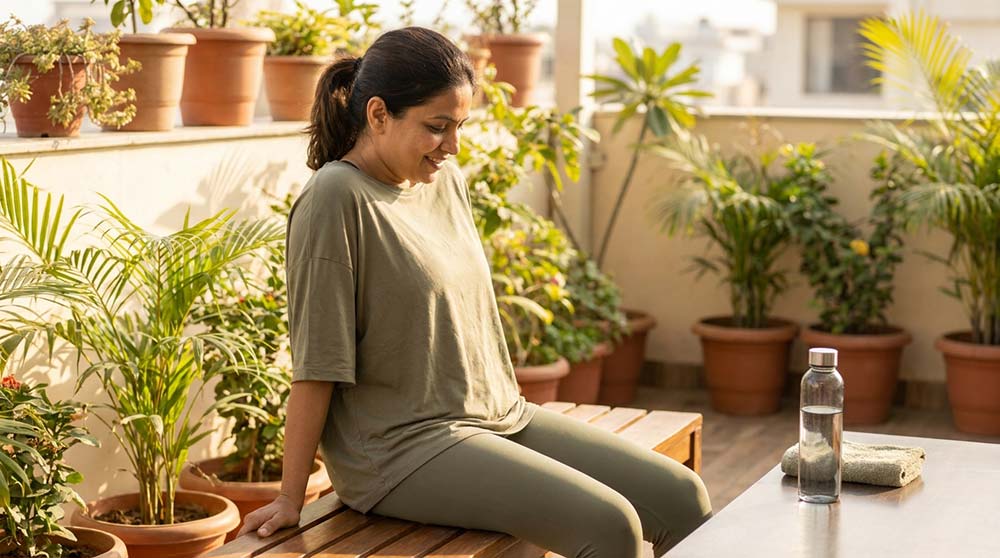
Why Skin Sensitivity Changes the Decision
Not every body tolerates synthetics equally. Natural vs synthetic fabrics is not just a sustainability debate — for sensitive skin types, it is a comfort necessity. Bamboo and modal blends reduce friction significantly during long sessions in high-humidity Indian summers.
- Sensitive skin: Bamboo and modal outperform polyester on friction and irritation.
- Odour control: Bamboo’s natural anti-bacterial properties work without chemical treatment.
- Heat rash: Lyocell’s low-friction surface prevents skin breakdown that humidity accelerates.
Natural fabric technology has closed the gap significantly. For yoga, pilates, and daily movement, these options deserve serious consideration.
How to Pick Breathable Activewear for Your Activity
The right breathable activewear for a HIIT session is not the same as what works for a morning walk or a weekend hike. Activity type should drive the decision. Ignoring this is how most people end up with a wardrobe full of activewear that works for nothing specific. The best fabric for workout clothes is always context-dependent.
Your Activity-to-Fabric Guide for Indian Summers
Choosing breathable fabrics for hot weather becomes straightforward once you match fabric to what your body is actually doing. High-sweat gym training needs polyester or a polyester-nylon blend — Dri-FIT or DryCell technology preferred. Outdoor running calls for nylon with UV protection, lightweight and quick-dry as the priority. Yoga and pilates work best with bamboo or modal — softness and stretch matter more than wicking speed here. Summer commuting or athleisure sits better with lyocell or bamboo. Home workouts are the one context where a cotton-modal blend is acceptable — lower intensity allows more natural fabric tolerance. This is your practical summer workout wear decision framework, not a gym clothes material guide built on theory.
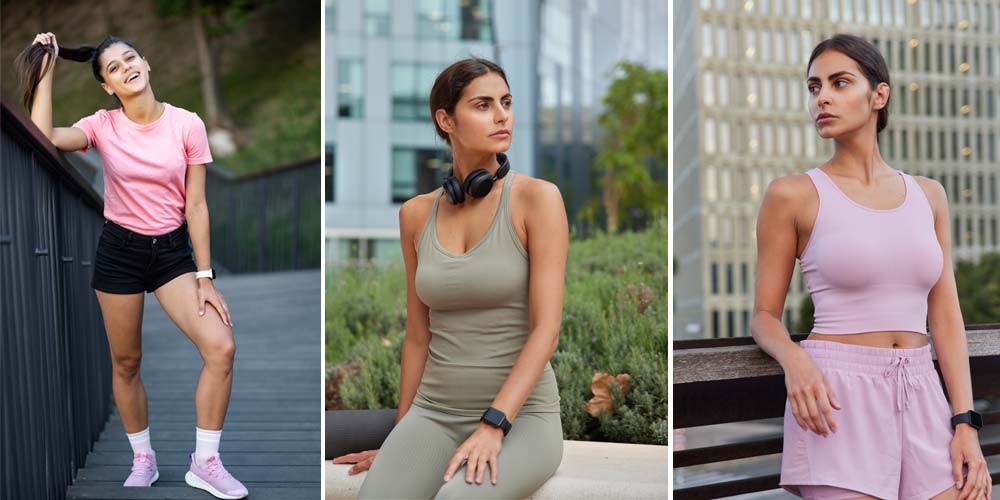
Is polyester or nylon better for gym wear?
For high-sweat Indian summer sessions, polyester is the stronger call — it wicks faster, dries quicker, and costs less. Nylon edges ahead for outdoor runs and yoga where softness and durability matter more than raw wicking speed.
Matching fabric to activity removes the guesswork. You spend less, perform better, and stop dreading the post-workout commute home.
What to Check Before You Buy Breathable Activewear
Most consumers buy activewear by brand or price. Fabric composition sits in small print on the label — ignored until the first sweaty session proves it wrong. Two minutes of label reading changes everything. It is the fastest way to filter sweat friendly clothing from sweat trapping clothing before you spend.
Here is what to check on the label before any breathable activewear purchase.
- Fabric composition: Look for polyester, nylon, or bamboo as the dominant material above 80%.
- Moisture management rating: Terms like Dri-FIT, DryCell, or Climalite signal engineered wicking technology.
- GSM weight: Below 150gsm for Indian summers. Heavier blends trap heat.
- Stretch component: Minimum 8-12% spandex or elastane for movement and shape retention.
- UPF rating: For outdoor use, UPF 30 or above protects against sun exposure.
- Vague claims: Avoid pieces labelled only “breathable” with no fabric breakdown.
Knowing how to read activewear fabrics India has on shelves — across Decathlon, Myntra, or any sports retail — is the most underused gym clothes material guide available to every consumer.
The label is the most honest thing about any activewear piece. Read it before the checkout, not after the first wash.
Also Read:
- Women Riders in India Changing the Biking Landscape
- Nude Makeup in 2026: The Rise of Intelligent Beauty
FAQ: Breathable Fabrics
What is the most breathable fabric for activewear?
Polyester and nylon blends are the most breathable for high-intensity use — they wick moisture fast, dry quickly, and maintain airflow under heat and sweat. Bamboo leads among natural options for low-to-mid intensity activity.
Which fabric is best for workouts in Indian summer heat?
Moisture-wicking polyester or a polyester-nylon blend performs best in Indian summer heat. It stays light, dries fast, and prevents the heavy, clingy feeling that humidity accelerates. Look for Dri-FIT or DryCell technology for best results.
Do natural fabrics work for high-intensity workouts?
Natural fabrics like cotton absorb sweat rather than wicking it — making them poor performers in high-intensity sessions. Bamboo and modal are exceptions for light training and yoga but still fall short of synthetics when sweat volume is high.
CONCLUSION
The breathable activewear market is full of options. The decision gets simpler once you know the logic — synthetic for performance, natural for comfort, a blend for everything in between. That framework covers most wardrobes and most routines.
Indian summers do not leave room for fabric errors. Forty-degree heat with humidity makes every wrong choice visible within minutes. The season does not forgive activewear bought on aesthetics alone.
Right fabric, right activity, right result. That is the only formula that holds across gym sessions, morning runs, and everything life fits in between.
Explore more lifestyle and fashion guides on TrendVisionZ to make every purchase decision count.
Additional Resources:
- Chinta, Shrirang & Gujar, P.. (2013). Significance of moisture management for high performance textile fabrics. Int. J. Innovative Res. Sci. Eng. Technol.. 2. 815-819. ↩︎
- Atalie D, Tesinova P, Tadesse MG, Ferede E, Dulgheriu I, Loghin E. Thermo-Physiological Comfort Properties of Sportswear with Different Combination of Inner and Outer Layers. Materials (Basel). 2021 Nov 14;14(22):6863. doi: 10.3390/ma14226863. PMID: 34832265; PMCID: PMC8624076. ↩︎
- C, Prakash & Govindan, Ramakrishnan & Koushik, Cv. (2013). Effect of blend proportion on moisture management characteristics of bamboo/cotton knitted fabrics. Journal of the Textile Institute. 104. 1320-1326. 10.1080/00405000.2013.800378. ↩︎
✍️ Guest Write with Us
At TrendVisionz, the digital venture of Nuteq Entertainment Pvt Ltd, we welcome contributors who share our passion for storytelling, digital marketing, and innovation. Whether it’s an article, case study, or industry insight that educates, inspires, or entertains — we’d love to feature your perspective.
- Explore our work: Nuteq Entertainment | TrendVisionz | Author Profile
- Read our newsletters: Transforming Lives | BizTech Chronicle | Nuteq Newsline | Growth Catalyst
- Guest Contributions: BizCatalyst360 | Praja Today
- Books: Go Mindfulness: Practices for Professionals Coached
- Join the community: LinkedIn Group – Digital Marketing & Content Creation World
- Connect with me: LinkedIn | Twitter | #StoryforBusiness
- Share your review: Leave your review on Google — your feedback helps us grow.
Follow me on Twitter or LinkedIn. Check out our website.
How to Contribute:
Send your pitch or draft to Editor: anujmahajan@trendvisionz.com


