
Ever wondered why obesity treatment is no longer just about diet and exercise, but a billion-dollar medical race shaping beauty, confidence, and health? Over time, fitness trends, societal pressure, and cultural upbringing have continuously reshaped how we see it. What was once considered a lifestyle issue is now being redefined by science and the rapid rise of weight loss drugs.
In reality, obesity is not just about “eating too much” or “moving too little.” It involves complex biological pathways, genes, and molecular signals. In simple terms, it’s not as black and white as it seems; it’s a whole different ball game. And when the problem is complex, the solution is rarely simple, which is why treatments like GLP-1 therapy are gaining global attention.
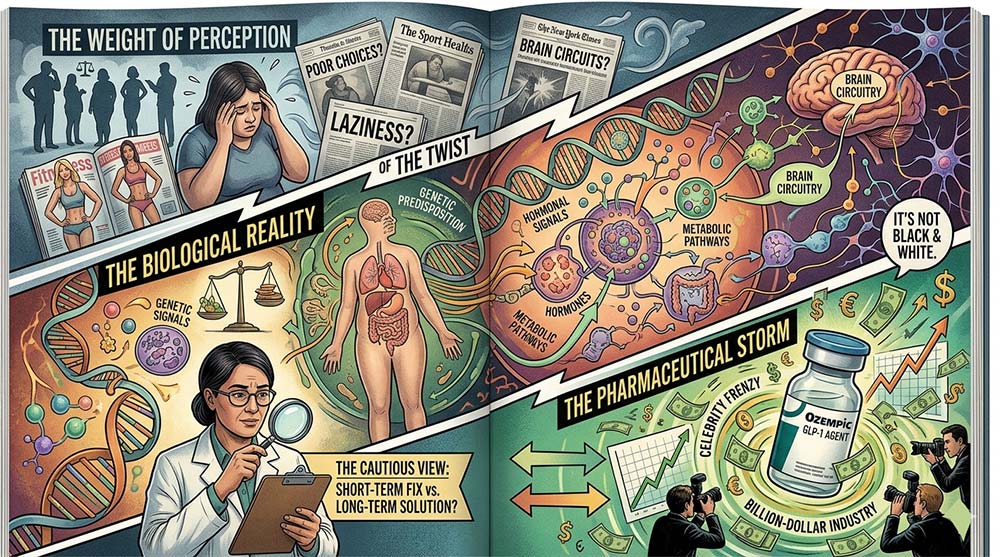
That’s where medications like Ozempic come in. Widely popular among the public and even celebrities. Ozempic has taken the pharmaceutical world by storm, creating a billion-dollar industry. In India, discussions around Ozempic have even reached Bollywood. Actor Ram Kapoor’s dramatic weight loss sparked speculation about the use of weight loss drugs, including Ozempic. While he addressed the rumours humorously, it reflects how GLP-1 therapy has entered mainstream conversations.
However, scientists remain cautious as it acts more like a short-term fix rather than a long-term solution, pushing research toward more advanced solutions such as gene therapy obesity interventions.
Also Read:
- Medical Tourism India: Discovering the Best of Healthcare in India
- Understanding Growth Delays in Children: When Is It More Than “Just a Phase”?
What is GLP-1 Therapy and How Does Ozempic Work in Obesity Treatment?
GLP-1 therapy is a modern obesity treatment approach where drugs like Ozempic mimic natural hormones to regulate appetite, metabolism, and blood sugar levels, making it one of the most effective weight loss drugs used globally today.
How GLP-1 Therapy Regulates Appetite and Metabolism
Ozempic works by mimicking a natural hormone called GLP-1, which plays a key role in regulating appetite and metabolism. It influences multiple organs at once, creating a coordinated metabolic effect. In the brain, it acts on appetite centers in the hypothalamus, reducing hunger signals. And in the stomach, it slows gastric emptying, helping individuals feel full for longer periods. In the pancreas, it enhances insulin secretion while suppressing glucagon, improving overall glucose control and metabolic balance.
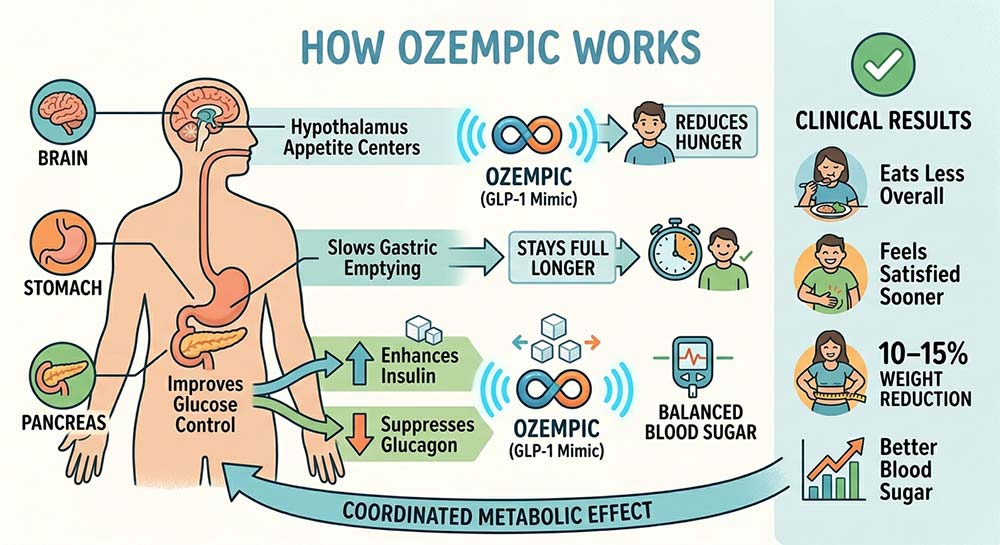
Together, these effects create a meaningful shift in how the body regulates food intake and energy. People tend to eat less, feel satisfied sooner, and maintain better blood sugar levels. Clinically, this often results in a 10–15% reduction in body weight, making it one of the most effective weight loss drugs within current obesity treatment strategies.
This is why GLP-1 therapy is increasingly positioned as a central pillar in modern obesity treatment, despite its short-term dependency limitations.
Weight Loss Drugs Market: The Rise of GLP-1 Therapy in Obesity Treatment
The global obesity treatment market is expanding rapidly, driven by the rising adoption of weight loss drugs and GLP-1 therapy.
Market Growth Driven by GLP-1 Therapy Adoption
The rise of Ozempic has been transformed from a diabetes medication into a global solution for obesity. Alongside major pharmaceutical players such as Novo Nordisk and Eli Lilly, it has contributed to one of the fastest-growing markets in modern healthcare. The obesity drug industry is now projected to exceed $100–200 billion globally, driven by demand across the United States, Europe, and emerging markets like India.

This rapid growth reflects something deeper. Obesity is no longer viewed solely as an individual responsibility; it has evolved into a large-scale medical and economic challenge.
Why is GLP-1 therapy not a complete obesity treatment solution?
GLP-1 therapy is not a complete obesity treatment solution because it suppresses appetite without permanently altering metabolic pathways, often leading to weight regain after discontinuation.
Despite its success, Ozempic presents several limitations that cannot be ignored. Its effects are not permanent, and many patients regain weight after discontinuing treatment. Additionally, side effects such as nausea and gastrointestinal discomfort can impact long-term adherence.
These limitations highlight why obesity treatment is shifting beyond weight loss drugs toward more sustainable, biology-driven solutions.
Why Scientists Are Looking Beyond Ozempic?
Scientists are looking beyond Ozempic because its effects are temporary, with many patients regaining weight after stopping treatment. It does not permanently alter metabolic pathways, and side effects like nausea and gastrointestinal discomfort can limit long-term adherence and effectiveness.
More importantly, GLP-1 therapies primarily focus on appetite regulation rather than addressing the deeper biological mechanisms that drive obesity. In essence, they manage the condition without fundamentally altering it, which is why researchers continue to explore more advanced approaches.
How Genetic Discovery Changes Everything?
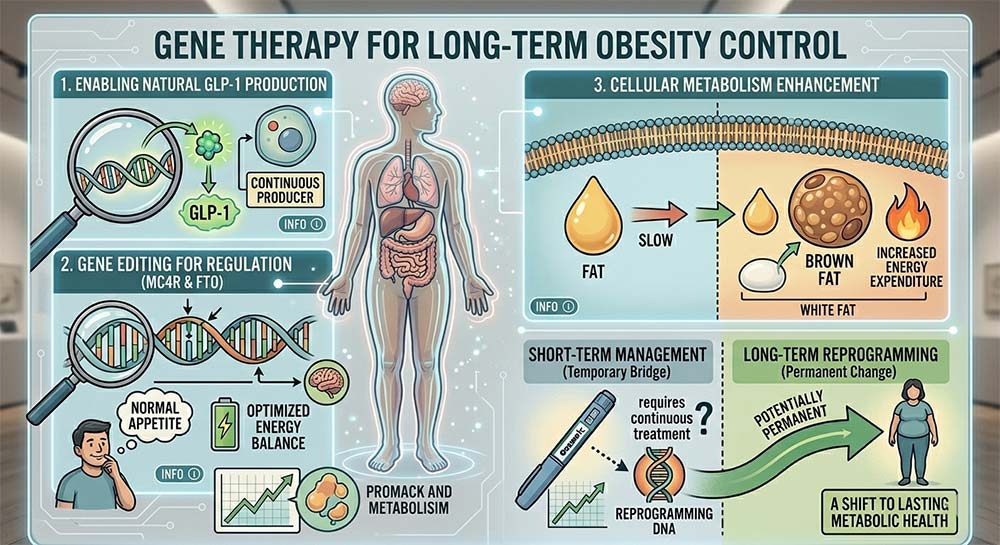
Scientific advancements in genetics have reshaped how obesity is understood. Genes such as FTO and MC4R play a significant role in appetite control, fat storage, and energy balance. These findings highlight that some individuals are biologically predisposed to weight gain, regardless of lifestyle interventions.
This shift in understanding reframes obesity as a gene-environment interaction rather than a purely behavioral issue. It opens the door to treatments that go beyond managing symptoms and instead target the biological foundation of the condition.
Gene therapy represents a fundamental shift in medical thinking. Instead of repeatedly administering drugs, it aims to modify the body’s internal systems at the genetic level. This involves delivering genetic material into cells, often through viral vectors, or using advanced technologies such as CRISPR to edit specific genes.
The objective is to correct dysfunctional metabolic pathways directly. Unlike traditional treatments, gene therapy is designed to be long-lasting, with the potential to provide benefits that extend for years or even a lifetime after a single intervention.
How Gene Therapy Treat Obesity?
Gene therapy treats obesity by modifying genetic pathways that regulate appetite, metabolism, and energy balance. Unlike weight loss drugs, it targets root biological causes, aiming for long-term obesity treatment by enabling sustained metabolic control rather than temporary symptom suppression.
This approach signals a shift in obesity treatment toward precision-based, long-term solutions, where gene therapy obesity strategies focus on lasting metabolic correction instead of repeated, short-term interventions like GLP-1 therapy.
Real World Companies and the future of genetic treatment of obesity.
Early-stage innovation is already underway, with several companies actively working toward genetic solutions for obesity. These organizations are exploring gene delivery systems, precision editing technologies, and personalized approaches to metabolic health.
| Company | Focus Area | Approach | Potential Impact on Obesity Treatment |
| Fractyl Health | Gene-based metabolic therapies | Developing gene delivery systems to enable sustained GLP-1 production | May reduce or eliminate the need for repeated injections by enabling long-term metabolic regulation |
| Editas Medicine | Precision genetic therapies | Building CRISPR-based treatments to correct genetic disorders | Future potential to regulate metabolic pathways through precise genetic correction |
| CRISPR Therapeutics | Gene editing platforms | Using CRISPR technology to modify disease-causing genes | Could directly target genetic drivers of metabolic diseases, including obesity |
| Regeneron Pharmaceuticals | Genetic research & personalized medicine | Studying genetic variations linked to obesity | Enables development of targeted, personalized therapies based on individual genetic profiles |
The table reflects a growing effort to move beyond traditional treatment models. These companies are working toward solutions that could address obesity at its genetic root, reducing reliance on continuous medication and moving closer to long-term or one-time interventions.
Comparison between Ozempic and Gene Therapy: A Fundamental Shift in Medicine.
| Aspect | Ozempic (GLP-1 Therapy) | Gene Therapy |
| Mechanism of Action | Mimics GLP-1 hormone to control appetite and metabolism | Alters genetic pathways responsible for metabolic signaling |
| Treatment Approach | Symptom management | Root-cause intervention |
| Duration of Effect | Short-term, requires continuous use | Long-term or potentially permanent effect |
| Cost Structure | Ongoing, lower per-use cost | Very high one-time cost (can reach hundreds of thousands to millions) |
This comparison highlights two fundamentally different approaches. Ozempic focuses on managing appetite and metabolism through ongoing treatment, while gene therapy aims to create lasting biological change by targeting the underlying causes of obesity. It reflects a broader shift in medicine from symptom control to system-level transformation.
Challenges and Future of Gene Therapy.
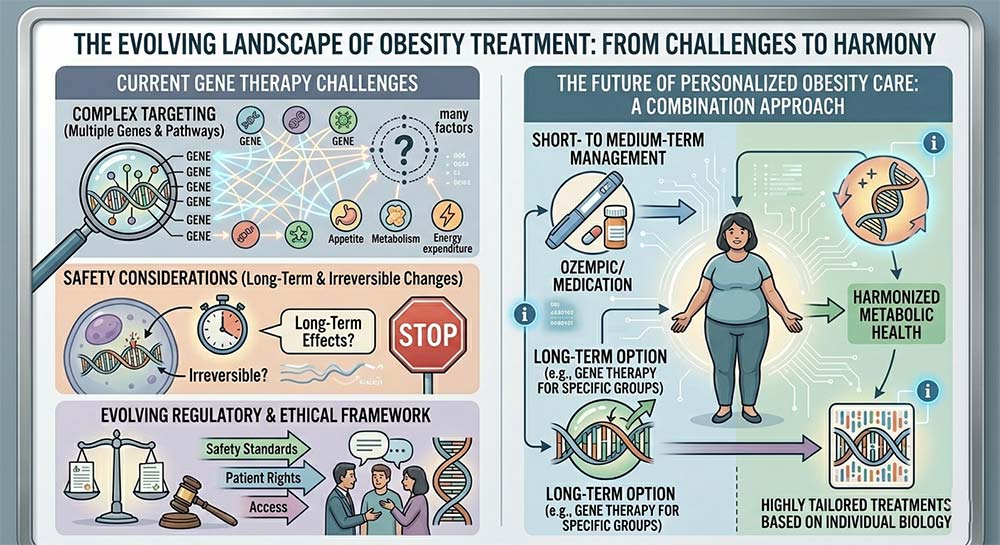
Gene therapy, while promising, faces several challenges. Obesity is influenced by multiple genes and interconnected biological pathways, making precise targeting complex. There are also safety considerations, particularly regarding long-term effects and irreversible genetic changes. In addition, regulatory frameworks and ethical considerations continue to evolve as the technology advances.
The future of obesity treatment is likely to involve a combination of approaches rather than a single solution. Medications like Ozempic may continue to play a role in short- and medium-term management, while gene therapy could emerge as a long-term option for specific patient groups. As personalized medicine develops further, treatments will become increasingly tailored to individual biology.

Also Read:
- Insulin Resistance Reversal: A Complete, Science-Backed Guide
Conclusion
The transition from Ozempic to gene therapy represents more than just medical progress. It marks a shift in how obesity treatment is understood and delivered. While GLP-1 therapy has enabled large-scale management through weight loss drugs, it remains a short-term intervention.
Medicine is now moving beyond symptom control toward deeper biological intervention. Gene therapy obesity research introduces the possibility of addressing metabolic pathways at their source, shifting treatment from management to long-term correction.
This signals the beginning of a new chapter, where obesity treatment is driven by precision, not repetition. As science evolves, the future will likely combine weight loss drugs with gene therapy to create more sustainable, biology-first solutions.
✍️ Guest Write with Us
At TrendVisionz, the digital venture of Nuteq Entertainment Pvt Ltd, we welcome contributors who share our passion for storytelling, digital marketing, and innovation. Whether it’s an article, case study, or industry insight that educates, inspires, or entertains — we’d love to feature your perspective.
- Explore our work: Nuteq Entertainment | TrendVisionz | Author Profile
- Read our newsletters: Transforming Lives | BizTech Chronicle | Nuteq Newsline | Growth Catalyst
- Guest Contributions: BizCatalyst360 | Praja Today
- Books: Go Mindfulness: Practices for Professionals Coached
- Join the community: LinkedIn Group – Digital Marketing & Content Creation World
- Connect with me: LinkedIn | Twitter | #StoryforBusiness
- Share your review: Leave your review on Google — your feedback helps us grow.
Follow me on Twitter or LinkedIn. Check out our website.
How to Contribute:
Send your pitch or draft to Editor: anujmahajan@trendvisionz.com
Additional Resources:
- Novo Nordisk. (2024). Ozempic (semaglutide) Prescribing Information.
https://www.novonordisk.com - U.S. Food and Drug Administration (FDA). (2023). Ozempic (semaglutide) Approval & Drug Safety Information.
https://www.fda.gov - World Health Organization (WHO). (2024). Obesity and Overweight Fact Sheet.
https://www.who.int/news-room/fact-sheets/detail/obesity-and-overweight - McCarthy, M. I. (2010). Genetics of Obesity. Nature Reviews Genetics.
https://www.nature.com/articles/nrg2843 - Friedmann, T. (2019). Gene Therapy: A New Era in Molecular Medicine. Science.
https://www.science.org - CRISPR Therapeutics. (2024). Gene Editing Technologies for Human Disease.
https://www.crisprtx.com