
India’s recent ICC Women’s T20 World Cup win did more than lift a trophy. It created a moment that shifted how the country sees women in sports. Watching our cricketers celebrate on that global stage felt like a message to every young girl who dreams fearlessly. It signalled a turning point where women’s sports are now viewed through a lens of ambition, respect, and serious commercial potential. What began as a cultural shift has now become one of the world’s fastest-growing movements.
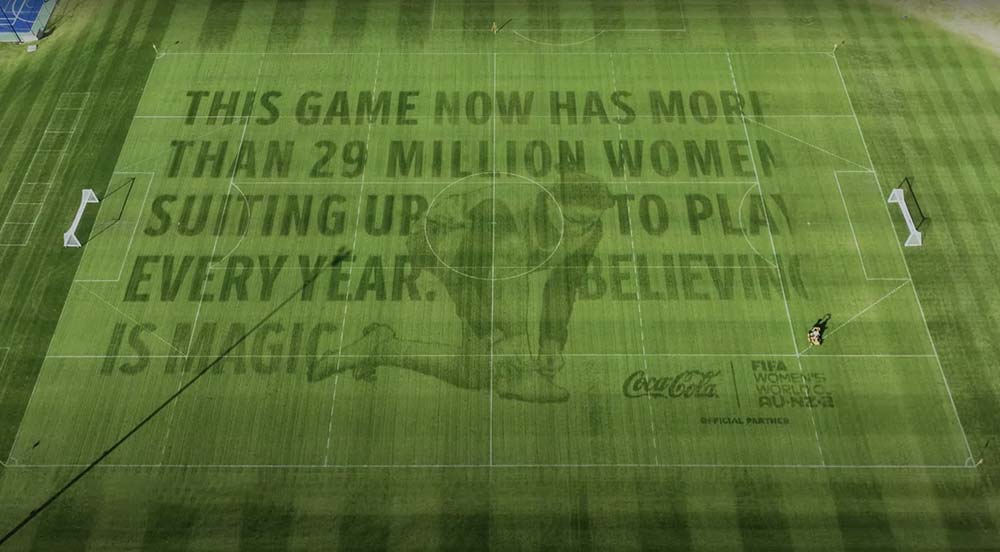
Global sports revenue trends reflect the same momentum. Deloitte projects that women’s elite sports will cross 2.35 billion dollars by 2025. A clear showing that this movement is not symbolic but economically powerful. As someone who writes deeply about women’s empowerment, leadership, and identity. I have seen how visibility strengthens confidence and how representation opens doors.
Women’s sports are no longer just about equality. They have become a global growth engine where business opportunity and social impact move together. This article explores why this rise matters, what is driving it, and what the next decade means for athletes, brands, and young girls who dare to dream.
Also Read:
- Burnout to Breakthrough: Athlete Burnout and Mental Resilience
- 10 Gorgeous Female Athletes Who Slayed the Red Carpet Like Supermodels
- Sports Infrastructure in India: How the 2047 Vision Is Reshaping the Game
Why Women’s Sports Are Entering a Hyper-Growth Phase
Women’s sports are experiencing commercial acceleration unlike anything seen before. Data from sports analysts shows a sharp rise in revenue, fan engagement, sponsorship interest, and long-term investment models. This moment is not hype. It is a measurable shift driven by changing audiences and changing economics. Women in motorsport are helping drive the growth of women’s sports through new opportunities, visibility, and competitive success.

This rising financial momentum at the athlete level directly reflects the broader global revenue surge now reshaping women’s sports worldwide. Insights from McKinsey1 reinforce how closing the monetization gap could unlock billions in new value for women’s sports.
How Did Women First Enter the World of Competitive Sports?
Women’s participation in physical activity can be traced back to the 18th century. True competitive visibility began only in 1900 when the Paris Olympics allowed women to compete for the first time. That moment planted the earliest seeds of global change.
The Global Revenue Surge
The financial momentum behind women’s sports is undeniable. Deloitte projects2 global revenue to reach 2.35 billion dollars by 2025. This growth is part of a steep trajectory that saw revenue climb from 981 million dollars in 2023 to 1.88 billion dollars in 2024. Female athletes are now generating more than half of sports-related social media engagement worldwide, capturing 53 percent of total interactions. Brands are responding quickly. Ninety-nine percent of surveyed decision-makers report that they have increased their investments in the last five years, recognising both commercial potential and cultural influence.

The World Economic Forum3 also highlights accelerating commercial returns, urging businesses to increase investment in women’s sports now.
Changing Sponsorship and Fan Behaviour
A major driver of growth is the rise of non-endemic sponsors, including finance, beauty, health, wellness, and technology companies. These brands see women’s sports as a credible space to reach modern audiences who care about trust, inclusion, and authenticity.
Recent fan-insight data reinforces this momentum. A Nielsen global study found that 84 percent of general sports4 fans are interested in watching women compete. While 51 percent actively follow women’s sports, proving how audience demand is accelerating the growth curve. This shift becomes even clearer when we look at who follows women’s sports and how large the audience base has become.

These audience patterns explain why fan behaviour is evolving rapidly, creating new engagement pathways that brands can no longer ignore. The support is digital-first, community-driven, and highly engaged across social platforms, streaming environments, and short-form content.
Key Revenue Drivers
Key revenue drivers in women’s sports reflect how commercial interest has evolved, combining traditional income streams with new digital and fan-driven opportunities.
- Sponsorships and long-term brand partnerships
- Merchandising and athlete-led product lines
- Media rights and expanded broadcast windows
- Technology integration and digital fan experiences
Case Study: WPL and the Rise of Women’s Cricket in India
Women’s cricket moved into a new business league with the arrival of the Women’s Premier League. For the first time in India, a women’s tournament attracted the kind of attention, bidding energy, and commercial confidence usually reserved for top-tier men’s cricket. The response surprised even industry insiders, proving that investors and audiences are ready for a bigger, more ambitious women’s sports ecosystem.
Key Evidence:
- Broadcast rights sold for 951 crore rupees
- Highest franchise sold for 1289 crore rupees (Adani Sportsline)
- Opening season viewership crossed 50 million digital viewers
- Consistent stadium turnout in Mumbai and Bengaluru matches
- Rising brand partnerships from fintech, wellness, fantasy sports, and beauty
- Increased central contracts and salaries for women cricketers
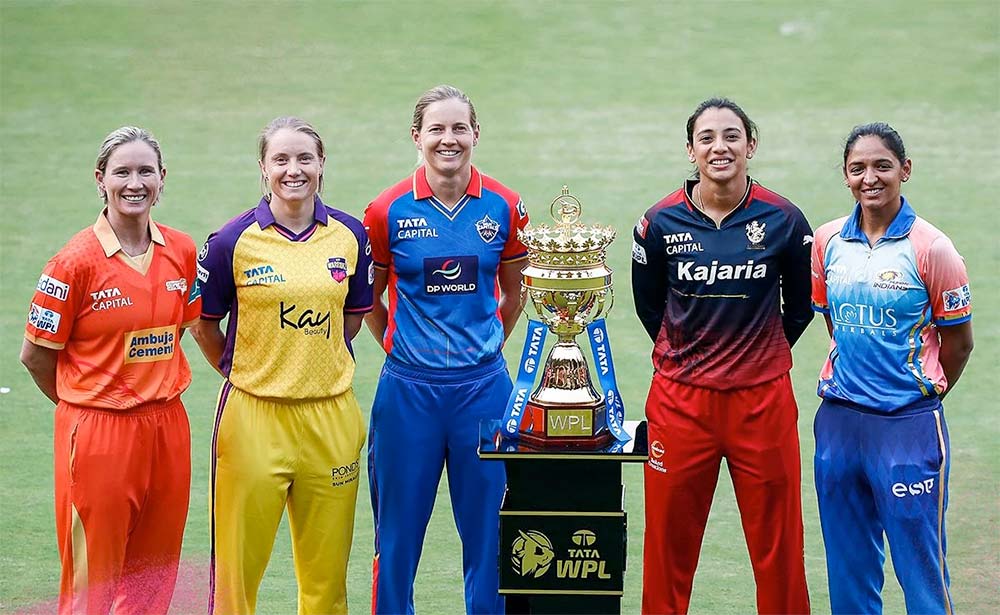
The WPL shows that when performance, visibility, and investment align, women’s sports do not just grow. They scale, commercialize, and reshape an entire nation’s sporting economy.
Women’s sports have moved from niche to mainstream. Commercial growth is accelerating, data-backed, and attracting investment models that once existed only in men’s sports.
How Women’s Sports Are Changing Business, Brands, and Sponsorship
Women’s sports are reshaping how brands think about value, influence, and return on investment. Companies today recognise that partnering with women athletes creates deeper emotional engagement, stronger community connection, and higher authenticity. This shift is being driven by changing consumer behaviour and rising visibility. You can see this evolution in how rising women athletes are becoming powerful ambassadors for global brands.

Why Brands See Higher ROI
Women’s sports deliver stronger ROI because the audience is young, digital-first, and highly values-driven. This group actively rewards brands that support women athletes and is more likely to buy, recommend, and advocate for sponsors who show genuine commitment to equality and representation. This agility mirrors the demand-driven momentum now defining women’s sports growth.
“Success comes from staying flexible and responding to real demand. We operate on responsive timelines, adjust quickly, and avoid overproduction. In women’s markets, agility is essential to meeting consumers where their interest is truly moving.” — Nancy Green, CEO Beyond Yoga
Brands embracing this agility build deeper trust, faster engagement, and stronger long-term loyalty, which directly translates into higher ROI in women’s sports.
Which Brands Are Leading the Sponsorship Boom in Women’s Sports?
Recent brand sponsorship trends show that major companies are shifting serious attention toward women’s sports. A 2025 MarketCast report highlights Amazon, Nike, Delta, and Dick’s Sporting Goods as top-considered sponsors. Purely driven by strong fan alignment, higher engagement, and growing demand for value-driven partnerships across leagues. This trend becomes even clearer when we compare how fans respond to official league sponsors across men’s and women’s sports.
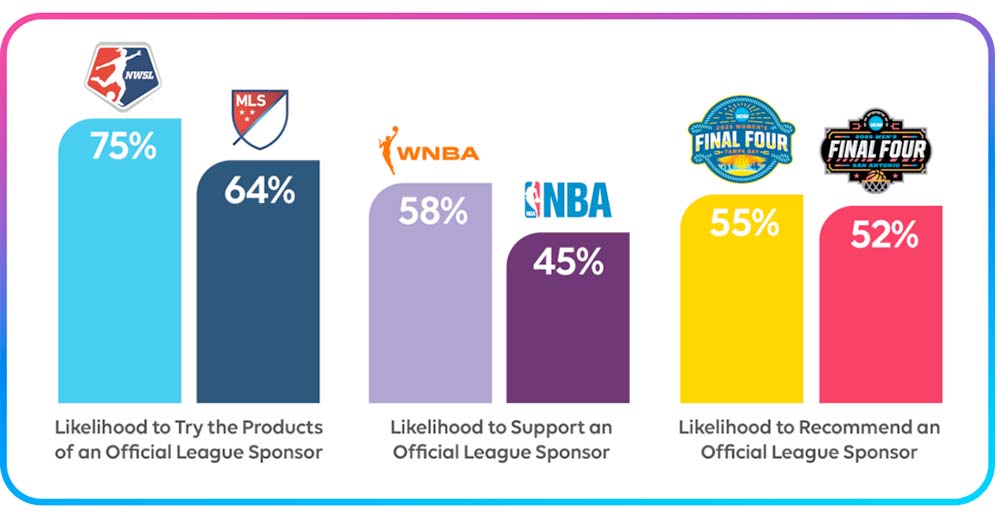
Fan willingness to try, support, and recommend league sponsors is significantly higher in women’s sports, creating stronger brand loyalty and conversion.
Key reasons brands see higher ROI in women’s sports:
- Audience characteristics: Fans aged 16 to 34 drive strong digital interaction and engagement.
- Purchase behaviour: Fans prefer brands supporting women athletes and show higher recommendation intent.
- Cost efficiency: Lower sponsorship entry costs deliver stronger returns and marketing efficiency.
- Revenue momentum: NWSL and WNBA sponsorship revenues have doubled since 2020.
- Trust advantage: Fans show 2.8 times higher purchase intent from female athlete endorsements.
- Values alignment: Purpose-led audiences reward brands showing equality, representation, and responsibility.
What do brands gain by investing in women’s sports?
Brands gain stronger authenticity, deeper cultural goodwill, and better DEI impact when they invest in women’s sports. These partnerships also improve employee engagement and position companies as future-ready, creating a meaningful blend of purpose, visibility, and long-term commercial growth.
Women’s sports now offer brands more than visibility. They create deeper trust, stronger cultural alignment, and meaningful long-term engagement. As sponsorship evolves, the clearest proof of this shift comes from real case studies showing how investment translates into measurable growth.
Case Studies That Show the Business Power of Women’s Sports
Investment in women’s sports is creating measurable brand impact through stronger engagement, lifestyle integration, and more culturally aligned storytelling. A single well-designed partnership can shift audience perception, expand brand visibility, and create deeper community connections across digital platforms.
Sephora and Golden State Valkyries
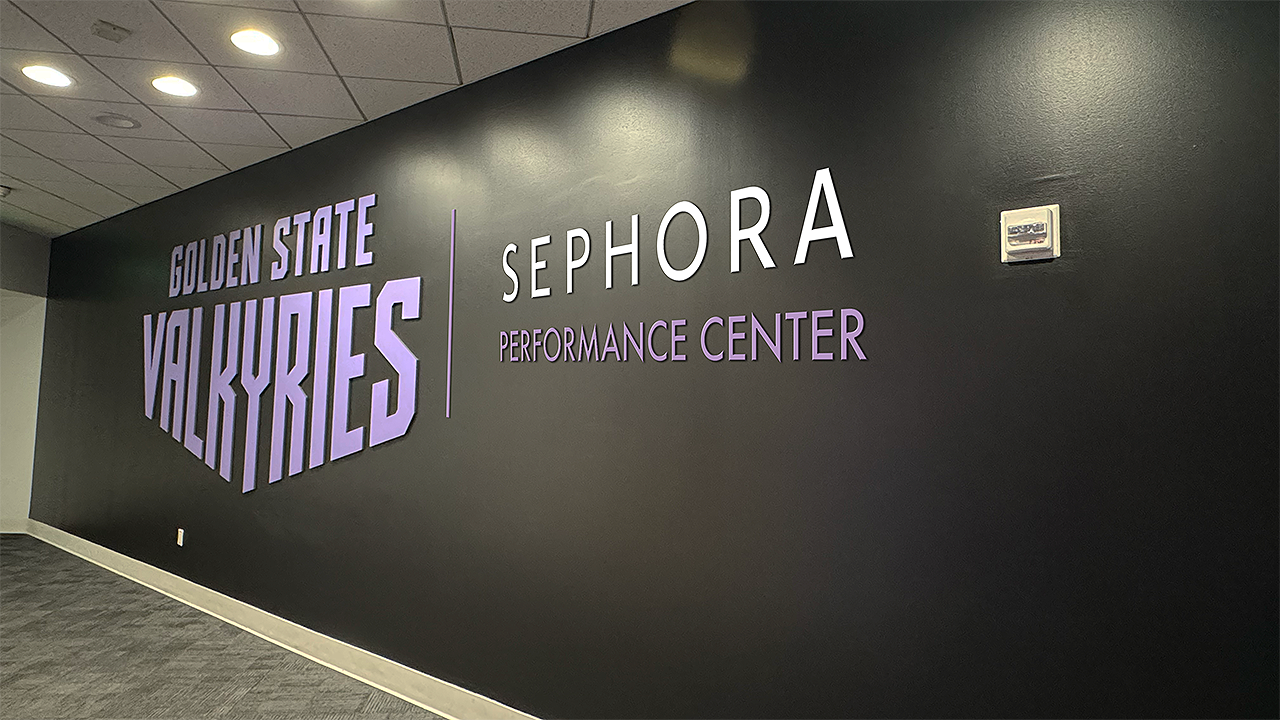
Sephora, a global beauty retailer, partnered with the Golden State Valkyries, one of the WNBA’s most culturally influential expansion teams. Together, they created a new space where beauty, sport, and community overlap, showing how lifestyle brands can reshape women’s sports engagement.
Before investment:
Before Sephora entered the partnership, beauty brands had limited presence in women’s basketball, resulting in low engagement and minimal cultural integration.
- Limited beauty-led activations: Minimal crossover between lifestyle and basketball audiences.
- Weak digital engagement: Younger fans lacked interactive match-day experiences.
- Low cultural integration: Beauty brands rarely connected with women’s sports environments.
After partnership:
After Sephora’s partnership with the Valkyries, fan engagement, cultural relevance, and lifestyle-led activation opportunities expanded across both digital and in-arena experiences.
- Glam-room installations: In-arena beauty spaces strengthened lifestyle connection for fans.
- Referee-themed drops: Creative product drops boosted social engagement and shareability.
- Fan-led content: Supporters generated organic coverage across TikTok and Instagram.
- Stronger brand recall: Sephora became visible to young, values-driven sports audiences.
Sephora’s activation shows how women’s sports open new cultural touchpoints where brands can build relevance, emotion, and long-term loyalty.
Real Examples of How Women’s Sports Drive Commercial Growth
Brands across sectors are discovering that women’s sports offer stronger engagement, cultural resonance, and long-term commercial value. These real examples demonstrate how well-executed partnerships convert visibility into measurable business impact.
Boost and Mithali Raj
Boost’s long-running campaigns with Mithali Raj shifted public perception about girls in cricket, expanded mainstream visibility for women athletes, and inspired more brand investment across India’s cricket ecosystem.
Charlotte Tilbury and F1 Academy
Charlotte Tilbury partnered with F1 Academy through custom car livery, empowerment-led storytelling, and athlete-focused content. This helped the brand engage new audiences and align beauty with speed, ambition, and global female leadership.

These examples highlight how strategic alignment in women’s sports can elevate brand influence and commercial returns.
Investment Is Reshaping the Sports Pathway for Girls and Women
Investment is transforming every stage of women’s sports, from grassroots participation5 to elite pathways. Increased funding drives visibility, improves training environments, strengthens league structures, and expands the support systems young athletes need. This shift is directly reshaping gender equality in sports and redefining opportunities for girls worldwide.
How Investment Creates Pathways
Greater investment in women’s sports helps close long-standing gaps6 in access, pay, and representation. Women globally earn about 82 cents for every dollar earned by men, and this gap widens in professional sports.
When money flows into women’s leagues, visibility increases, role models emerge, participation rises, and the talent pipeline becomes stronger. Deloitte’s research highlights how investment improves socio-economic mobility, expands inclusion, and elevates community influence.
Investment drives improvements such as:
- Better facilities: Modern training spaces help athletes develop faster and safer.
- Better coaching: Specialist support improves performance and long-term growth.
- Professional contracts: Stable income allows athletes to pursue full-time careers.
- Mental and tactical development: Structured programs enhance confidence and game awareness.
- Financial security: Income stability reduces dropout rates among talented players.
- Leadership pipelines: More women rise into coaching and administrative roles.
India’s Turning Point: Jemimah Rodrigues and the WPL
Jemimah Rodrigues represents the new generation of Indian cricket. A Mumbai prodigy, ICC T20 World Cup standout, and one of India’s most reliable middle-order batters, she has become a symbol of confidence, grit, and possibility for young girls entering the sport. She captures the emotional shift investment has created.
“I remember being the only girl among 500 boys at MIG Cricket Club in Bandra. After the 2017 World Cup, things changed. Within two years, we had special nets just for girls.”- Jemimah Rodrigues

On the WPL’s impact, she shared: “WPL has brought tremendous benefits… exposure to global players, professional dressing rooms, packed stadiums, and financial belief. Domestic cricket has transformed.”
The WPL has opened new pathways for women athletes in India, proving that when the ecosystem invests, girls who play eventually become women who lead. This aligns deeply with the TrendVisionz philosophy of empowerment through opportunity.
Every investment in women’s sports multiplies into community influence, economic mobility, and aspirational visibility. When leagues like the WPL thrive, the entire ecosystem rises with them.
The Future of Women’s Sports: Revenue, Technology, and Global Opportunity
Women’s sports are entering a decade defined by technology, data-driven fandom, and global investment. Deloitte’s Next Phase of Growth framework highlights how emerging digital platforms, new ownership models, and rising audience demand will shape the next generation of leagues and athletes worldwide.
The Next Decade of Growth
Women’s sports will grow through technology, new ownership models, and rising global fan demand. Digital-first audiences and immersive experiences are reshaping how fans connect with teams, athletes, and live events.
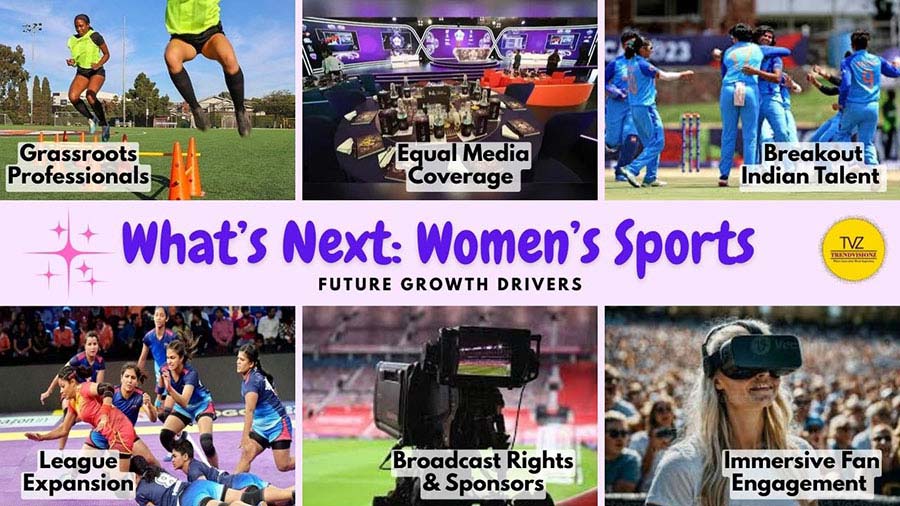
What’s next for women’s sports:
- Professionalisation of grassroots: Structured scouting and academies strengthen early athlete development.
- Equal media slots: Broader broadcast coverage increases visibility and long-term audience retention.
- Breakout athletes: Non-cricket sports in India will see faster recognition and support.
- League expansion: New tournaments across Asia and Europe create stronger global competition.
- Higher broadcast rights: Growing demand pushes networks to invest at more premium levels.
Women’s sports will expand through innovation, deeper audience engagement, and global collaboration, shaping a more inclusive sports economy.
India’s Opportunity
India will play a major role in shaping this future. The WPL’s early success is creating momentum for women’s hockey, boxing, wrestling, and badminton. Cricket India’s ecosystem investments continue to drive belief, while rising role models in mainstream media are expanding possibilities for young girls nationwide.
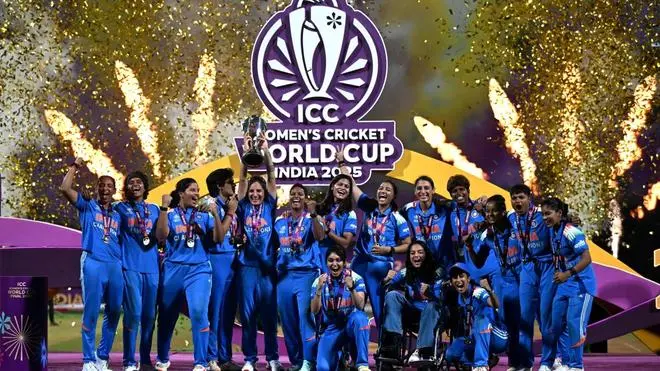
“Everyone wants their son to be like Virat Kohli or Rohit Sharma, but no one wants their daughter to be like Harmanpreet Kaur or Smriti Mandhana. That’s why we introduced equal opportunity and pay parity in women’s cricket.” — Jay Shah
The future of women’s sports is not only about equality. It is a powerful convergence of business, media, technology, and culture that will define the next era of global sports consumption.
Also Read:
- Sports Mentors in Indian Sports: The People Powering Revolution
- Beyond Cricket: Emerging Sports Gaining Popularity in India
FAQ: Women’s Sports
Who was the first woman to win at the ancient Olympic Games?
Cynisca of Sparta made history in 396 BCE as the first woman to win at the ancient Olympics. She trained her own horses and entered her chariot team, which won the prestigious four-horse race despite women being barred from competing.
Why are women’s sports growing so fast globally?
Growth is driven by rising fan demand, strong digital engagement, affordable sponsorship entry, and increasing brand investment. Women’s sports attract younger audiences, offer higher authenticity, and benefit from expanding leagues, better media coverage, and a global shift toward inclusive, community-driven sports consumption.
How does investment help women athletes in India?
Investment strengthens pathways through better training, coaching, and financial stability. The WPL offers global exposure and professional environments, while athletes like Jemimah Rodrigues highlight how increased support creates visibility, inspires participation, and helps young girls see sports as a credible long-term career.
What are some examples of gender equality in sports today?
Gender equality in sports is advancing through equal prize money at major Grand Slams, expanded women’s leagues, better media coverage, and increased investment. In India, initiatives like the WPL and improved central contracts are driving stronger pathways for women athletes.
Conclusion
Women’s sports have become a global growth engine, reshaping how the world views performance, leadership, and opportunity. With revenue projected to cross 2.35 billion dollars in 2025, the commercial and cultural shift is undeniable. In India, the WPL shows how investment can open pathways, empower young girls, and strengthen the talent pipeline. When funding increases, visibility rises, equality expands, and businesses gain new loyal audiences. The future belongs to organisations that recognise this momentum early and choose to support women athletes with purpose and long-term belief.
Join us at TrendVisionz as we champion the rise of women’s sports and create stories, strategies, and opportunities that help this movement grow with impact, insight, and intention.
Additional Resources:
- McKinsey & Company. (2023). Closing the monetization gap in women’s sports: A $2.5 billion opportunity. ↩︎
- Deloitte. (2024). Women’s elite sports revenues to surpass US$2.35 billion in 2025. ↩︎
- World Economic Forum. (2025). 3 reasons why businesses should invest in women’s sports now. ↩︎
- Nielsen. (2023). The Rise of Women’s Sports: Global Fan Insights Report. Nielsen Sports. ↩︎
- Banerjee, D. (2023). Women’s participation and performance trends in Indian sports. International Journal of Physical Education, Sports and Health, 10(4), 25–45. ↩︎
- Naik, A., & Bavadekar, R. (2024). Women in sports: An analytical study of multi-dimensional challenges faced by women athletes in India. Arthshastra Indian Journal of Economics & Research, 13, 171. ↩︎
Stay Connected with Me
Namita Mahajan is a Lifestyle Influencer, Digital Strategist, and Womenpreneur empowering self-reliance and creativity through storytelling and digital presence.
As Director of Nuteq Entertainment Pvt. Ltd. and Co-Founder of TrendVisionz, she brings together media experience, empathy, and innovation to build purposeful brands.
- Explore our work: Nuteq Entertainment | TrendVisionz | About the Authors
- Read our newsletters: Transforming Lives | BizTech Chronicle | Nuteq Newsline
- Guest writer: BizCatalyst360 | Praja Today
- Join the community: Go Mindfulness: Practices for Professionals Coached
- Connect with me: LinkedIn | Twitter | #StoryforBusiness
- Share your review: Leave your review on Google — your feedback helps us grow.
- Listen on Spotify: Leadership Podcast | Guided NLP | Daily Motivation
Believe. Practice. Perform. Let’s create impact together.
✍️ A Note from the Editor
At TrendVisionz, we craft every article with intention—guided by insight, empathy, and the belief that stories can empower change. Our content remains open and free, because knowledge should be accessible to everyone.
If our work inspires you, we’d be deeply grateful for your support. Even $10/month helps us continue creating stories that inform, uplift, and inspire.
💛 Support our work: Contribute via PayPal or write to us at anujmahajan@trendvisionz.com to set up your monthly support.
Thank you for believing in independent storytelling. — Editor


7 comments
Interesting point — do you have any sources where I can read more?
[…] Posts How Women’s Sports Are Powering a New Era of Growth Budget Fashion Hacks to Look Expensive Every Day Dharmendra Deol: Remembering the Legend of […]
[…] Posts How Women’s Sports Are Powering a New Era of Growth Budget Fashion Hacks to Look Expensive Every Day Dharmendra Deol: Remembering the Legend of […]
This was beautiful Admin. Thank you for your reflections.
Excellent article — the FAQs section was particularly useful.
thanks for feedback. Its important for us
This post is quite useful, thanks!
Comments are closed.