
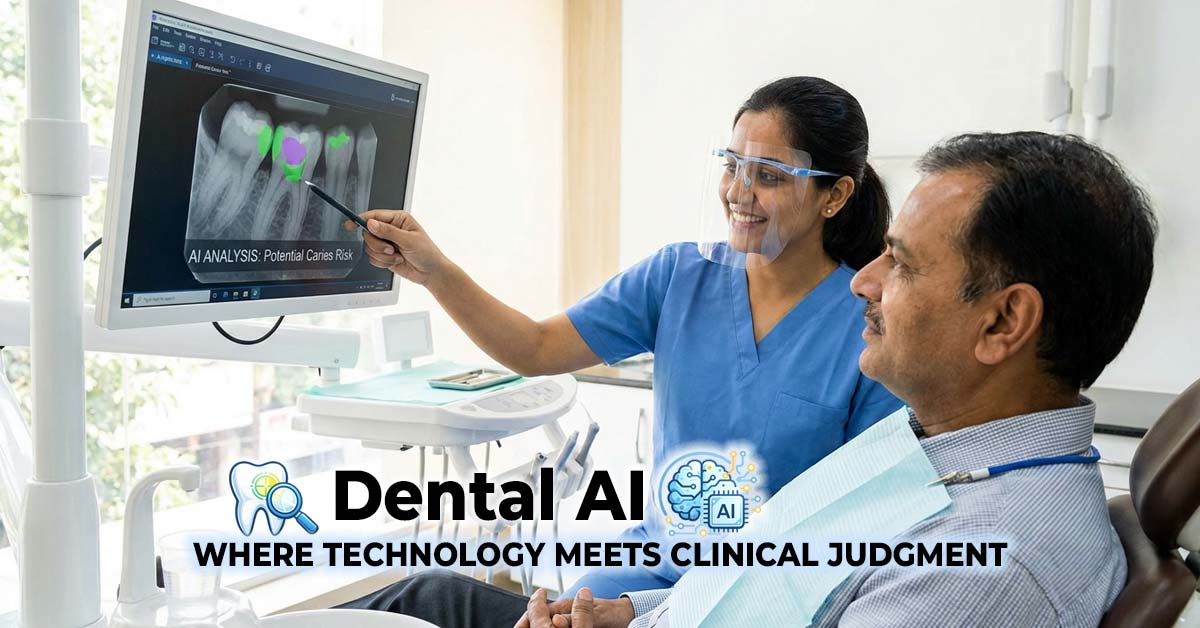
A patient in a Delhi dental clinic watches a screen highlight a tiny cavity before the dentist says a word. Dental AI is now detecting warning signs earlier than visual examination alone. Years ago, the problem would have waited for pain. In 2026, dentistry is quietly becoming one of healthcare’s most AI-assisted fields.
This is not a pilot project anymore. Dental AI has crossed from experiment to everyday tool. Clinics that once relied on the naked eye and film X-rays now run images through trained models. The market reflects the speed of that shift. Analysts expect AI in dentistry to grow more than 22 percent a year through 2035.

My insight comes from more than three decades working across industries alongside healthcare providers and technology-led businesses. Dentistry is moving from reactive treatment toward data-assisted prediction. Digital systems now help spot problems early, often before pain reaches the patient.
Also Read:
- Muscle Loss in Women: Why Strength Matters After 40
- Insulin Resistance Reversal: A Complete, Science-Backed Guide
What Is Dental AI and Why Dentistry Is Changing
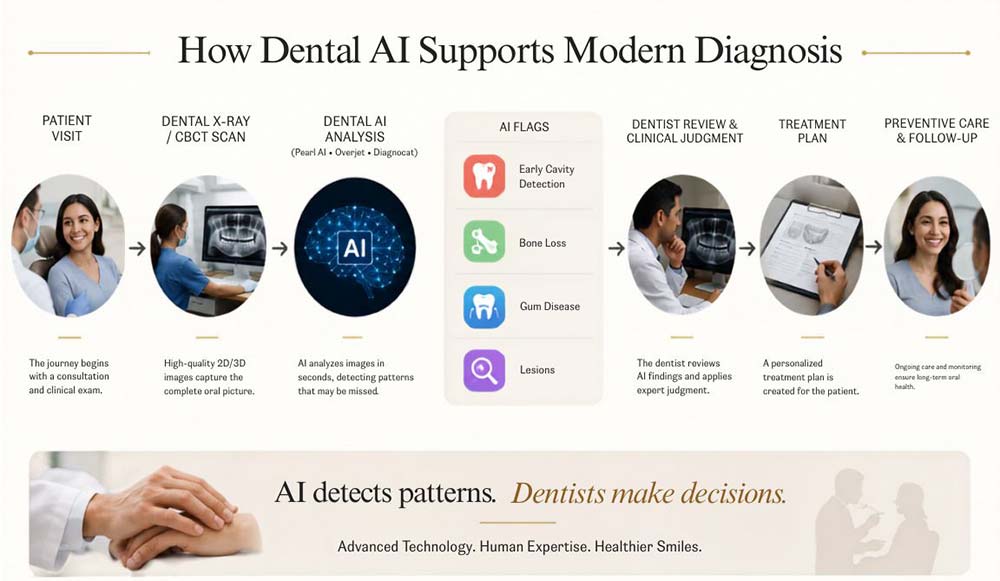
Dental AI is the use of trained software to read dental images, flag problems, and support diagnosis and treatment planning. It does not act on its own. It works beside the dentist, using dental imaging AI to catch early signals in scans and X-rays.. This is the quiet engine behind the wider move toward digital dentistry.
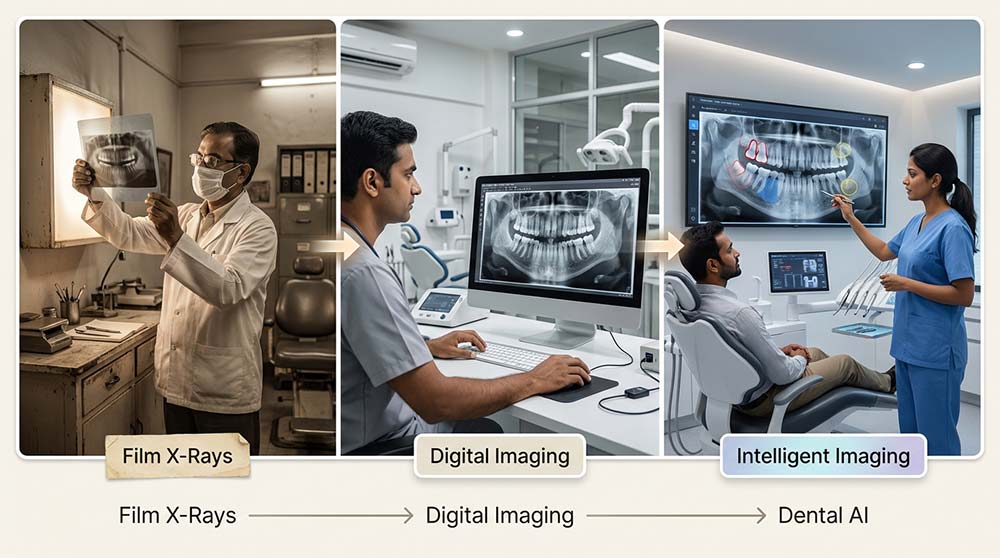
From Film to Digital to Intelligent Imaging
Dentistry has moved through three clear stages. First came film X-rays, developed in a darkroom and read by eye. Then digital sensors arrived, showing images on a screen within seconds. Now machine learning dentistry adds a third layer. The software studies the same image and highlights areas a busy clinician might pass over. Think of an old film X-ray held up to a light box. Compare that to a screen where a faint shadow near the root is circled automatically. The dentist still decides. The tool simply makes sure less gets missed.
Why the Shift Is Accelerating in 2026
Three pressures are driving adoption right now. Clinics face staffing strain, so any tool that saves time earns its place. Patients expect to see their own scans and understand them, not just take a word on trust. And faster diagnosis means problems get named in one visit instead of three. The numbers track this shift. The global digital dentistry market was worth about 7.4 billion dollars in 2025 and is expected to more than double by 2035. This is the same digital inversion now reshaping the rest of medicine, from imaging to AI and robotics across modern healthcare. Dentistry is simply catching the same wave.
The point is not that machines arrived in the dental chair. It is that dentistry stopped treating an X-ray as something only a trained human eye could read. The image became data, and data can be checked twice.
How Dental AI Improves Diagnosis and Clinical Decision-Making
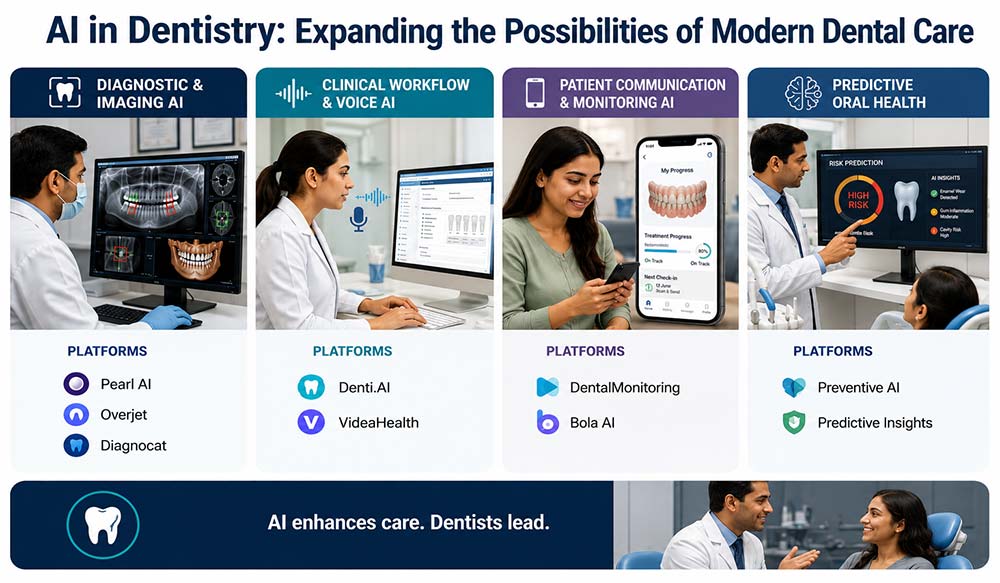
AI dental diagnosis remains the most visible use of dental AI, but it is no longer the only one. Modern platforms now support imaging, workflow automation, patient communication, and predictive oral health. Together, these tools help dentists make faster and more informed decisions while improving patient understanding and trust.
The Dental AI Ecosystem Is Growing Beyond Diagnosis
Dental AI is no longer limited to reading X-rays. Today’s platforms support multiple stages of modern dental care, creating a connected ecosystem that improves both clinical efficiency and patient outcomes. Diagnostic platforms such as Pearl AI, Overjet, and Diagnocat help identify cavities, bone loss, and lesions from radiographs and CBCT scans. Other tools assist with documentation, workflow management, and treatment monitoring, reducing routine administrative work for clinicians.
Together, these technologies are helping shape a more informed model of smart dental care where diagnosis, communication, and preventive decision-making work seamlessly around the patient.
Can AI detect cavities a dentist might miss?
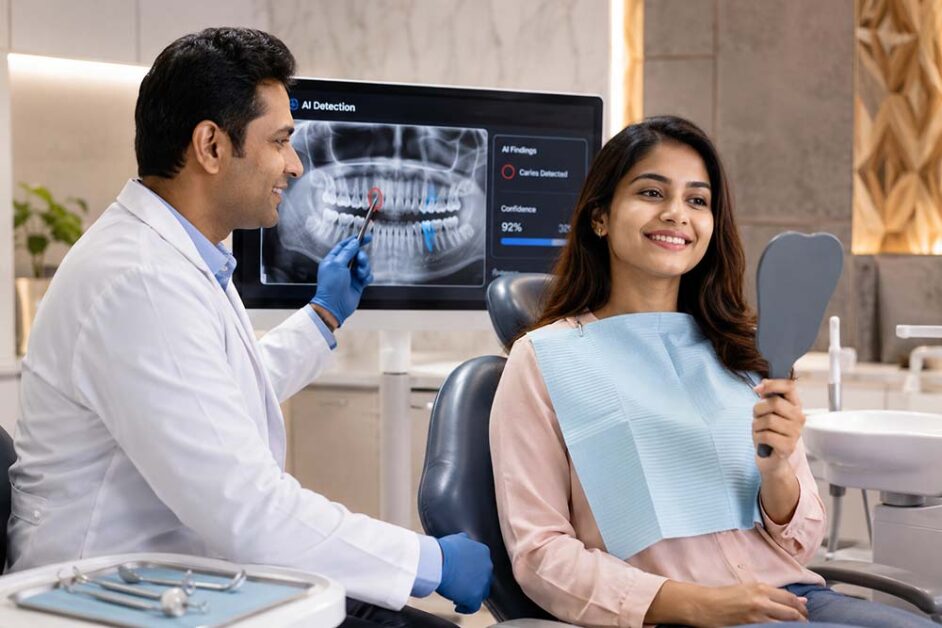
Yes. AI flags early-stage decay and small lesions on radiographs that are easy to overlook, giving the dentist a second read. It does not diagnose alone. It surfaces the suspect area, and the clinician then confirms or clears it. This early lesion detection means a tiny cavity can be watched or treated before it reaches the nerve and turns into a root canal.
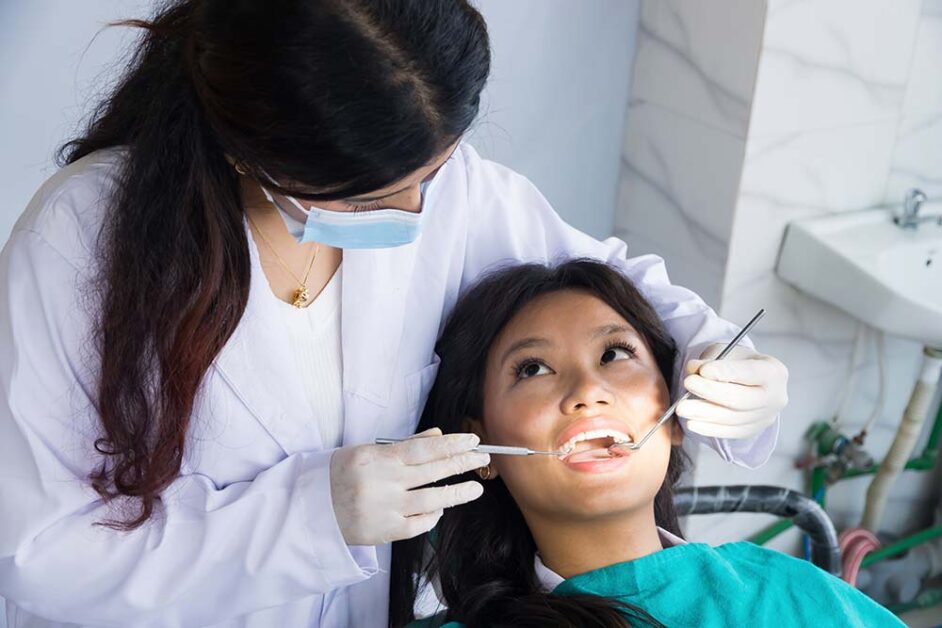
Accuracy is only part of the story. The larger shift is that dental AI is evolving into a connected clinical support system. From diagnosis to patient monitoring, the technology helps dentists work with more information while keeping human judgment at the centre of care.
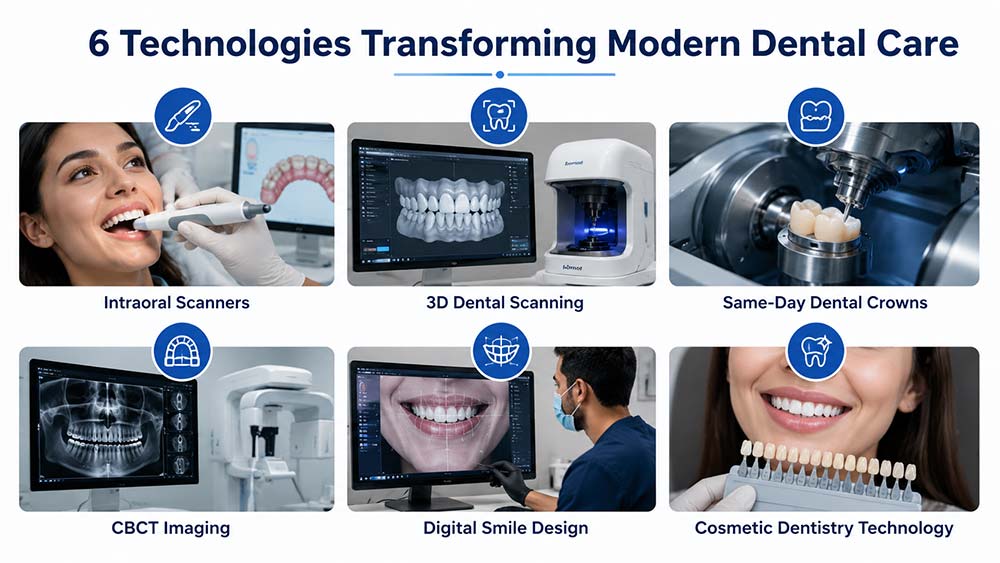
6 Technologies Transforming Modern Dental Care
AI rarely works alone. It sits inside a connected set of oral health technology that turns a scan into a finished treatment. Each tool feeds the next, and the patient feels the difference as fewer visits and less guesswork.
Modern medical aesthetic clinics increasingly integrate advanced dental technologies with comprehensive skin and hair care services.
Scanning and Same-Day Workflows
These tools handle the first half of the journey. They capture the exact shape of the mouth and turn it into a precise, working digital model. That model is the foundation every later step in the treatment quietly depends on.
- Intraoral scanners1: replace messy putty impressions with a quick 3D digital scan in minutes.
- 3D dental scanning: feeds precise models straight into design software, so nothing is lost in translation.
- Same-day dental crowns: chairside milling shapes a fitted crown during one visit, not three.
Imaging and Smile Planning
The second half of the workflow plans treatment in detail and lets the patient see the likely result before any drilling starts.
- CBCT imaging: detailed dental imaging AI work together to map bone, nerves, and roots before a single cut.
- Digital smile design: patients preview their new smile2 on screen before work begins.
- Cosmetic dentistry technology: planning becomes visual and measurable, shared openly with the patient.
Much of this rests on secure digital records, the same shift toward biometric data reshaping patient care across healthcare.
AI is the intelligence layer. These tools are the hands and eyes it works through. Together they shorten the distance between spotting a problem and fixing it, often inside a single appointment.
AI in Dentistry India: Adoption, Access, and Challenges
AI in dentistry India is a tale of two countries. In metro clinics it is growing fast. Beyond the big cities it is still rare. The Indian Dental Association (IDA), India’s national body of dental professionals, sits at the centre of this uneven shift.
What Is Driving Adoption in Indian Clinics
Three forces push adoption3 in urban clinics, each tied to how patients and dentists now behave and choose.
- Patient expectation: people expect to see their own scans, the way they compare phone features before buying.
- Falling hardware cost: intraoral scanners now start near 2.5 lakh rupees, far below old imported prices.
- Competitive edge: clinics adopt technology to stand apart in crowded, competitive urban markets.
The same pull draws patients from abroad, feeding India’s reputation in medical tourism where advanced care meets lower cost.
The Barriers That Remain
Cost is still the first wall. A small-town practice cannot justify lakhs in oral health technology for a thin patient flow. Training is the second. The software is only as good as the hand reading its output. Trust is the third, as many patients and older dentists stay wary of a machine’s verdict. So early dental diagnosis through AI remains a metro privilege, not yet a tier-2 or tier-3 reality.
India’s dental AI story is real but partial. The technology has arrived in the cities. Access has not yet followed it down the map. That gap is the real work ahead.
Human Dentists and AI: Why Collaboration Matters
AI supports clinical decisions. It does not replace the dentist. The screen can flag a shadow, but it cannot hold a worried patient’s attention or weigh what treatment suits a real life. Smart dental care still runs on a human at the chair.
Many AI for dentists platforms are designed to support diagnosis, imaging review, and workflow efficiency rather than replace clinical judgment.
What AI Cannot Do
A machine reads images well. It cannot do the rest of the job. Four things stay firmly human.
- Clinical judgment: knowing when to treat and when to watch and wait.
- Patient communication: the calm explaining that turns fear into informed consent.
- Ethical calls: decisions a real person must stand behind and answer for.
- Treatment trade-offs: weighing what suits a patient’s real life, not just the scan.
The evidence backs this balance. In one global study, 80 percent of dentists who used AI tools rated them moderately or highly effective, yet the same consensus holds that the technology augments the dentist rather than replaces them. This is human dentist collaboration in practice. The tool detects. The dentist decides. The same principle applies across the body, where managing something like hormone health and wellness still needs a human reading the whole person, not just a result.
Will AI replace dentists in the future?
No. AI improves diagnostic accuracy4 and cuts routine workload, but dentists provide judgment, hands-on treatment, and the human reassurance patients need. The credible direction is collaboration, where AI handles detection and the dentist makes the call.
The strongest clinics will not be the ones that hand over to machines. They will be the ones where the dentist trusts the tool and the patient trusts the dentist. Technology earns its place by making that trust easier, not by replacing it.
The Future of Preventive and Predictive Oral Healthcare
Dental AI is moving care from reactive repair toward prediction and prevention. Instead of waiting for a tooth to fail, it watches for the signs that one will. This is where preventive dental care and predictive oral health start to merge.
The shift shows up in four practical ways.
- Risk modelling: AI tracks patterns over time to flag rising decay or gum-disease risk, much like a digital twin of the mouth.
- Predictive oral health: each scan becomes a baseline to compare against, not a one-off snapshot.
- Whole-body links: oral signals connect to diabetes, heart, and inflammation markers, the same way gut health ties to wider disease.
- Earlier intervention: problems get caught at the warning stage, not the pain stage.
The next shift in dentistry is not a better filling. It is the appointment that prevents the filling from ever being needed. Care stops being a repair bill and becomes a quiet habit of looking ahead, one scan at a time.
Also Read:
FAQ: Dental AI
Dental AI is software that assists dentists with diagnosis, imaging analysis, treatment planning, and preventive care. Using machine learning dentistry, it detects cavities, gum disease, bone loss, and other abnormalities earlier by reading digital scans and X-rays.
No. Dental AI supports clinical decisions but cannot replace the dentist. It improves accuracy and speeds up workflow, while dentists provide judgment, patient communication, ethical calls, and personalised planning. The real model is human dentist collaboration.
Digital dentistry is improving diagnosis speed, precision, and patient experience across India. Tools like CBCT imaging, 3D dental scanning, AI X-ray analysis, and same-day dental crowns are spreading, with adoption of this oral health technology rising fast across urban clinics.
Conclusion
Dental AI is changing how problems are found, not who treats them. A cavity caught early on a screen is still a cavity a real dentist chooses to fix.
The tool is real, and so are its limits. It reads images, not people. And in India its reach is still uneven, strong in cities, thin beyond them.
The future is not man or machine. It is a dentist who looks twice, because good preventive care, like sound nutrition, starts long before any pain.
As healthcare becomes more predictive, the conversation around technology, wellness, and human behaviour will only deepen. Through TrendVisionz, I continue exploring how emerging innovations are reshaping modern life, healthcare, and the future of human decision-making.
Additional Resource:
- Dhull KS, Nagar R, Mathur P, Shil M, Jain S, Dureha R, Kapoor A. Intraoral Scanners: Mechanism, Applications, Advantages, and Limitations. J Pharm Bioallied Sci. 2024 Jul;16(Suppl 3):S1929-S1931. doi: 10.4103/jpbs.jpbs_1299_23. Epub 2024 May 1. PMID: 39346446; PMCID: PMC11426806. ↩︎
- Jafri Z, Ahmad N, Sawai M, Sultan N, Bhardwaj A. Digital Smile Design-An innovative tool in aesthetic dentistry. J Oral Biol Craniofac Res. 2020 Apr-Jun;10(2):194-198. doi: 10.1016/j.jobcr.2020.04.010. Epub 2020 Apr 18. PMID: 32373450; PMCID: PMC7193250. ↩︎
- Usman M J, Latha N, Saraswathy A, Makkadan Thachanath H. Integration of Three-Dimensional Scanning and Computer-Aided Design/Computer-Aided Manufacturing (CAD/CAM) Technology in Routine Prosthodontic Practice: A Cross-Sectional Study in Kerala. Cureus. 2024 Dec 26;16(12):e76409. doi: 10.7759/cureus.76409. PMID: 39867077; PMCID: PMC11762909. ↩︎
- Abbott LP, Saikia A, Anthonappa RP. ARTIFICIAL INTELLIGENCE PLATFORMS IN DENTAL CARIES DETECTION: A SYSTEMATIC REVIEW AND META-ANALYSIS. J Evid Based Dent Pract. 2025 Mar;25(1):102077. doi: 10.1016/j.jebdp.2024.102077. Epub 2024 Dec 12. PMID: 39947783. ↩︎
Stay Connected with Me:
Anuj Mahajan is a senior marketing and communication professional with over three decades of operating experience across complex business environments. A business and media operator at core, he uses structured storytelling to sharpen judgement, strengthen communication architecture, and reinforce leadership discipline that drives sustainable growth. An ICF-ACC Certified Coach and seasoned corporate trainer, he works closely with leaders and organisations to translate strategy into consistent execution and measurable business outcomes.
- Explore my work: Nuteq Entertainment | TrendVisionz | Author Profile
- Read our newsletters: Transforming Lives | BizTech Chronicle | Nuteq Newsline
- Guest writer: BizCatalyst360 | Praja Today
- Books: Go Mindfulness: Practices for Professionals Coached
- Join the community: LinkedIn Group – Digital Marketing & Content Creation World
- Connect with me: LinkedIn | Twitter | #StoryforBusiness
- Share your review: Leave your review on Google — your feedback helps us grow.
- Listen on Spotify: Leadership Podcast | Guided NLP (7 Episodes) | Daily Motivation – 21 Episodes
Believe. Practice. Perform. Let’s create impact together.
✍️ A Note from the Editor
Independent storytelling thrives with you. Contribute $15/month via PayPal or email us at anujmahajan@trendvisionz.com. [Guest write for us — Free or Paid.]


1 comment
[…] Posts AI in Dentistry: Transforming Modern Dental Care Employee Burnout in India: The Silent Crisis Inside Modern Work Agentic AI in Education: […]
Comments are closed.