
When billions of people watch football, where does the money actually go? It is a simple question, but in the World Cup economy, the answer is not.
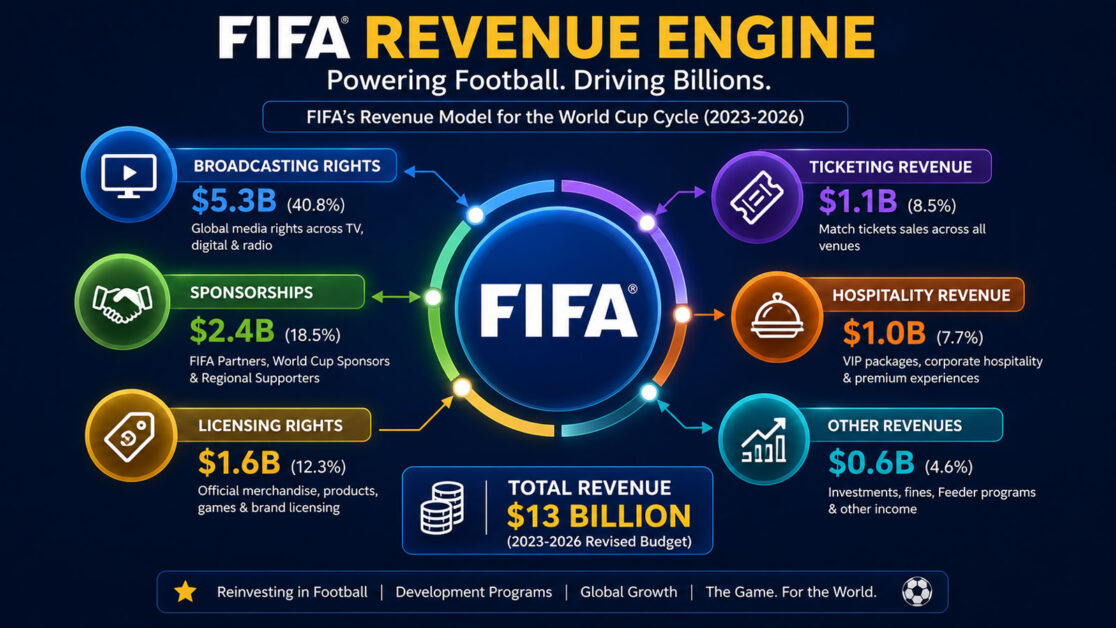
Every World Cup is sold as a windfall for the country that hosts it. The 2026 numbers tell a more divided story. The World Cup economy is really two economies. One belongs to FIFA. The other belongs to the host cities. They do not always move together. FIFA has budgeted a record $13 billion for the 2023 to 2026 cycle.
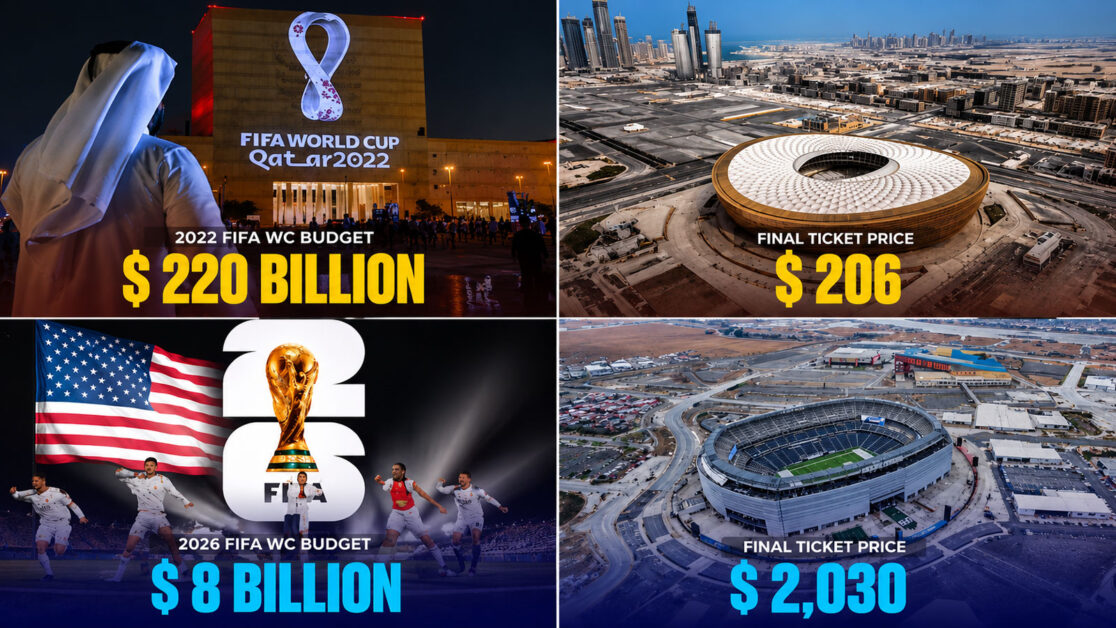
I read a World Cup the way I read any growth system. Not by the spectacle. By where the money settles after the lights go off. This piece follows that money. We start with FIFA’s engine. Then the host city ledger. Tourism gains there are smaller than they look. Then the fans, India’s paradox, the athletes, and the next decade.
How the World Cup Economy Works: FIFA’s Revenue Engine First
The World Cup economy runs on two engines at once. One is FIFA’s global revenue machine. The other is the host country’s local ledger. They rarely move together. FIFA’s side is the more insulated of the two.
The Global Engine: Broadcasting Rights and Sponsorship
Most of FIFA’s money is made before a single match kicks off. FIFA revenue comes mainly from four streams. The largest by far is broadcasting rights. Television and media deals make up roughly a third of the total. Broadcasting alone is budgeted at over $4 billion this cycle. Sponsorship and licensing follow close behind.
These deals are signed years in advance. That timing matters. FIFA’s income is locked in long before the tournament starts. The result is a revenue base that barely flinches at the wider economy. Empty seats or full, the core money holds.
Ticketing and Hospitality: Where Dynamic Ticket Pricing Enters
Ticketing and hospitality work differently. This stream depends on real demand. Fans have to show up and pay. For 2026, FIFA has leaned on dynamic ticket pricing. Prices rise and fall with demand, like airline seats. A high-demand match can cost many times its base price.
The approach lifts revenue when interest is strong. It also draws criticism when prices climb out of reach. Hospitality packages add another layer for premium buyers. North America makes this the most lucrative ticketing market yet. But these streams carry more risk than the locked broadcast deals.
So FIFA’s side of the World Cup economy is built to be safe. The risk sits elsewhere. It sits with the cities that host.
The Host City Ledger: Tourism and Who Really Gains
Hosting looks like a guaranteed win. The real ledger is quieter. Host cities gain from World Cup tourism, but less evenly than headlines suggest. Much of the spending displaces existing travel rather than adding new demand.
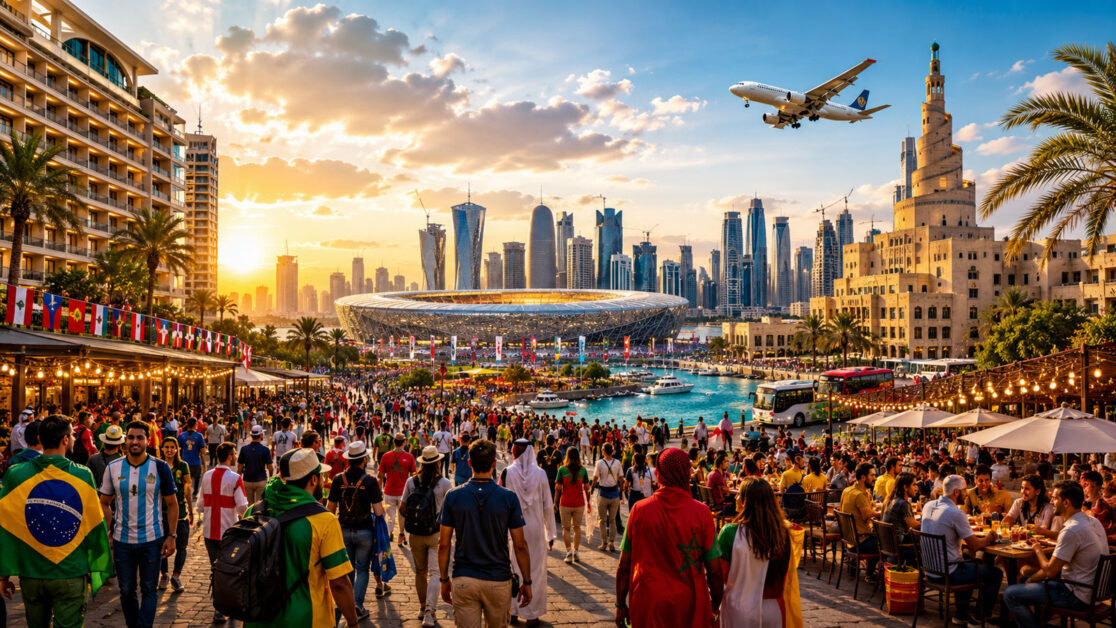
The Tourism Surge: Hotels, Flights, and Fan Zones
The surge is real. Tourism Economics projects 1.24 million international visitors to the United States for the tournament. About 742,000 of those are additional trips. These are visits that would not have happened otherwise. They spend heavily, too.
The US Travel Association estimates over $5,000 per visitor, far above a normal trip. Hotel occupancy climbs sharply on match days. Room revenue in host markets is forecast to rise 7 to 25 percent in June. Across US cities, that adds close to $900 million in extra hotel income.
The Infrastructure Bill
Then come the costs. Hosting is expensive, and cities carry much of it. The United States alone is expected to spend more than $11 billion. Total spending across all parties may top $13.9 billion, by FIFA’s own estimate. Local governments fund the least glamorous parts. Security and policing. Transit upgrades. Crowd control and fan festivals.
The bill does not end at the final whistle. Brazil learned this after 2014. It spent more than $3 billion on stadiums. Several became white elephants. The arena in Manaus cost around $300 million. It sits deep in the Amazon, with no top-flight club to fill it. Its upkeep ran near $250,000 a month.
The most expensive stadium, in Brasília, later became a bus parking lot. Eight of the twelve venues ended their first year in the red. That risk shapes 2026. Sharing the tournament across three nations spreads the cost, and leans on stadiums that already exist.
The Displacement Problem: Why the Boom Runs Smaller Than Projected
This is where the headline numbers shrink. Oxford Economics found the gains will be marginal and short-lived. Much of the tourism simply displaces existing travel. A fan books a room a business traveler would have used anyway. By April 2026, 80 percent of host-city hotels reported bookings below forecast. Some called the event a non-event.
History agrees. A University of Toronto study found 12 of the last 14 World Cups left host cities with net losses. The link between sports and GDP is real. But it is thinner than the forecasts suggest.
Does Hosting the World Cup Actually Grow a City’s Economy?
Yes, but modestly and briefly. Host cities see a short tourism and jobs boost, mostly in hospitality. The gains are often offset by security, transit, and stadium costs. The net result for the host city economy is often small, sometimes negative.
The local ledger, then, is the exposed half of the World Cup economy. The spectacle is real. The lasting payoff is not. Next, the fans.
Read More
- Women in Motorsport: Champions Breaking Barriers
- Burnout to Breakthrough: Athlete Burnout and Mental Resilience
Why Fans Plan Their Lives Around the Fixtures
The World Cup differs from league football because billions of viewers concentrate on the same matches in a fixed window. Economists call this concentrated attention. Fans call it a shared global moment.
World Cup viewership behaves differently from regular-season sport. A league season spreads attention across hundreds of games and many months. The World Cup compresses it. One tournament, one month, a fixed set of fixtures. FIFA expects the 2026 event to reach around six billion people. That scale turns matches into appointments.
The Psychology of the Schedule: Scarcity, FOMO, and the Shared Moment
Scarcity drives the behaviour. The World Cup comes once every four years. Miss it, and the next is far away. That rarity makes each match feel urgent. There is also fear of missing out. The tournament is a shared conversation, and nobody wants to be outside it. The pull is strong enough that many fans keep watching after their own team is knocked out. The event matters more than the result.
Streaming, Watch Parties, and the Second Screen
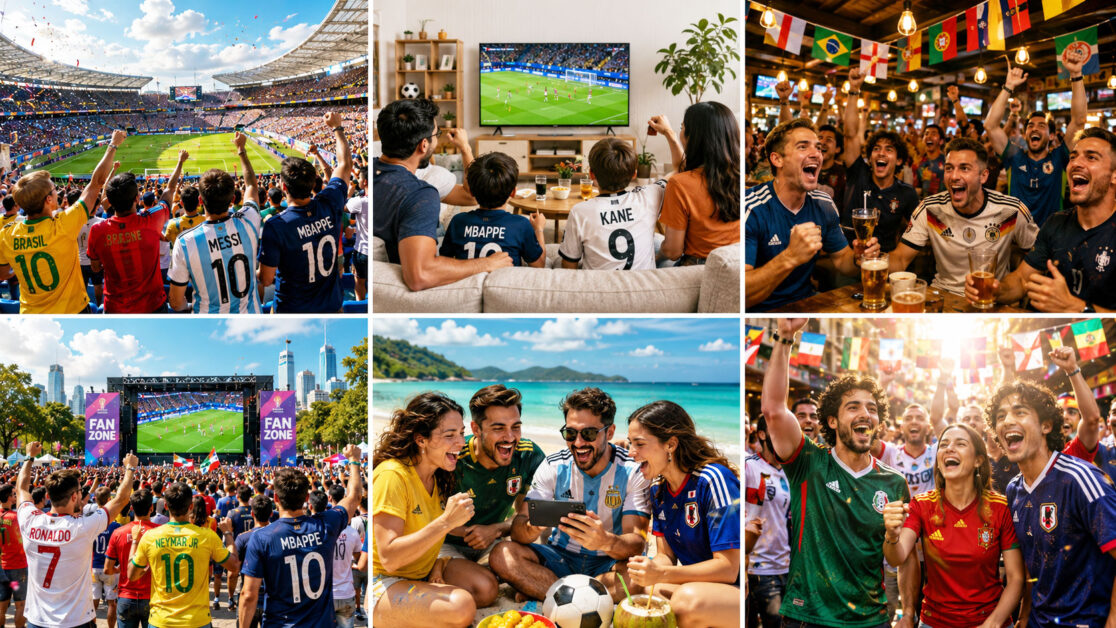
How fans watch is shifting too. Streaming now sits beside traditional television. Many follow matches on phones, away from home. Watch parties turn private viewing into a social event. Bars, fan zones, and living rooms fill at the same hour. A second screen runs alongside, as fans post and react in real time.
Football fan engagement compounds here. The match is the start, not the whole experience. Fans, then, are the most reliable economy of all. Their attention is what FIFA sells. Next, a market that proves how strange that attention can be. India.
The India Paradox: 300 Million Fans, No Team, No Easy Money
India shows football’s strangest economics. The passion is enormous. The money is not. India is one of football’s largest audiences and one of its hardest markets to monetise. Huge passion, weak commercial economics, a midnight kickoff problem.
Four forces explain the paradox:
- A team-less fanbase: An estimated 300 million football fans in India back Brazil, Argentina, France, or Portugal. India’s own team offers few heroic moments to celebrate. So fans adopt the global icons instead. Messi, Ronaldo, Neymar, and Mbappé fill the space a national hero would.
- The midnight problem: Key matches kick off around 12:30 am IST. The opener, both semi-finals, and the final all start past midnight. Late-night timing suppresses live ad value.
- The broadcaster gap: The World Cup India telecast stayed unsettled until the final days. Zee secured the rights only just before kickoff, after months of uncertainty. FIFA reportedly sought around $100 million, then cut its asking price sharply. Cricket owns the ad budget, so football struggled to find a buyer.
- The open emotional space: Football is loyalty without national pressure. A fan can love Argentina freely. Cricket is the opposite. There, national identity and expectation weigh on every match.
So India watches in huge numbers, but pays little. It is the clearest proof of the gap. Attention does not always become revenue.
What the World Cup Does to an Athlete’s Market Value
A strong World Cup can re-rate a player’s market value within weeks. It is the single largest valuation event in football. No other event compresses global scouting, sponsorship exposure, and audience attention into so short a window.
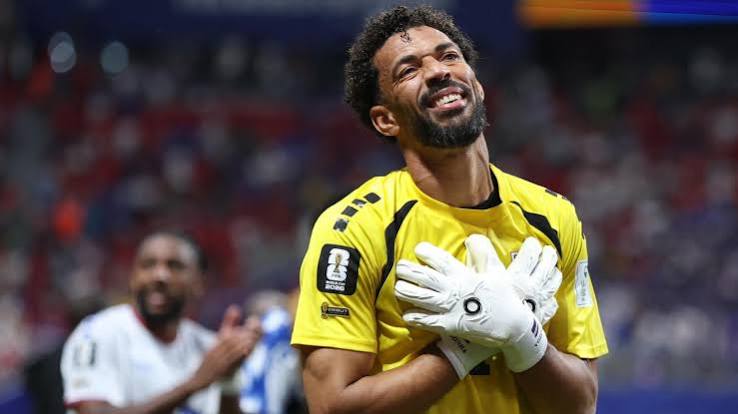
Vozinha showed how fast it happens. The 40-year-old Cape Verde goalkeeper was little known before 2026. Then he held Spain, the European champions, to a draw. One viral performance, and a career changed shape overnight.
From Salaries to Ownership: The Rise of the Athlete Brand Economy
The money has changed shape too. A generation ago, a footballer earned mostly from wages. Now the biggest names earn from themselves. They build brands, not just careers. This is the athlete brand economy. Endorsements, equity stakes, media ventures, and social reach now rival the salary.
At the 2026 World Cup, Cristiano Ronaldo ranks as the highest-paid player, with Messi close behind. Much of that comes from off the pitch. A World Cup stage is the launchpad. Global attention turns a strong tournament into years of earning power.
The pattern repeats every cycle:
- James Rodríguez, 2014: He won the Golden Boot with six goals. Weeks later, Real Madrid signed him for around €80 million. One tournament made him a marquee asset.
- Kylian Mbappé, 2018: A teenager scored in the World Cup final. He walked away a global superstar, his commercial value transformed.
- The mechanism: A breakout lifts player market value, transfer interest, and sponsor demand at the same time.
For most players, the World Cup is the biggest shop window in sport. A few weeks can rewrite a career, and a price tag.
The Future: 48 Teams, New Nations, and the Legacy Question
The 2026 World Cup is a turning point. The 48-team format changes the economics of qualification. More nations get a seat and more markets open. But the legacy question gets harder, not easier.
There is a reason 2026 is hosted by the United States, Canada, and Mexico together. Three nations share the cost, the risk, and the venues.
- The expansion math: A 48-team field adds matches, host cities, and new media markets to sell. More inventory means more revenue for FIFA.
- New nations in play: More qualifying slots open doors for Africa and Asia. The FIFA Forward programme redistributes some revenue, giving every member association up to $8 million a cycle.
- The infrastructure bet: Stadium infrastructure built for one month must earn its keep for decades. Sharing the 2026 event across borders spreads that risk, and leans on stadiums that already exist. It is a direct answer to Brazil’s white elephants.
- The legacy question: The real test is whether a host is left with a real FIFA World Cup legacy or just a bill
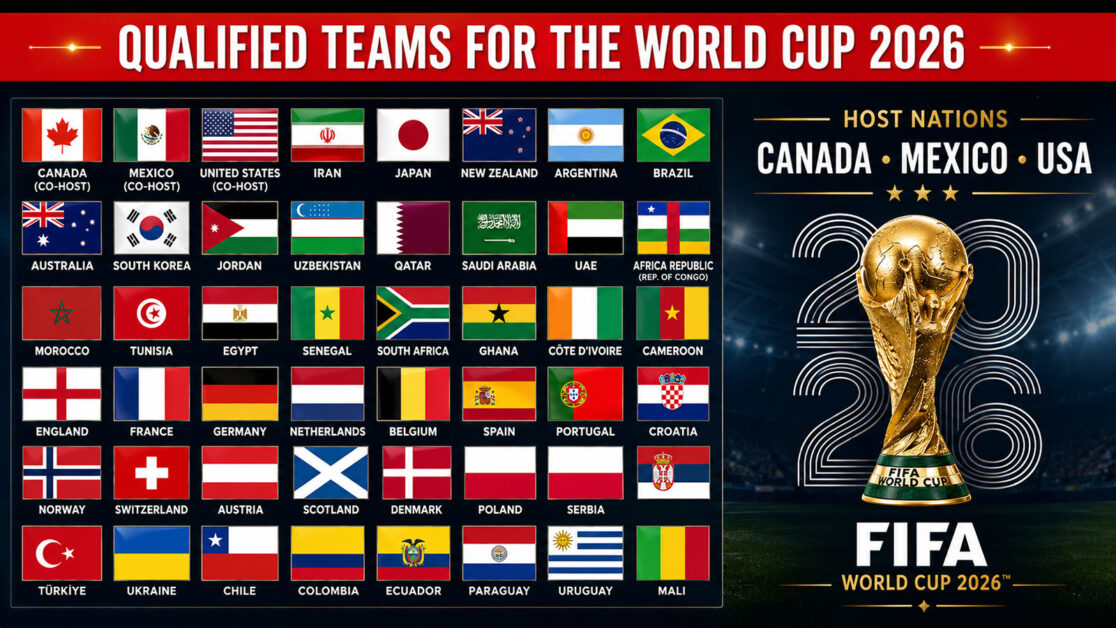
The future of football spreads wider than ever. More nations, more markets, more money. Whether it leaves more value behind is the question the next decade will answer.
The Real World Cup Economy: What Lasts and What Fades
The World Cup economy ends where it began, split in two. FIFA collected its money long before kickoff. Many host cities are still counting the cost. Six weeks of football, two very different ledgers.
The pattern holds across every part of the tournament. World Cup viewership, player market value, the athlete brand economy, all run on the same fuel. Attention. The lasting winners build systems around that attention. They turn one month into years of value. The rest get a spike, then a quiet stadium and a bill.
So watch the next cycle with a clear eye. See where the money settles, not just where the cameras point.
Frequently Asked Questions
FIFA has budgeted a record $13 billion in revenue for the 2023 to 2026 cycle, most of it tied to the World Cup. The bulk comes from broadcasting rights and sponsorship, much of it secured years before the tournament begins.
No host benefits as much as FIFA, which keeps most of the revenue. Among hosts, those using existing stadiums gain most, because they avoid heavy construction costs. The United States is well placed in 2026 for exactly this reason.
The 2030 World Cup will be hosted mainly by Spain, Portugal, and Morocco. To mark the tournament’s 100th anniversary, three opening matches will be played in Uruguay, Argentina, and Paraguay, where the first World Cup was held in 1930.


