
A press can complete its run on schedule and still miss the delivery deadline. Increasingly, the answer lies in digital print finishing, where workflow decisions shape production performance. Digital printing accounts for around 28.5% of global book-printing revenue in 2025 and is projected to exceed 37% by 2034, increasing pressure on finishing operations.
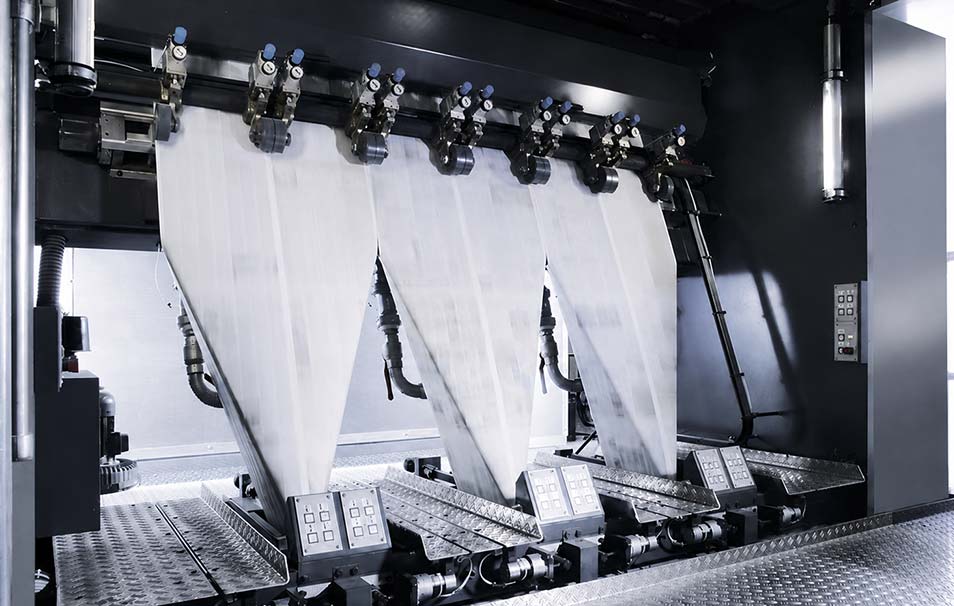
Print operations have spent decades improving press productivity, reflecting the long tradition of printing as a driver of technological and economic progress. As run lengths shorten and product variation increases, production constraints increasingly move beyond the press. Finishing is no longer simply the last stage of production. It increasingly determines whether printing capacity becomes delivered output.
As a digital media communication company, we work with founders, leadership teams and experts in print operations. We help leaders turn operational complexity into informed business decisions. That perspective reminds us that lasting infrastructure decisions depend on technology, workflow and business goals working together.
In this edition, we examine how digital print finishing shapes production performance through the choice between inline and offline finishing. Using five practical decision lenses, we explain which workflow architecture best supports different print operations and production environments.
Also Read:
- The Efficiency Economy: How Businesses Must Be Designed to Scale in 2026
- How Engineered Trust is Redefining Global OEM Partnerships
Finishing Is Where Print Efficiency Is Won or Lost
Press capacity is tracked every hour.1 Finishing capacity is often measured only when delays appear. Press capacity has dashboards, while finishing often has waiting pallets. That imbalance shapes the finishing workflow, where production schedules are ultimately won or lost. Reliable finishing also depends on disciplined Printing Press Maintenance that keeps upstream production stable.
Print efficiency is not determined by press speed alone. It depends on how quickly printed output moves through finishing without queues, excess handling or idle stock. When finishing capacity2 falls behind press output, the entire production schedule absorbs the delay.
The Press Sets the Speed, Finishing Sets the Schedule
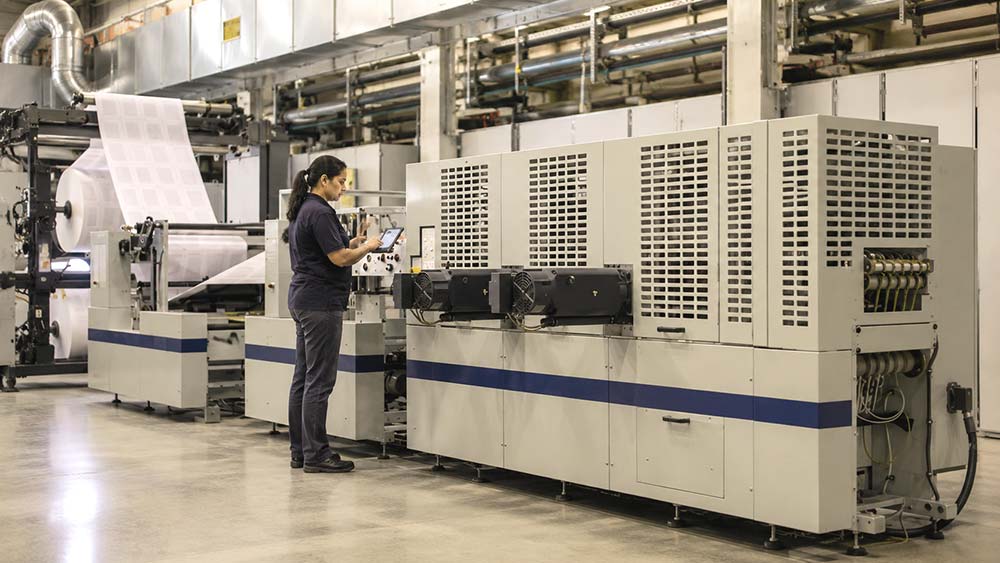
Press output is a rate, measured in sheets per hour. Finishing output is a queue, measured in jobs waiting. They describe different parts of the production workflow and should never be interpreted as the same measure of performance.
A fast press feeding a slow bindery does not produce a fast job. It produces a larger pile. The press runs ahead. The schedule does not move with it. Throughput is capped by the slowest stage, never the fastest. Adding press speed to a constrained finishing line3 simply grows the backlog faster.
Idle Stock Between Stages Is Unrecorded Cost
Work-in-progress between print and finishing carries hidden costs. It occupies valuable floor space every day and demands extra handling before work can continue. It also locks working capital into unfinished stock. Nothing ships. Nothing gets invoiced. Yet the business continues paying for it.
None of this appears on a machine report. The press logs its uptime. The finishing unit logs its uptime. The gap between them logs nothing. That gap is where margin quietly leaks. Many operations underestimate it because their reporting has no field for it.
In my experience, efficiency is rarely lost in one dramatic failure. It leaks between stages, where delays become routine and nobody questions whether the workflow itself is responsible. The same logic that extends asset life through press modernization applies equally to finishing architecture, where workflow improvements often deliver greater value than equipment replacement.
Inline Finishing Compresses the Production Timeline
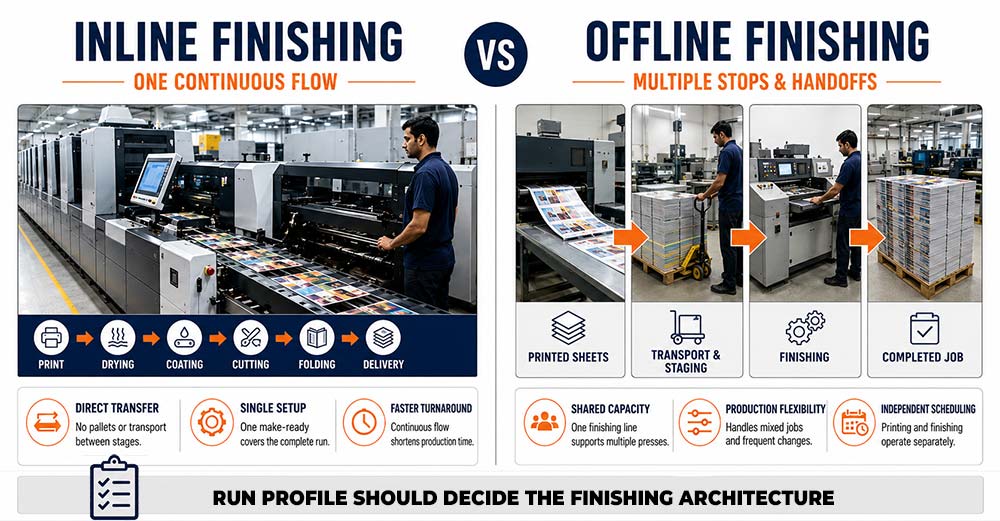
Inline finishing4 compresses the production timeline by removing the stages where a job usually waits. Finishing modules connect directly with the press, allowing printed output to move towards completion without separate staging, transport or requeue time.
From what I have seen across production workflows, delays rarely come from one dramatic failure. They accumulate in the handoffs between stages. Inline finishing removes several of those handoffs by creating one setup, one operator sequence and one continuous production flow. Peak production tests whether newspaper press performance stays aligned downstream.
One Pass Eliminates Handling and Waiting Between Stages
Most production time is not spent working on the job. It is lost while printed stock waits to be moved, staged, transported, requeued and processed again.
- Direct transfer: Printed stock moves straight into finishing, with no transport leg and no pallet.
- Single setup: One make-ready covers the run, removing the duplicate staging and re-feed cycle.
- Faster turnaround time: The job completes sooner without any increase in press speed or shift hours.
Fewer Operators Are Needed per Completed Job
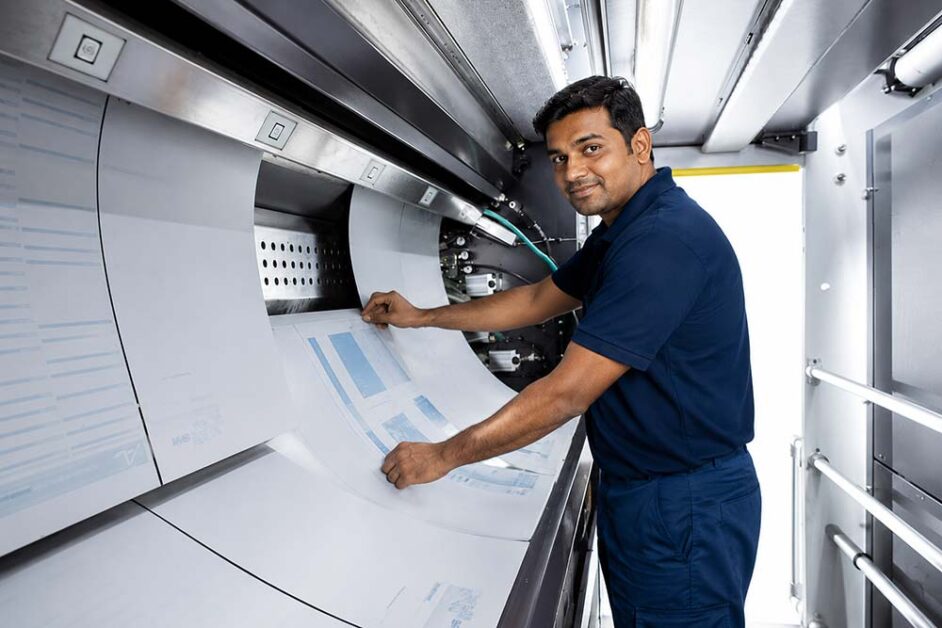
The labour gain is not a headcount cut. It comes from redeploying people away from repetitive handling tasks and towards work that requires judgement, oversight and productive intervention.
- One operator sequence: A single sequence covers both print and finish on the same line.
- Higher-value redeployment: Staff move to work that needs judgement rather than lifting, stacking and feeding.
- Workflow automation: Repeat steps that were manual are absorbed into the line, not supervised individually.
Inline finishing delivers its greatest value where volume and repeatability outweigh variation. Fewer touchpoints improve labour efficiency, reduce handling between stages and support faster turnaround. Frequent changeovers, however, interrupt the entire production flow, making inline most effective where run profiles remain stable.
Offline Finishing Buys Flexibility at the Cost of Speed
Offline finishing separates the finishing stage from the press. Printed output moves to standalone print finishing equipment, where finishing follows its own schedule. That separation adds handling time but removes operational dependency, allowing printing and finishing to continue independently when production conditions change.
Does Offline Finishing Still Belong in a Modern Print Operation?
Yes. Offline finishing remains valuable where job variety, frequent specification changes and mixed production schedules outweigh the need for continuous flow. Separating printing from finishing improves operational resilience, protects production continuity and provides greater flexibility across diverse print applications.
On an inline line, print and finish share a single point of failure. A press fault halts finishing with it. Offline keeps the second stage working while the first is repaired. That operational resilience rarely appears in speed comparisons, yet often determines delivery performance.
Independent Scheduling Absorbs Variation the Press Cannot
A press runs one job at a time. A finishing line, scheduled separately, can support multiple presses and absorb production variation that the press alone cannot manage.
Think of a warehouse dispatch operation. Trucks keep arriving with finished goods, but loading bays work at a different pace. An additional loading area absorbs the incoming flow, allowing unloading to continue while dispatch catches up. Offline finishing serves a similar purpose by separating printing from finishing without stopping production.
- Shared capacity: One finishing line serves multiple presses, improving utilisation without additional capital investment.
- Batch processing: Jobs are grouped by finish type rather than print order, reducing repeated setup and changeover.
- Production flexibility: Short runs, special finishes and late specification changes remain commercially practical across a varied job mix.
Offline finishing trades speed for flexibility. Where production schedules change frequently, that flexibility often delivers greater operational value than the continuous flow advantage of an inline production line.
Run Length and Job Mix Decide Which Model Fits
Run length and job mix determine which finishing model delivers the greatest operational value. No equipment specification overrides them. Turnaround time, labour efficiency, production flexibility and changeover requirements all follow from how long production runs are and how much they vary.
Long, Repeatable Runs Favour Inline; Mixed, Short Runs Favour Offline
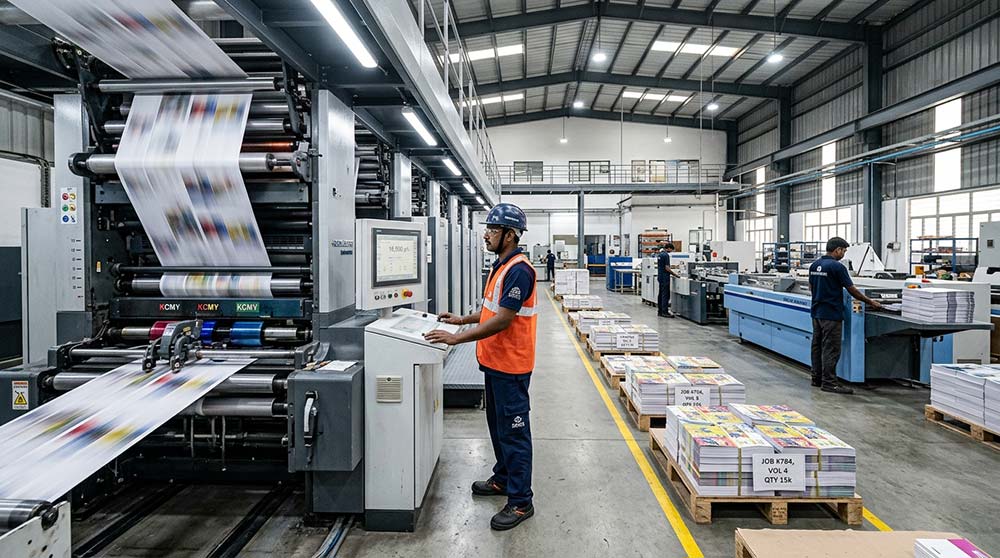
Long, repeatable newspaper and commercial print runs often favour inline finishing, where continuous workflow supports higher throughput, fewer handling stages and faster turnaround. Mixed commercial jobs and many book printing environments generally benefit from offline finishing, where production flexibility accommodates changing formats, varied specifications and shorter runs without disrupting press output. Every finishing decision sits downstream of the same economics that govern web offset expansion.
This workflow-first approach is reflected in digital print finishing solutions such as FoldLine and FormerLine from manroland Goss. These solutions support different production environments across newspaper, commercial and book printing by aligning finishing architecture with run profiles and application requirements rather than relying on a single production model.
What Changeover Frequency Makes Inline Finishing Uneconomical?
There is no universal number. The threshold is reached when setup time consumes more productive capacity than continuous workflow returns. Frequent changeovers reduce labour efficiency, interrupt production flow and erode the throughput gains that make inline finishing commercially attractive.
The right print finishing solutions follow the job mix, not the other way around. Operations that match finishing architecture to production requirements consistently deliver stronger workflow efficiency and long-term operational performance.
Print Finishing Architecture Readiness Checklist
Before choosing between inline and offline finishing, every print operation should understand how work actually moves through the plant. Workflow decisions succeed when they are based on production data rather than assumptions. Most mismatches begin long before equipment is purchased.
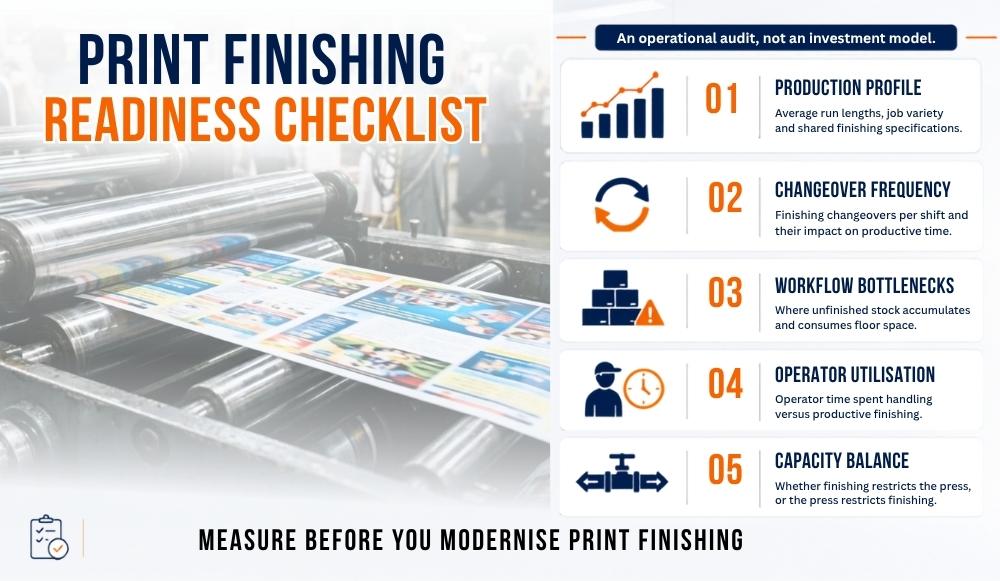
This checklist is not an investment model. It is an operational audit. The answers already exist on the production floor. The objective is to measure how the current print finishing workflow supports throughput, labour efficiency and production flexibility.
Questions Every Print Operation Should Answer
- Run Profile: Review average run lengths, job variety and shared finishing specifications.
- Changeover Load: Measure finishing changeovers per shift and their impact on productive time.
- Workflow Bottlenecks: Identify where unfinished stock accumulates and consumes valuable floor space.
- Labour Utilisation: Track how much operator time goes into handling rather than productive finishing.
- Capacity Constraint: Determine whether finishing restricts press output or the press limits finishing capacity.
Many modern digital print finishing platforms follow this workflow-first approach. Solutions such as FoldLine and FormerLine from manroland Goss support different run profiles, production environments and application needs across newspaper, commercial and book printing.
The checklist does not choose the model. It reveals which model the operation is already running by default. That answer is often more valuable than any specification sheet because it reflects how the plant actually performs. Where ageing infrastructure limits flexibility, compare press refurbishment with replacement before investing further.
FAQs: Digital Print Finishing
Digital print finishing benefits jobs requiring faster turnaround, fewer manual handoffs and efficient short-to-medium production cycles. The right configuration depends on run length, finish complexity, job frequency and the production flexibility required.
Yes. A hybrid finishing architecture can use inline finishing for predictable, repeatable jobs while retaining offline capacity for variable formats, special finishes or changing specifications. The right balance depends on the operation’s actual job mix.
Printers should track turnaround time, changeovers per shift, work-in-progress accumulation, handling hours, waste and finishing capacity. These measures reveal whether the finishing workflow supports press output or creates a hidden production bottleneck.
Also Read:
- Employee Burnout in India: The Silent Crisis Inside Modern Work
- 3D Photo Crystal: A Global Craft and Complete Buyer’s Guide for 2026
Conclusion
The choice between inline and offline finishing is not about selecting better technology. It is about selecting the workflow architecture that best matches run profile, job mix and production objectives. When that alignment is right, digital print finishing improves throughput, labour efficiency and production flexibility without unnecessary operational compromise.
The strongest print operations evaluate workflow before equipment. Finishing decisions should follow production requirements, not the other way around. That is how existing infrastructure delivers greater operational value over time.
At TrendVisionz, our Print Operations & Infrastructure Intelligence cluster within Worth examines how workflow, technology and infrastructure decisions shape business performance across the print industry. Follow the series for grounded analysis of workflow, infrastructure and capital decisions shaping the future of modern print operations.
Also Read:
- Kataka, M. B., Byiringiro, J. B., & Muchiri, P. N. (2018). Optimization of printing press operations. IOSR Journal of Mechanical and Civil Engineering, 15(2, Version III), 53–63. ↩︎
- Johan Eklund, Bertil Österberg, Lars Eriksson, Lars Eidenvall, “Finishing of Digital Prints – A Failure Mapping” in Proc. IS&T Int’l Conf. on Digital Printing Technologies (NIP18), 2002, pp 712 – 715 ↩︎
- Vaishya, A., & Dave, R. (2016). Identifying the bottlenecks & increasing the production of finishing area in a steel manufacturing process industry – a case study. International Journal of Engineering Sciences & Research Technology, 5(1), 1–7. ↩︎
- SCREEN Europe. (2026). What is inline finishing in production printing? https://www.screeneurope.com/knowledge/what-is-inline-finishing-in-production-printing/ ↩︎
Stay Connected with Me
Anshuman Mahajan is a Digital Marketing Strategist, SEO Specialist, and Co-Founder of TrendVisionz. With expertise in ROI-focused growth strategies, brand development, and media solutions, he helps businesses navigate the fast-changing digital landscape with clarity and confidence.
- Explore my work: TrendVisionz | Nuteq Entertainment
- Read our newsletters: BizTech Chronicle
- Guest writer: BizCatalyst360 | Industry Blogs
- Courses & Certification: B.Com (Hons), University of Delhi | Digital Marketing (Shaheed Sukhdev College of Business Studies) | SEO Internship, ClickSlice (London)
- Join the community: LinkedIn Group – Digital Marketing & Content Creation World
- Connect with me: LinkedIn | BizTech Chronicle | #GrowWithAnshuman
- Share your review: Leave your feedback on Google — it helps us grow.
- Subscribe: Be part of our 1.95 Lakh+ YouTube family
Believe. Transform. Succeed. Let’s grow together.


