

It often begins with a pause, not panic. A quiet moment after seeing two lines on a test. The question at this moment is not ideological but practical: What do I do now? For many people, this is their first search for reliable information on abortion care. It is often searched under stress, with little understanding of how safe abortion methods actually work
For Anjali, a 26-year-old professional in Delhi, that pause came despite consistent contraception use. This experience is not rare. Nearly 73 million abortions occur globally each year, making abortion one of the most common medical decisions worldwide.

I am a women’s health content specialist at TrendVisionz. Over the last 25 years, my work has involved close collaboration with healthcare providers across clinical communication and public awareness initiatives. This experience shapes how complex health topics are explained clearly, responsibly, and without judgement.
At TrendVisionz, we explain reproductive health using evidence. This research-based content is written for anyone seeking clarity, not opinion. We believe awareness begins with accurate information. Medical science, clinical experience, and legal clarity help people understand their options.
Also Read:
- In Vitro Fertilization Treatment: A Complete IVF Guide for Couples
- Kegel Exercises for Men & Women: Pelvic Health Guide
What Is Abortion Care?
1Abortion care is a healthcare intervention focused on the safe management of pregnancy termination. In plain language, it refers to professional medical support provided to end a pregnancy through medication or a simple medical procedure. This care is delivered under clinical guidance to ensure safety, monitoring, and appropriate follow-up.
Abortion vs. Miscarriage
Although commonly used as the same term, abortion and miscarriage represent different medical realities. Understanding the distinction helps ensure the correct clinical approach, appropriate follow-up, and clarity in both medical and legal contexts.
Difference in Medical Terms:
A miscarriage is medically classified as a spontaneous abortion. It refers to the natural and unintentional loss of a pregnancy, usually before the 20th week. In contrast, the term abortion in medical use typically refers to an induced abortion, which is a deliberate medical decision to terminate a pregnancy using approved methods.

Why the Distinction Matters:
Clinically, this distinction is important for determining the correct pathway of care. While physical symptoms such as cramping or bleeding may overlap, miscarriage management supports a natural process. Induced abortion involves a planned medical intervention. Accurate terminology ensures patients receive care aligned with their medical needs and legal context.
Where Abortion Care Fits in Reproductive Healthcare
Abortion is not an isolated event but a core component of reproductive health and rights.
- A Fundamental Healthcare Service: Global health authorities, including the World Health Organization, recognise comprehensive abortion care as an essential health service. It functions as a medical safety net when contraception fails or health circumstances change.
- Delivered Under Medical Supervision: To ensure safety, abortion care must be doctor-guided. Clinical oversight, whether through in-person care or telemedicine abortion, is necessary to confirm gestational stage, rule out ectopic risks, select the appropriate method, and provide follow-up support.
When delivered under medical supervision, abortion care is a structured healthcare service. Clear information helps individuals understand their options and approach decisions with safety, confidence, and clarity.
Why Do People Seek Abortion Care?
The decision to seek abortion care is rarely driven by a single reason. It is often shaped by a combination of medical factors, contraceptive failure, and changing personal circumstances. Understanding these situations without judgment is essential to comprehensive abortion care.
Contraceptive Failure
Even with correct and consistent use, no contraceptive method is completely effective. Contraceptive failure remains one of the most common clinical reasons people seek abortion care.
- Missed pills or inconsistency: Minor lapses, such as a missed oral contraceptive dose or incorrect use of a barrier method, can result in unintended pregnancy.
- Device failure: Although uncommon, long-acting methods like IUDs or implants can shift or fail, sometimes without obvious symptoms.
- Delayed awareness: Because pregnancy occurs despite precautions, many individuals recognise it later in the first trimester, making timely, doctor-guided abortion care important.
Medical or Health-Related Reasons
In some cases, abortion is a necessary medical intervention to protect health or respond to serious fetal conditions.
- Maternal health risks: Pregnancy may worsen conditions such as severe heart disease, kidney failure, or cancer, where continuation poses significant risk.
- Fetal anomalies: Screening may identify serious genetic or structural conditions that are incompatible with life or associated with severe suffering, leading to a clinical decision.
Personal and Family Planning Situations
Abortion care also plays a role in family planning and life stability.
- Life circumstances: Financial strain, lack of support, or unsafe relationships can influence decisions.
- Timing considerations: Education, career goals, or existing caregiving responsibilities may affect readiness for pregnancy.
These reasons reflect real-life complexity. Abortion care exists to address medical needs and personal realities through safe, confidential, and doctor-guided pathways.
Types of Abortion Care Used in Medical Practice
Medical professionals use different types of abortion care2 based on gestational age, medical assessment, and individual health factors. Selecting the appropriate method helps ensure safety, effectiveness, and proper follow-up under clinical supervision.
Medical Abortion Care
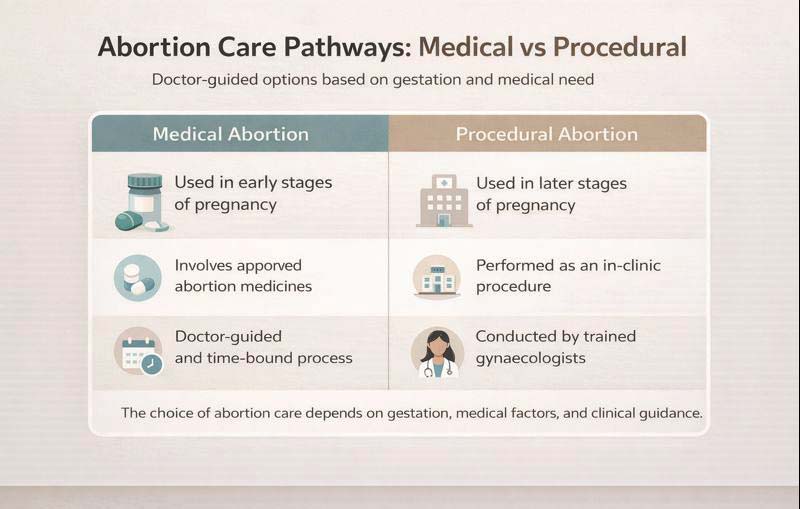
Medical abortion care uses approved medicines to end an early pregnancy. It is widely used because it is safe, effective, and allows care to be managed under medical guidance.
- Uses Approved Medicines: This method involves two medicines, mifepristone and misoprostol. Together, they stop the pregnancy from progressing and help the uterus expel the pregnancy tissue.
- Used in Early Pregnancy: In current medical practice, medical abortion care is commonly used up to 9 weeks (63 days) of pregnancy. In some clinical settings, it may be used later under strict medical guidance.
- Doctor-Guided and Time-Bound: Although it can often be completed at home, this method requires doctor guidance. Medical supervision helps manage expected symptoms such as cramping and bleeding and ensures timely follow-up.
Procedural Abortion Care
Procedural abortion care is a doctor-performed medical procedure used at later stages of pregnancy or when medical abortion care is not appropriate. It follows strict clinical safety standards.
- Performed by Trained Medical Professionals: These procedures are carried out by qualified gynecologists using approved techniques. Methods such as Manual Vacuum Aspiration (MVA) or Electric Vacuum Aspiration (EVA) are commonly used in early stages.
- Used at Later Gestational Stages: As pregnancy advances, procedural methods become more appropriate. For later stages, doctors may use Dilation and Evacuation (D&E), which allows controlled and predictable care.
How Doctors Decide the Type of Abortion Care
The choice of abortion care is not arbitrary. Doctors assess gestational age, health conditions, and clinical safety factors to recommend the most suitable and safest method for each individual.
- Gestational Age: The primary factor in choosing between medical and procedural care.
- Medical History: Conditions such as severe anemia, bleeding disorders, or ectopic pregnancy are carefully reviewed.
- Safety Assessment: Doctors assess overall health, access to emergency care, and ability to follow treatment and follow-up instructions.
Choosing the right abortion care depends on medical assessment, not guesswork. Doctor-guided decisions ensure safety, appropriate follow-up, and care that aligns with individual health needs and pregnancy stage.
Is Abortion Care Safe? What Medical Science Shows
Fear around safety is one of the most common concerns when someone considers abortion care. Medical science addresses this clearly. When abortion care is doctor-guided and accessed within recommended 3timelines, it is recognised as a safe and routine healthcare intervention.
Overall Safety of Abortion Care
From a medical standpoint, the safety of abortion is well established. Large clinical studies and global health guidelines show that abortion care has a very low risk of serious complications when provided under medical supervision.
- High Safety When Doctor-Guided: Large clinical studies and global health guidelines show doctor-guided abortion care ensures that the patient’s medical history is screened for contraindications and that the correct dosage or procedure is used. It minimizes the risk of infection or incomplete termination.
- Lower Risk When Accessed Early: Clinical data shows that the safety of abortion is highest in the first trimester. Accessing care earlier reduces the likelihood of complications and often allows for non-invasive medical abortion safety protocols.
Common Experiences vs Medical Concerns
During abortion care, the body responds in predictable ways as the pregnancy ends. Most symptoms are expected and temporary. Understanding the difference between normal physical responses and medical concerns helps reduce fear and supports timely care.
- Cramping and bleeding: Similar to a heavy period and usually strongest in the first 24 hours.
- Fatigue and weakness: Temporary tiredness as the body adjusts and recovers.
- Nausea or mild fever: Short-term effects that often settle on their own.
Symptoms That Need Medical Attention
- Unusually heavy bleeding that requires changing two or more pads per hour for multiple hours in a row.
- Persistent high fever: Fever lasting more than 24 hours.
- Severe pain: Intense abdominal pain that does not improve with medication.
- Signs of infection: Foul-smelling discharge or worsening symptoms over time.
Doctor-guided abortion care includes clear instructions on what to expect and when to seek help. Most people recover without complications, but medical guidance ensures that warning signs are not missed.

How Doctors Confirm Abortion Care Is Complete
Doctors confirm completion through a combination of clinical signs and follow-up. Reduced bleeding, symptom resolution, and patient recovery are key indicators. Follow-up visits, ultrasound, or pregnancy tests may be used to ensure the abortion is complete and recovery is progressing safely.
Clear follow-up is a core part of safe abortion care. Medical review confirms completion, addresses concerns early, and supports physical recovery, ensuring abortion care remains safe, complete, and medically supervised.
Telemedicine Abortion and Digital Healthcare
Telemedicine has expanded access to abortion care by allowing early medical consultation, assessment, and follow-up through digital platforms. In appropriate cases, it offers a safe, regulated way to receive care without requiring repeated clinic visits.
When Telemedicine Abortion Is Used
Telemedicine abortion is typically used in early pregnancy, after a doctor confirms gestational age and medical suitability. It is recommended for individuals with a stable health profile and no conditions that would require in-person evaluation.
Through digital consultation, doctors review medical history, assess symptoms, and determine whether medical abortion care can be safely managed remotely. This model is especially helpful when access to clinics is limited due to distance, work constraints, or caregiving responsibilities. Telemedicine does not replace clinical judgement. It extends it, using technology to support timely and appropriate care.

Safety and Follow-Up in Telemedicine Care
Safety remains central to telemedicine abortion. Remote consultations follow structured clinical protocols. Doctors provide clear instructions, explain expected symptoms, and outline warning signs that require medical attention.
Follow-up is a required part of care. Digital check-ins, symptom reviews, and follow-up tests help confirm completion. If concerns arise, patients are advised to seek in-person care immediately. Telemedicine care includes defined escalation pathways, ensuring that emergency or in-clinic support is available when needed.
Privacy Benefits of Digital Care
One of the strongest advantages of telemedicine is patient confidentiality in healthcare. Digital platforms allow consultations to take place in private settings, reducing exposure to stigma or unwanted disclosure.
Telemedicine also reduces logistical barriers such as travel, time off work, and childcare arrangements. By combining privacy with medical oversight, digital abortion care offers a structured, confidential option for eligible individuals.
When used appropriately, telemedicine abortion expands access without compromising safety. Digital care, supported by clear follow-up and escalation, allows abortion care to remain private, timely, and medically guided.
Abortion Care in India Under the MTP Act
In India, abortion care is regulated through a medical and legal framework4 that prioritises patient safety, informed consent, and structured access. Over the years, working closely with legal experts has shaped how reproductive health laws are interpreted and explained.

Abortion in India is legally permitted up to 20 weeks in most cases, extendable to 24 weeks for specific categories. Later termination allowed only for serious fetal conditions. The focus is on healthcare delivery, guided by clinical standards and legal safeguards, rather than moral judgement or informal decision-making.
This legal framework reflects a public health approach to abortion care in India. Decisions are centred with clear accountability placed on trained healthcare providers. The intent is to ensure safe, timely, and regulated access within the healthcare system, rather than pushing women toward unsafe or unregulated pathways.
What Is the Medical Termination of Pregnancy (MTP) Act?
The Medical Termination of Pregnancy (MTP) Act is the primary law that governs abortion care in India. It decriminalises abortion under defined medical conditions and formally recognises it as a healthcare service.
Under the MTP act, abortion can be provided only by a Registered Medical Practitioner (RMP) and must take place at approved healthcare facilities. The law sets gestational limits based on clinical safety and the complexity of care required at different stages of pregnancy.
Amendments in 2021 and subsequent judicial interpretation in 2022 clarified that the Act applies equally to married and unmarried women, removing earlier marital distinctions.

Who Can Access Abortion Care Under Indian Law?
Access to abortion care in India depends on legal age, informed consent, and medical criteria outlined under the MTP Act, ensuring regulated and safe care.
- Adult women: Any woman aged 18 or above can access abortion care based on her own informed consent. Consent from a husband, partner, or family member is not legally required.
- Unmarried women: Following a 2022 Supreme Court ruling, unmarried women have the same legal access to abortion care as married women, including in cases of contraceptive failure.
- Minors: Individuals below 18 years can access care with guardian consent. Doctors follow additional clinical protocols to safeguard the minor’s health and privacy.
Clinical and Legal Reform in India — Perspective from Dr. Nikhil Datar
Reform of the MTP Act has been shaped by sustained clinical and legal advocacy. Insights shared here reflect long-term interaction with practising gynaecologists, where clinical decision-making balances medical safety, legal limits, and patient circumstances.
Dr. Nikhil Datar, a senior gynecologist and legal expert, played a key role in advancing a rights-based approach to abortion care in India.
He is a lead petitioner in cases that extended the legal limit from 20 to 24 weeks, citing medical advances and the needs of vulnerable patients. His work emphasised shifting the law from provider discretion to patient-centred decision-making.
Dr Datar continues to highlight challenges such as limited rural access and procedural delays for cases beyond 24 weeks.
“India has moved from treating abortion as a conditional medical privilege to recognising it as healthcare within a regulated safety framework.” — Dr. Nikhil Datar
Gestational Limits Under the MTP Act
The MTP Act sets clear gestational limits for abortion care to ensure safety, medical oversight, and appropriate decision-making at different stages of pregnancy.
- Up to 20 weeks: Termination based on the opinion of one doctor.
- 20 to 24 weeks: Termination for specified categories, including sexual assault survivors and minors, based on the opinion of two doctors.
- Beyond 24 weeks: Termination only in cases of substantial fetal abnormalities, as confirmed by a state-level Medical Board.
Understanding the MTP Act empowers individuals to access abortion care safely. Legal clarity, medical guidance, and timely action ensure care remains regulated, confidential, and patient-centred.
What Happens After Abortion Care
After abortion care, most people want to know what recovery looks like and what comes next. Post-care guidance focuses on physical healing, emotional wellbeing, and planning future contraception under medical supervision.
Recovery and Follow-Up
Physical recovery usually begins quickly. Mild cramping, light to moderate bleeding, and tiredness are common in the first few days. These symptoms gradually reduce on their own. Most people can return to daily activities within a short period, based on how they feel.
Doctors advise follow-up to confirm that abortion care is complete and recovery is progressing normally. Medical advice is taken if bleeding is very heavy, fever persists, pain worsens, or symptoms do not improve. Follow-up ensures safety and helps address concerns early.

Emotional Wellbeing and Support
Emotional responses after abortion care vary. Some people feel relief, while others may experience sadness, anxiety, or mixed emotions. All of these responses are normal and do not indicate a problem.
Doctors may discuss emotional wellbeing as part of care. Counselling or support services are available for those who feel they need additional support. Seeking help is a routine part of healthcare, not a sign of weakness.
Future Contraception Planning
Discuss future contraception during follow-up. Doctors help individuals choose a method that fits their health needs and lifestyle. Planning ahead helps reduce the risk of unintended pregnancy and supports long-term reproductive health.
Post-abortion care does not end with the procedure. Recovery, emotional support, and contraception planning together ensure long-term health, confidence, and continuity of reproductive care.
Also Read:
- AI & Robotics: How Early Integration Is Shaping Modern Healthcare
- Cervical Cancer Prevention in India: Screening and HPV Vaccination
FAQs: Abortion Care
Is abortion legal for unmarried women in India?
Yes. Indian law allows unmarried women to access abortion care under the MTP Act. A 2022 Supreme Court ruling confirmed that marital status cannot limit access to safe, legal abortion services.
How is patient privacy protected during abortion care?
Patient privacy is protected through medical confidentiality laws. Doctors are legally required to keep all records confidential, and telemedicine platforms use secure consultations to prevent unauthorised disclosure.
What should I do if my contraception fails?
If contraception fails, consult a doctor as early as possible. Early medical advice helps confirm pregnancy, discuss safe options, and ensure timely, doctor-guided abortion care if needed.
Conclusion
Abortion care is a structured medical process with guidance from clinical protocols, legal safeguards, and professional oversight. When accessed in a timely manner, it allows doctors to recommend the safest option based on gestational stage and individual health needs.
For first-time readers, uncertainty is common, but accurate information helps replace fear with clarity. Modern healthcare systems recognise abortion as part of routine reproductive care, supported by follow-up, privacy protections, and counselling where needed. Knowing what to expect before, during, and after care empowers individuals to make informed decisions without confusion or stigma. Access to doctor-guided services ensures safety, proper recovery, and continuity of care, regardless of personal circumstances.
With the right medical support, abortion care remains predictable, safe, and focused on patient wellbeing.
Explore TrendVisionz for research-led health guides that simplify complex medical topics, combining clinical insight, legal clarity, and practical information for informed decision-making.
✍️ A Note from the Editor : This article uses insights gained from ongoing work with practising gynaecologists and legal experts to ensure medical accuracy, patient safety, and legal clarity.
Additional Resources:
- Kumwong S, Sunder M, Akinbinu R. Abortion. [Updated 2025 Apr 12]. In: StatPearls [Internet]. Treasure Island (FL): StatPearls Publishing; 2025 Jan ↩︎
- The Lancet, Volume 390, Issue 10110, 2372 – 2381. Global, regional, and subregional classification of abortions by safety, 2010–14: estimates from a Bayesian hierarchical model Ganatra, Bela et al. ↩︎
- World Health Organization. (2022). Abortion care guideline. World Health Organization. ↩︎
- Ministry of Health and Family Welfare. (2023). Comprehensive abortion care: Training and service delivery guidelines. National Health Mission, Government of India. ↩︎
Stay Connected with Me:
Anuj Mahajan is a marketing and communication professional with over 30 years of experience. A senior business and media operator, he uses storytelling to bring clarity, strengthen communication, and reinforce leadership discipline to drive growth. He is an ICF-ACC Certified Coach and an experienced corporate trainer. Drawing from deep operating experience, he helps leaders and organizations translate strategy into consistent business outcomes.
- Explore my work: Nuteq Entertainment | TrendVisionz | Author Profile
- Read our newsletters: Transforming Lives | BizTech Chronicle | Nuteq Newsline
- Guest writer: BizCatalyst360 | Praja Today
- Books: Go Mindfulness: Practices for Professionals Coached
- Join the community: LinkedIn Group – Digital Marketing & Content Creation World
- Connect with me: LinkedIn | Twitter | #StoryforBusiness
- Share your review: Leave your review on Google — your feedback helps us grow.
- Listen on Spotify: Leadership Podcast | Guided NLP (7 Episodes) | Daily Motivation – 21 Episodes
Believe. Practice. Perform. Let’s create impact together.
✍️ A Note from the Editor
Independent storytelling thrives with you. Contribute $15/month via PayPal or email us at anujmahajan@trendvisionz.com. [Guest write for us — Free or Paid.]


1 comment
[…] When provided under medical guidance, safe abortion protects health, fertility, and wellbeing. It replaces unsafe practices with science backed abortion care. […]
Comments are closed.