

We were promised flying cars. Instead, 2026 is giving us astro-tourism and biometric, invisible borders. The biggest shift in travel trends 2026 is not where we are going. It is how we move, how we prepare, and how much of the journey now happens before we even leave home.
Travel in 2026 is no longer destination-first. It is shaped by decisions, systems, and readiness. Global tourism1 volumes continue to rise toward and beyond pre-pandemic levels. AI-driven planning tools, stricter entry rules, an aging traveller base, and climate pressure are making travel more deliberate. Spontaneity is giving way to informed movement, where confidence matters as much as curiosity.

Having spent over three decades working across media, storytelling, and consumer behaviour, I have seen how global shifts quietly change everyday choices. I see the same pattern emerging in travel today. Nearly 80 percent of travelers plan to travel the same or more than the previous year, with a growing share willing to increase spending on experiences rather than volume-based trips. As a media professional and frequent traveller, this signals a clear move toward more deliberate, value-driven journeys.
This article breaks down how people will plan, move, stay, and experience travel in 2026, and why understanding these shifts matters far more than simply chasing the next destination.
Also Read:
- Women Travellers in India: How Empowering Journeys Are Transforming Tourism
- Satvik Travel in India: Where Spiritual Tourism Meets Sustainability
Travel Is Shifting From Destinations to Decisions
There is a paradigm shift in how Travel behavior reflects. Asking “where should I go” toward more practical questions about movement, preparation, and experience. Travel trends 2026 show that decisions now begin long before bookings are made, shaped by systems, rules, and personal readiness rather than inspiration alone.
From Checklist Tourism to Decision-Led Travel
For years, travel followed a checklist mindset. Visit the landmark. Take the photo. Move on. In 2026, this approach feels incomplete. Travelers are now evaluating trips based on how smoothly they can move through the entire journey.

Decision-led travel focuses on:
- Entry rules and authorisations: Understanding visas, ETAs, and documentation before booking
- Airport procedures: Boarding processes, screening rules, and mobility considerations
- Crowd pressure: Choosing timings and routes that reduce congestion and stress
- Physical comfort: Planning journeys that match energy levels and health needs
Recent travel surveys show that over one-third of travelers now plan trips months earlier than before, driven by entry rules, event dates, and pricing volatility. Destinations still matter, but the decision framework now comes first.
Personalized Travel Experiences Are the New Baseline
Personalized travel experiences are no longer premium features. They are expected. Travelers want journeys that adapt to their pace, preferences, and stage of life.
Booking behaviour in 2026 shows that personalisation is no longer a premium feature. A majority of travellers now factor personalised recommendations, flexible itineraries, and adaptive pricing into their booking decisions2. The expectation is for travel plans to fit their routines, preferences, and life stage rather than forcing one-size-fits-all packages.
This shift is driven by:
- AI-supported planning: Tools that tailor routes, stays, and timing
- Flexible bookings: Options that allow changes without heavy penalties
- Customised itineraries: Experiences built around interests rather than attractions
- Better pre-trip information: Clear expectations before departure
Travel that fits into a person’s life now performs better than travel that demands adjustment from the traveler.

Why does preparation now matter more than spontaneity
Preparation builds confidence. With stricter entry rules, digital checks, and changing airport procedures, travelers who prepare well feel more in control.
In 2026:
- Prepared travelers move faster: Fewer delays and less confusion during transit
- Informed decisions reduce friction: Clarity lowers stress at airports and borders
- Spontaneity works better on readiness: Flexibility comes after preparation, not before
Having travelled across regions for work and also with family, I have seen this shift play out consistently. Business travel highlights system friction and time pressure. Family travel exposes comfort gaps and uncertainty. In both cases, the destination matters less than how smoothly people can move through the journey.
The best trips in 2026 are not defined by how much you do, but by how smoothly you move. When preparation reduces friction, travel becomes calmer, more confident, and far more enjoyable in real life.
The 10 Travel Trends Defining 2026
These ten travel trends explain how travel is evolving in 2026, shaped by changing traveler behavior, technology, sustainability pressures, and a growing focus on experience over excess. Each trend reflects not just a preference, but a deeper shift in how people choose to move, pause, and engage with the world.
Across global travel outlooks for 2026, demand is increasingly shifting from volume-driven trips to experience-led 3journeys. Research and industry signals point to rising interest in wellness travel, event-anchored planning, climate-driven destination shifts, slower forms of movement, and longer stays.
These behaviours are especially visible among Gen Z, Millennials, and older travellers planning fewer but more intentional journeys.
Glowmads (Beauty-Led Travel)
Beauty-led travel refers to journeys planned around wellness, skincare, and self-care rituals rooted in local culture. Instead of treating wellness as an add-on, travelers choose destinations that offer meaningful practices tied to health, balance, and personal care.

Beauty-led travel in 2026 is strongly visible in destinations like Seoul, where skincare, dermatology, and wellness experiences increasingly influence booking intent rather than acting as secondary activities. Wellness-focused resorts in Asia and the Middle East are also seeing travelers plan trips specifically around restorative beauty and self-care experiences.
The Pawprint Economy
The pawprint economy reflects travel designed to include pets as active participants rather than afterthoughts. Accommodation, transport, and experiences are evaluated based on how seamlessly animals can be accommodated.

In 2026, this trend reshapes planning priorities. According to Hilton’s 2026 travel trends research, over half of pet-owning travelers now plan trips where accommodation, dates, and transport are chosen specifically to accommodate pets, making pet-friendly infrastructure a primary decision factor.
Travel becomes more emotionally grounded, as people choose comfort and shared experiences over convenience-driven itineraries.
Shelf Discovery (Grocery Tourism)
Shelf discovery, or grocery tourism, involves exploring local supermarkets to understand everyday food habits and cultural preferences. It shifts attention from curated souvenir shops to authentic, daily-life experiences.
In 2026, grocery tourism reflects a shift toward everyday authenticity. Skyscanner highlights Shelf Discovery as a growing behavior, with travelers intentionally visiting local supermarkets to understand daily food habits rather than curated tourist experiences. Food shelves become cultural narratives, making travel more grounded and less performative.
Romantasy Retreats
Romantasy retreats combine romance, fantasy, and heritage, offering immersive environments that feel cinematic and story-driven. These journeys prioritise atmosphere, emotion, and narrative over factual sightseeing.

In 2026, story-driven travel is increasingly shaped by screen and literary influence. Expedia reports that a significant share of Gen Z and Millennial travelers now book trips. Destinations that feel timeless, dramatic, and imaginative gain relevance as travel becomes an emotional experience.
Interest in story-driven travel continues to grow, with travelers seeking immersive environments such as historic monasteries, fortified towns, and castle landscapes across Europe. These destinations allow visitors to step into narrative worlds shaped by literature, mythology, and fantasy rather than conventional sightseeing.
Altitude Shift (Cool-cations)
Altitude shift refers to the growing preference for cooler climates and higher elevations as temperatures rise globally. Travelers actively seek comfort over traditional seasonal patterns.
As heatwaves become more frequent, travelers are actively shifting toward cooler and higher-altitude destinations. Skyscanner’s 2026 Travel Trends report highlights increased search demand for Northern Europe and high-elevation escapes as comfort and climate resilience override traditional summer travel patterns
Hushpitality (Silent Travel)
Hushpitality focuses on silence, reduced noise, and intentional disconnection. These journeys offer mental rest by limiting digital interruptions and sensory overload.

In 2026, silence is increasingly treated as a form of wellbeing. Expedia’s Unpack ’26 report shows that 91% of travelers actively seek trips designed for rest, reading, and mental recovery. The findings reflect rising demand for low-noise, low-stimulation environments that counter digital fatigue and constant connectivity with digital detox.
Mainstage Tourism
Mainstage tourism is travel planned entirely around fixed events such as sports tournaments, concerts, festivals, or cultural gatherings. The event becomes the reason for the journey.
In 2026, this trend defines purpose-driven travel. Dates, locations, and logistics are anchored to moments that matter. Exploration becomes secondary to participation, making travel more intentional and time-bound.
Major global events are now anchoring travel decisions months in advance, with platforms like Airbnb reporting that a majority of top travel searches for 2026 are directly tied to fixed events such as the FIFA World Cup and the Winter Olympics.
This shift is already visible in global events scheduled for 2026. The FIFA World Cup across the USA, Canada, and Mexico and the Winter Olympics in Milan–Cortina are driving early, event-anchored travel planning and multi-city itineraries.
Astro-tourism is accelerating as travelers plan trips around rare celestial events. Industry reports noting early demand spikes and expanded eclipse-specific travel packages ahead of the August 2026 solar eclipse.
Set-Jetting 2.0
Set-jetting 2.0 refers to travel inspired by films, series, and digital storytelling, with a focus on exact locations rather than general inspiration.

In 2026, this trend reflects how visual culture shapes aspiration. Travelers want screen-accurate experiences that mirror what they have already connected with emotionally. Travel becomes a way to enter familiar worlds rather than discover unknown ones.
Rail Revival (No-Fly Families)
Rail revival highlights the return of trains as a preferred mode of travel, especially for families and older travelers. Comfort, predictability, and the journey itself take precedence over speed.
For senior and multi-generational travelers, rail is increasingly preferred over short-haul flights. Skyscanner’s ‘Family Miles’ trend shows families prioritizing trains for predictability, comfort, and reduced airport stress. Experiences such as long-distance scenic trains and heritage rail routes allow travelers to bypass airport stress while prioritizing comfort, continuity, and ease of movement.
In 2026, this trend defines slower, more mindful movement. Rail travel reduces stress, supports sustainability, and turns transit into experience. The journey regains value, not just the destination.
Micro-Retirements
Micro-retirements involve taking extended breaks mid-career for learning, lifestyle change, or personal reset, rather than waiting for traditional retirement.

In 2026, micro-retirements reflect measurable shifts in work patterns. Expedia reports rising interest in extended stays, farm stays, and slow travel formats, driven by mid-career breaks, remote work flexibility, and digital-nomad visa uptake. Industry bodies such as ABTA4 note that future travel demand is being shaped by conscious decision-making, sustainability expectations, and a growing preference for slower, more meaningful journeys over mass tourism.
Together, these travel trends show that 2026 is defined by intention. Travel is no longer about doing more, but about moving smarter, living better, and choosing journeys that truly fit modern life.
AI & the Future of Travel — Opportunity, Risk, Balance
Artificial intelligence is reshaping how travel is discovered, planned, and managed. In 2026, its real impact is not defined by how advanced the technology becomes, but by how responsibly it supports human judgment, confidence, and decision-making across the travel journey.
“Travel is no longer about escaping life. It is about expressing who you are, how you move, and what you value.” — Neel Ghose, Travel Trends and Destinations Expert, Skyscanner
The Upside for Travelers and the Industry
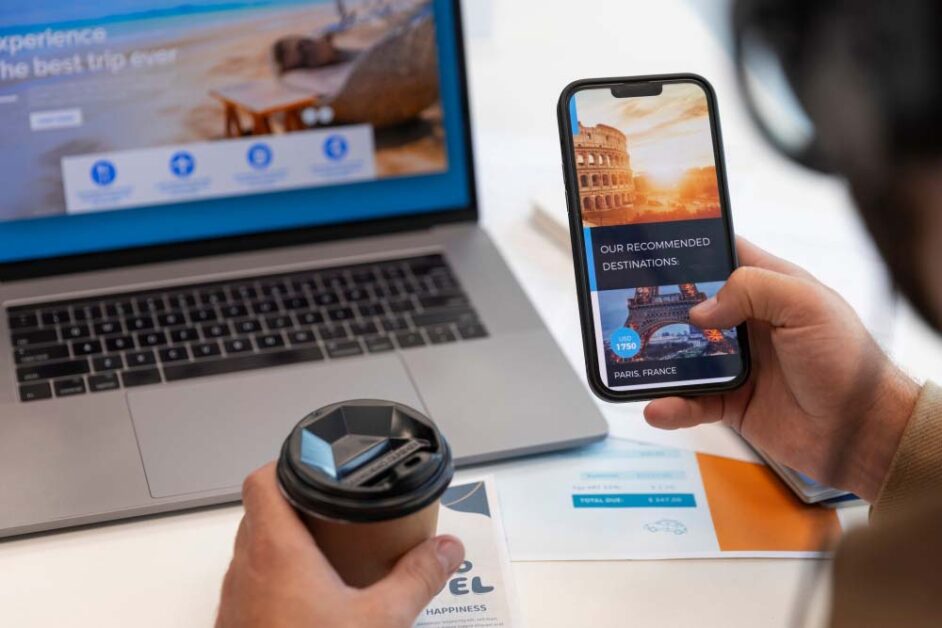
AI in travel5 primarily removes friction. It simplifies planning, reduces uncertainty, and makes complex decisions easier to manage. Travelers benefit from clearer routes, better timing, and fewer surprises. For the industry, AI improves efficiency without adding operational strain. Speaking on how AI is reshaping travel discovery and booking behaviour, Senior Product Manager at Lighthouse, notes:
“Search, discovery, and booking are now shaped first by algorithms. Human judgment still decides, but machines increasingly frame the options.” — Niki van den Broeck, Senior Product Manager, Lighthouse
Smarter trip planning is now actively shaped by AI-assisted discovery. Skyscanner reports double-digit growth in AI-influenced search and booking behaviour, as travelers increasingly rely on algorithm-led tools for inspiration, price forecasting, and itinerary refinement before making final human decisions
AI guidance builds confidence by clarifying entry rules, transit processes, and expectations before departure.
The Risks That Cannot Be Ignored
Despite its advantages, AI introduces risks that the travel industry cannot ignore. Travel is emotional and human. Over-automation can flatten experiences and weaken trust.
Key concerns include:
- Loss of human touch: Empathy and reassurance cannot be replicated by algorithms
- Over-optimised discovery: Repeated recommendations can make travel feel uniform
- Trust and authenticity: AI-generated content may blur what is real and reliable
If convenience overrides judgment, exploration becomes limited rather than enriched.
Can AI support travel without replacing human judgment
The most effective future lies in balance. AI should enhance preparedness, not replace decision-making. Technology works best when it manages complexity quietly while humans retain control over choices, values, and interactions.
In 2026, successful travel experiences will emerge from human and AI collaboration. When systems support clarity and people provide context, travel remains meaningful, flexible, and deeply human.
Movement, Not Miles — How People Will Physically Travel in 2026
In 2026, how people move matters as much as where they go. Physical travel choices are increasingly shaped by comfort, age, sustainability goals, and regulatory change, shifting attention from distance covered to ease, safety, and predictability across the journey.
How are senior travelers adapting to new airport procedures in 2026
Senior travelers are adapting to stricter digital systems by planning with greater clarity and assistance. Industry research cited by Hilton and Amadeus shows older travelers increasingly requesting pre-boarding, assisted screening, and predictable schedules to reduce stress and uncertainty at airports.

- Pre-boarding requests: Seniors request extra boarding time to move calmly and safely
- Assisted security screening: Modified screening helps manage mobility and balance needs
- Printed travel documents: Physical boarding passes reduce dependence on digital systems
- Advance airline communication: Assistance is arranged before arrival at the airport
- Comfort-first scheduling: Flight timings and layovers are chosen to minimise fatigue
- Clear medical disclosure: Mobility aids and medical needs are declared early
These adjustments reflect a broader shift toward preparedness over urgency.
Why are rail and alternative transport options gaining popularity
Rail and overland travel are gaining traction as travelers reassess comfort and stress levels. Skyscanner’s ‘Family Miles’ trend shows families and older travelers increasingly preferring trains over short-haul flights for predictability, comfort, and reduced airport friction
In 2026, the journey itself becomes part of the experience, not just a means to reach the destination.
Sustainability Is No Longer Optional — It’s Structural
In 2026, sustainability is no longer treated as a personal preference or ethical add-on. Research from the World Travel & Tourism Council and Expedia shows a growing share of travelers factoring environmental impact, crowd pressure, and local benefit into transport and accommodation decisions.”
Travel decisions increasingly reflect environmental awareness, social responsibility, and long-term impact rather than short-term convenience.
“People are no longer satisfied with ticking off landmarks. They are looking for journeys that feel meaningful, immersive, and emotionally rewarding.” — Johnny Prince, Co-founder, Timbuktu Travel

Sustainability now shows up in everyday travel choices:
- Slow travel adoption: Travelers stay longer in one place to reduce transit frequency and deepen local engagement
- Rail revival: Trains are preferred for comfort, lower emissions, and reduced travel stress
- Offbeat destinations: Lesser-known regions attract travelers seeking balance between experience and crowd control
- Community impact: Local businesses, culture, and livelihoods influence destination appeal
- Environmental standards: Accommodation is assessed on energy use, waste management, and resource efficiency
These shifts signal a structural change. Sustainability is embedded into planning, pricing, and expectations, not treated as a separate category.
In 2026, responsible travel is no longer about doing less harm. It is about making choices that support better journeys for travelers, communities, and the environments they move through.
Also Read:
- Economic Impact of Tourism: Global Trends and Recovery in 2025
- 8 Unique Festivals Around the World You Must Experience
FAQ: Travel Trends
What are the top travel trends for 2026
Travel trends for 2026 emphasize personalization, slow travel, wellness-led journeys, sustainability, event-based trips, and technology-enabled planning, shifting focus from mass tourism to more intentional and experience-driven travel.
Why is slow travel becoming popular in 2026
Slow travel allows travelers to stay longer in one place, reduce stress, connect with local culture, and lower environmental impact while creating deeper, more meaningful travel experiences.
How is technology shaping travel in 2026
Technology, especially AI, enables personalized itineraries, flexible bookings, real-time guidance, and smarter planning, helping travelers move with greater confidence and reduced friction throughout the journey.
How is AI influencing travel planning and decision-making in 2026
AI supports travel planning through personalization, forecasting, and real-time assistance, while human judgment remains essential for values, comfort, and final decision-making.
Conclusion
Travel in 2026 is defined less by distance and more by movement, mindset, and meaning. The way people plan, prepare, and navigate journeys now shapes the experience as much as the destination itself. Travelers who understand systems, entry rules, technology, and sustainability pressures move with greater confidence.
Impulsive travel gives way to informed movement, where clarity reduces stress and improves enjoyment. From personalized planning and slower journeys to smarter transport choices, the future of travel rewards awareness.
Understanding these travel trends is no longer optional. It is the difference between friction-filled trips and intentional journeys that feel balanced, comfortable, and truly memorable.
At TrendVisionz, we help travel brands and businesses translate emerging travel trends into clear strategies, content, and digital experiences that connect with how people will move and decide in 2026.
Additional Resources:
- McKinsey & Company. (2024). The state of tourism and hospitality 2024. https://www.mckinsey.com/industries/travel/our-insights/the-state-of-tourism-and-hospitality-2024 ↩︎
- Teodora-Maria, Panoiu & Foris, D.. (2024). The Influence of Online Booking Platforms on Travel Decision-Making. Bulletin of the Transilvania University of Brasov. Series V: Economic Sciences. 53-64. 10.31926/but.es.2024.17.66.2.5. ↩︎
- HBX Group. (2025). Travel trends 2026. HBX Group. ↩︎
- ABTA – The Travel Association. (2025). Travel trends 2026.
https://www.abta.com/sites/default/files/media/document/uploads/Travel%20Trends%202026%20-%20FINAL%20241125.pdf ↩︎ - Amadeus. (2025). Travel trends 2026: Global overview and trends. Amadeus Insights. ↩︎
Stay Connected with Me:
Anuj Mahajan is a marketing and communication professional with over 30 years of experience. A senior business and media operator, he uses storytelling to bring clarity, strengthen communication, and reinforce leadership discipline to drive growth. He is an ICF-ACC Certified Coach and an experienced corporate trainer. Drawing from deep operating experience, he helps leaders and organizations translate strategy into consistent business outcomes.
- Explore my work: Nuteq Entertainment | TrendVisionz | Author Profile
- Read our newsletters: Transforming Lives | BizTech Chronicle | Nuteq Newsline
- Guest writer: BizCatalyst360 | Praja Today
- Books: Go Mindfulness: Practices for Professionals Coached
- Join the community: LinkedIn Group – Digital Marketing & Content Creation World
- Connect with me: LinkedIn | Twitter | #StoryforBusiness
- Share your review: Leave your review on Google — your feedback helps us grow.
- Listen on Spotify: Leadership Podcast | Guided NLP (7 Episodes) | Daily Motivation – 21 Episodes
Believe. Practice. Perform. Let’s create impact together.
✍️ A Note from the Editor
Independent storytelling thrives with you. Contribute $15/month via PayPal or email us at anujmahajan@trendvisionz.com. [Guest write for us — Free or Paid.]


1 comment
This was beautiful Admin. Thank you for your reflections
Comments are closed.