

Do you notice urine leaks when you laugh or sneeze, or struggle with bladder control or erections? Pelvic floor muscle weakness is not limited by gender and affects many adults over time. But there is nothing to worry about, as kegel exercises for men and women can play an important role in restoring comfort, and confidence in daily life.
Pelvic floor problems are far more common than most people realise. Research shows that pelvic floor exercises have a high success rate in improving bladder control and muscle strength. 56 percent to as high as 95 percent of people reporting meaningful improvement when the exercises are performed correctly and consistently.

Over the years, while working closely with doctors, hospitals, and healthcare providers across the country. I have seen how often good medical advice fails to translate into clear, usable guidance for everyday life.
This guide brings that clarity together by explaining how Kegel exercises work. Explore with us how it helps. You will receive expert-guided learning on how to perform them safely. Read till the end and apply them with confidence and realistic expectations.
Also Read:
- Liver Health Risks of Long Work Hours and Sedentary Lifestyle
- AI & Robotics: How Early Integration Is Shaping Modern Healthcare
- Birth Control Methods for Family Planning: A Guide to Effective Contraception
What Are Kegel Exercises for Men?
Kegel exercises for men focus on strengthening the pelvic floor muscles that support bladder control, bowel control, and sexual function. These muscles often weaken with age, prostate-related changes, or surgery, leading to leakage, urgency, or reduced control. Strengthening them helps restore coordination and confidence in daily life.
A common question many readers ask before starting is whether Kegel exercises are suitable at every age.
Is There an Age Limit for Kegel Exercises?
There is no fixed age limit for Kegel exercises. Adults across age groups can practice them safely, with intensity and purpose adjusted to life stage, muscle strength, and health needs. Proper technique and comfort matter more than age.
- Young adults (20s–40s): Useful for prevention, pregnancy recovery, bladder control, and long-term pelvic floor strength.
- Middle age (40s–60s): Helps manage urinary leakage, pelvic support issues, and post-surgical recovery in men.
- Older adults (60+ years): Supports bladder control, pelvic stability, and quality of life with gentle practice.
At any age, consistent Kegel practice works best when movements remain gentle and pain-free. Focus on well-coordinated muscle control and full relaxation rather than force, speed, or unrealistic expectations over time.
Where Kegel Exercises Come From
Kegel exercises were first described in the 1940s as a way to strengthen pelvic muscles and improve urinary control. Over time, they became widely used for both men and women, especially to manage leakage and muscle weakness related to ageing, surgery, or physical strain.

Pelvic Floor Function and Urinary Control in Men
The pelvic floor acts like a support base for the bladder. When these muscles weaken, men may notice urine leakage, frequent urgency, or a weak urine stream. After prostate surgery or with conditions like benign prostatic hyperplasia, pelvic floor weakness can worsen symptoms. Urinary control exercises such as Kegels help improve muscle coordination, making it easier to hold and release urine at the right time.
Sexual Function, Erections, and Ejaculation Control
Pelvic floor muscles play a key role in erections and ejaculation control. They help maintain blood flow during erections and assist with rhythmic contractions during climax. Strengthening these muscles can improve control, confidence, and sexual performance.
Pelvic floor exercises enhance erectile function by improving blood flow for firmer erections and help reduce premature ejaculation through better muscle control. Research shows pelvic floor rehabilitation improved erectile function in 42 percent of men without surgery, with many also reporting better orgasm quality.

However, Kegels support symptoms. They do not treat prostate disease itself.
Why pelvic floor strength matters more than prostate size for daily control
Daily urinary control depends more on muscle coordination than prostate size. Strong pelvic floor muscles help manage leakage and urgency even when the prostate is enlarged. Kegel exercises improve control but do not shrink the prostate, which requires medical treatment.
Takeaway: Kegel exercises for men are about improving control and coordination, not curing prostate conditions. When done correctly and consistently, they offer practical support for bladder function, sexual health, and daily confidence, especially alongside proper medical care.
The Benefits of Kegel Exercises for Women
Pelvic floor exercises play a quiet but powerful role in a woman’s health journey. From pregnancy to postpartum recovery and through menopause, these muscles influence daily comfort, bladder control,1 and long-term pelvic stability. Kegel exercises help women stay confident through each life stage.
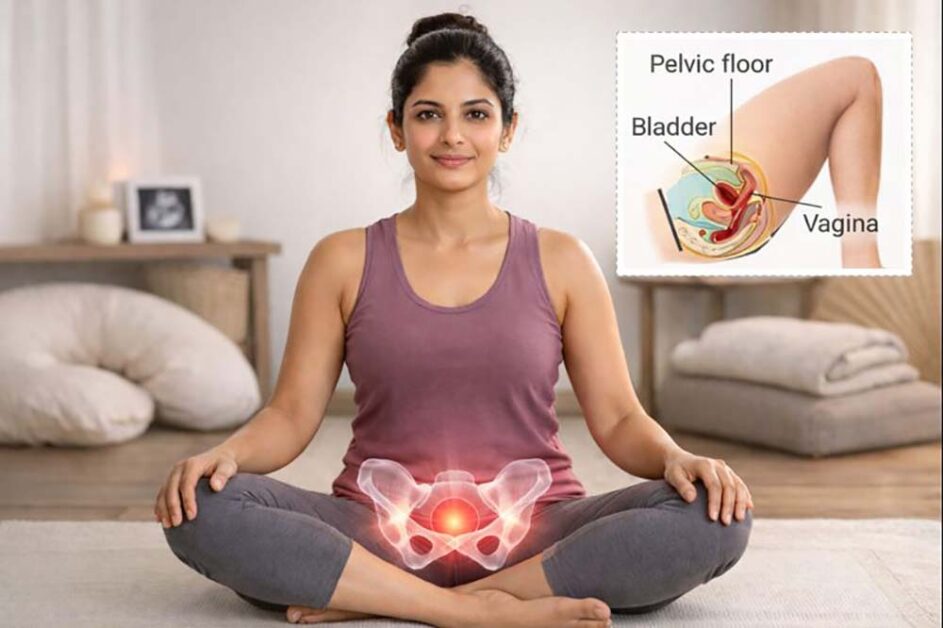
Often labelled differently for men and women, kegel exercises strengthen the same pelvic floor muscles. And also contribute to everyday control, comfort, and stability for all adults.
Pregnancy and Postpartum Pelvic Recovery
During pregnancy, the pelvic floor carries increasing weight, much like a hammock holding a growing load. Strengthening it early helps the body cope better with pressure and strain.
- Support during pregnancy: Strong pelvic muscles help manage pressure from the growing uterus and reduce discomfort in later months.
- Postpartum pelvic recovery: After delivery, these muscles often stretch and weaken. Kegels help retrain them, supporting healing and restoring control.
- Leakage reduction: Many women experience urine leaks after childbirth. Pelvic floor exercises improve bladder control when done consistently.
Caption- Key benefits of Kegel exercises
Alt Image- Infographic summarising key pelvic health benefits for women
Menopause and Pelvic Organ Support
As estrogen levels drop with age, pelvic muscles can lose strength, just like any other muscle group that is not used regularly. This is where Kegels become protective.
- Muscle weakening with age: Regular pelvic muscle strengthening helps counter natural muscle loss during menopause.
- Pelvic organ prolapse prevention: Strong pelvic muscles support the bladder, uterus, and bowel, reducing the risk of organs shifting downward.
- Long-term pelvic floor health: Consistent practice supports bladder control, comfort, and stability well into later years.
Strong pelvic floor muscles act like a reliable foundation. When they are trained and supported, women experience better control, confidence, and comfort across all stages of life.
How to Identify Your Pelvic Floor Muscles Correctly
Pelvic floor muscles sit deep inside the body, so you cannot see them like your arms or legs. This makes identification tricky. Clear guidance matters because using the wrong muscles can reduce benefits and even create tension instead of strength.
The “Stop-the-Flow” and Gas Control Analogy
The easiest way to identify your pelvic floor muscles is through familiar body actions.
- Stopping urine mid-stream: The muscles you gently squeeze to pause urine flow are your pelvic floor muscles. This is only for identification, not regular practice.
- Preventing gas: Tightening the muscles that stop you from passing gas uses the same pelvic floor group.
What correct contraction feels like?
You should feel a light lifting sensation inside the pelvis, as if something is being gently drawn upward. The stomach, thighs, and buttocks should remain relaxed. Breathing should feel natural.
Common Identification Mistakes
Many people engage the wrong muscles without realising it. These common mistakes reduce effectiveness and may create tension instead of improving pelvic floor strength and control.
- Using abs, thighs, or glutes: If your stomach tightens or your legs squeeze, you are compensating instead of activating the pelvic floor.
- Breath holding: Holding your breath creates pressure instead of control. Pelvic floor activation should feel calm, not strained.
- Pelvic tension: Over-tightening without full relaxation can lead to discomfort and reduced coordination.
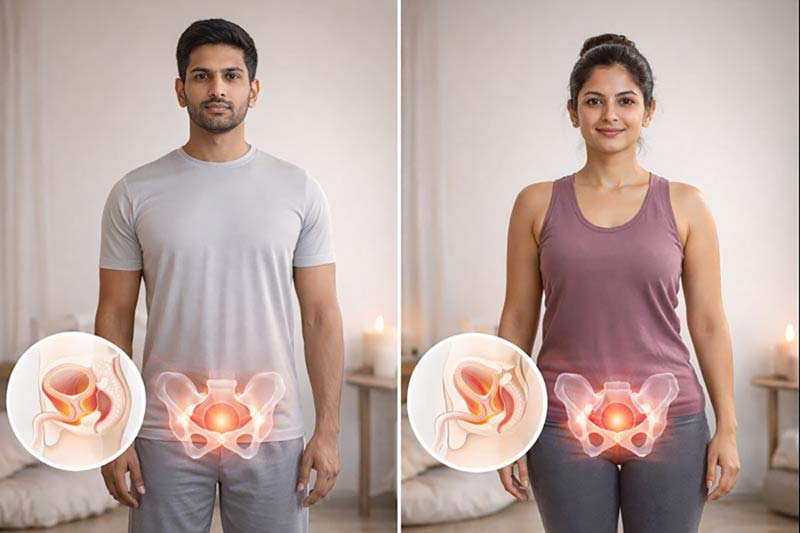
Identifying the right muscles is the foundation of effective pelvic floor exercises. Once you can locate them correctly, strengthening becomes safer, more effective, and far more consistent over time.
Step-by-Step Pelvic Muscle Strengthening for Beginners
Pelvic muscle strengthening works best when approached slowly and correctly. Over the years in training sessions, I have repeatedly seen people overdo these exercises or rush results. Control, not intensity, is what builds strength safely and consistently over time.

The 5 Essential Steps
From my experience working closely with leading healthcare providers, I have seen that most pelvic floor exercises fail not due to lack of effort, but because the basic steps are often done incorrectly.
- Empty your bladder before starting. This reduces discomfort and helps you focus on correct pelvic muscle engagement.
- Choose a comfortable posture. Sit, lie down, or stand with a neutral spine, relaxed shoulders, and no tension in the abdomen or thighs.
- Gently contract the pelvic floor muscles. Lift the muscles upward from inside, without tightening the stomach, buttocks, or legs.
- Sustain the lift for three to five seconds, then release fully. Maintain control without strain or breath holding.
- Relax fully and breathe normally. Release completely for the same duration before the next contraction.
What should proper pelvic floor engagement feel like during a contraction?
A correct contraction feels like a gentle internal lift and tightening, not squeezing or pushing down. The abdomen, thighs, and buttocks remain relaxed, breathing stays natural, and there is no strain or pressure.
How many Kegel exercises should you do in a day?
Most people benefit from 24 to 36 Kegels per day, divided into three sets of 8 to 12 repetitions. This range strengthens pelvic floor muscles effectively without causing fatigue or overuse.
“The real question is not ‘to Kegel or not to Kegel.’ It’s understanding when pelvic floor strengthening is helpful and when awareness, relaxation, or whole-body support is needed. Pelvic health is not a one-muscle, one-exercise solution. It requires a broader, integrated approach.” — Julie Wiebe, PT, DPT, Pelvic Health Specialist
Takeaway: When performed consistently, these simple steps help beginners build coordination before strength. Pelvic floor progress depends on patience and precision, not force. Mastering control first leads to safer, more effective long-term results.
What Ayurveda Says About Pelvic Strength and Control
Ayurveda approaches pelvic health through awareness, posture, breath, and balanced muscle control. Rather than isolating one muscle group, it looks at how the body moves, rests, and responds to stress. These principles work alongside pelvic floor exercises and modern guidance, not as replacements, but as supportive practices.
Image: ayurveda-pelvic-floor-awareness-posture-breath.jpg
Caption : Ayurveda supports pelvic awareness and balance
Alt Image : Yoga-based posture and breath supporting pelvic awareness
Ayurveda-Inspired Asanas That Support Pelvic Awareness
Traditional yoga postures focus on gentle movement, relaxation, and coordination. When practised regularly, they help build awareness of the pelvic region and reduce unnecessary tension that often interferes with pelvic floor function.
- Malasana (Yogic squat): Encourages pelvic awareness and natural relaxation
- Setu Bandhasana (Bridge pose): Supports pelvic muscles and the lower back
- Baddha Konasana (Butterfly pose): Improves hip mobility and pelvic flexibility
- Vajrasana or Supta Baddha Konasana: Promotes posture, calm breathing, and relaxation
Herbal and Lifestyle Support in Ayurveda
Ayurveda also considers internal balance through herbs and daily routines that support muscle tone, urinary comfort, and stress regulation. These elements aim to create a stable internal environment that allows the pelvic floor to function more effectively.
- Ashwagandha: Traditionally linked to muscle tone and stress balance
- Shatavari: Often associated with women’s pelvic and hormonal health
- Gokshura: Commonly used for urinary comfort
Herbal support should always be used with guidance. These remedies do not treat prostate enlargement or incontinence.
Ayurveda-inspired practices emphasise awareness and relaxation. When combined with pelvic floor exercises and evidence-based care, they offer a balanced, realistic approach to long-term pelvic health.
Daily Habits and Action Plan for Stronger Pelvic Floor
Kegel exercises work best when they are supported by daily habits that protect and reinforce pelvic floor strength. Small posture, movement, and breathing adjustments throughout the day can prevent strain and help your pelvic muscles function as intended.
Actor and long-time fitness advocate Sunil Shetty has often spoken about fitness as a lifelong commitment built on consistency and realism rather than quick results.
“Fitness was never meant to be a trend. It’s a lifelong relationship with your body. The real success is not starting, but staying consistent for years.” Sunil Shetty, Actor, Investor, Sportsman at Heart
Consistency in pelvic floor care follows the same principle, where small daily actions create lasting strength, control, and confidence over time.
Practical Daily Action Plan
One insight my work alongside leading healthcare providers has reinforced is this: pelvic floor strength is built through everyday posture, movement, and breathing habits, not exercises performed in isolation.
- Over-tightening: Constant clenching can increase pelvic tension and reduce muscle coordination. Pelvic floor muscles need both contraction and full relaxation to stay healthy and responsive.
- Using the wrong muscle groups: Tightening the abdomen, thighs, or glutes instead of the pelvic floor reduces effectiveness and may lead to compensation patterns rather than true strengthening.
- Pain or discomfort patterns: Pain, pressure, or discomfort during or after Kegels often signals incorrect technique or excessive effort and should not be ignored.
- Sitting posture: Prolonged slouching places continuous pressure on the pelvic floor. Sitting tall with neutral spine support helps distribute load evenly.
- Walking technique: Relaxed, upright walking with natural arm swing supports lower body stability and reduces unnecessary pelvic strain.
- Gentle core engagement: Light, coordinated core activation supports pelvic floor muscles without over-bracing or breath holding.
- Avoiding heavy straining and chronic coughing triggers: Repeated straining during bowel movements or unmanaged coughing increases downward pressure on pelvic organs and weakens pelvic support over time.
Can daily habits undo the benefits of Kegel exercises?
Yes. Poor posture, constant breath holding, chronic straining, or habitual clenching can weaken pelvic floor coordination over time. Even well-performed Kegels cannot fully compensate if daily movements repeatedly overload or fatigue these muscles. Habits and exercises must work together.
Takeaway: Consistent daily habits can either strengthen or undermine your pelvic floor. Supporting Kegel exercises with mindful movement, posture, and breathing helps maintain balance, prevent strain, and improve long-term pelvic control for both men and women.
Supervised vs Unsupervised Kegel Training
Kegel exercises look simple on paper, but correct technique makes all the difference. In practice, I have seen many people unknowingly perform them incorrectly, which limits results. This is where the role of guidance becomes important, especially in the early stages.
What Research Says About Biofeedback-Guided Training
Research shows that supervised Kegel training, especially when supported by biofeedback. This aligns with findings from a Cochrane systematic review on pelvic floor muscle training, which confirms that structured Kegel programs2 significantly improve urinary control compared to no treatment.
Biofeedback therapy is an instrument-based learning process that is based on “operant conditioning” techniques- Physiopedia
It helps people see or feel whether they are contracting the correct muscles, rather than guessing. Studies comparing supervised and unsupervised pelvic floor training consistently report higher success rates in bladder control and symptom relief when guidance is provided. These findings are reinforced by a Cochrane review3 on pelvic floor muscle training. Simply put, learning the correct muscle engagement early prevents months of ineffective practice.
When Home Practice Is Enough
Unsupervised, at-home Kegel exercises can be effective for people with mild symptoms or those who already understand correct technique. Home practice also works well during the maintenance phase, once coordination and control are established. For many, a short period of guided learning followed by regular home practice offers the best balance of effectiveness and convenience.
Supervision is not about dependency, but about accuracy. Learning Kegels correctly from the start helps ensure that home practice remains safe, effective, and sustainable over time.
When Kegel Exercises Are Not Enough
Kegel exercises play an important role in pelvic health, but they are not suitable for every situation. Setting clear boundaries helps build medical trust and prevents frustration when symptoms need more than self-guided exercises.
Red-Flag Symptoms That Need Medical Review
Certain pelvic symptoms signal that exercise alone may not be appropriate and that professional medical evaluation is necessary.
- Persistent pain: Ongoing pelvic, groin, or lower abdominal pain during or after exercises may indicate issue that needs evaluation.
- Urinary retention or difficulty emptying: A constant feeling of incomplete bladder emptying, weak urine stream, or difficulty starting urination should not be managed with exercises alone.
- Severe or worsening leakage: Sudden increase in urine leakage, urgency, or loss of control despite regular practice suggests that muscle strengthening alone may not address the root cause.
Role of Pelvic Floor Physiotherapy and Medical Care
Pelvic floor physiotherapy and medical care help identify whether weakness, tension, or coordination issues are causing symptoms, ensuring the right treatment approach rather than guesswork.
- Targeted muscle assessment: Pelvic floor physiotherapists assess whether muscles are weak, overactive, or poorly coordinated, which determines the right treatment approach.
- Corrective guidance and relaxation training: In some cases, learning how to relax the pelvic floor is more important than strengthening it.
- Medical evaluation when needed: Doctors can rule out prostate conditions, infections, nerve issues, or structural problems that exercises cannot fix.
Kegel exercises are a supportive tool, not a diagnostic solution. Knowing when to seek professional care protects pelvic health, saves time, and leads to better long-term outcomes
Also Read:
- Can Soleus Push-Ups Really Lower Blood Sugar?
- Cervical Cancer Prevention in India: Screening and HPV Vaccination
FAQs: Kegel Exercises for Men and Women
Can Kegel exercises reduce an enlarged prostate, and how long do they take to work?
Kegel exercises do not reduce the size of an enlarged prostate or treat the gland itself. They strengthen pelvic floor muscles, which can improve urinary symptoms like leakage and urgency. With consistent practice, symptom improvement is often noticed within 4 to 8 weeks.
Can Kegel exercises help with urinary leakage after prostate surgery?
Yes. Kegel exercises help retrain pelvic floor muscles weakened after prostate surgery. Regular practice improves muscle coordination and bladder control, reducing leakage over time. Many men notice gradual improvement within weeks, especially when exercises are performed correctly and consistently as part of recovery.
Can both men and women do Kegels at any age?
Yes. Kegel exercises are safe and beneficial for both men and women at any age. They support bladder control, pelvic stability, and muscle coordination. Benefits apply across life stages, including young adulthood, pregnancy, post-surgery recovery, menopause, and healthy ageing.
Conclusion
Pelvic floor health supports many aspects of everyday life, from bladder and bowel control to posture, sexual function, and overall comfort. When practised with correct technique and consistency, kegel exercises for men and women provide a safe and effective way.
The key is understanding that progress comes from awareness, control, and supportive daily habits rather than force or quick fixes. Pelvic floor exercises work best when combined with good posture, relaxed breathing, and timely medical guidance when symptoms persist.
Approached patiently and realistically, Kegels can become a valuable long-term tool for maintaining pelvic stability, confidence, and quality of life across different stages of adulthood.
At TrendVisionz, we focus on simplifying health information so it translates into real-life action. Stay connected with us for more clear, experience-backed wellness guidance you can trust.
Stay Connected with Me:
Anuj Mahajan is a marketing and communication professional with over 30 years of experience. A senior business and media operator, he uses storytelling to bring clarity, strengthen communication, and reinforce leadership discipline to drive growth. He is an ICF-ACC Certified Coach and an experienced corporate trainer. Drawing from deep operating experience, he helps leaders and organizations translate strategy into consistent business outcomes.
- Explore my work: Nuteq Entertainment | TrendVisionz | Author Profile
- Read our newsletters: Transforming Lives | BizTech Chronicle | Nuteq Newsline
- Guest writer: BizCatalyst360 | Praja Today
- Books: Go Mindfulness: Practices for Professionals Coached
- Join the community: LinkedIn Group – Digital Marketing & Content Creation World
- Connect with me: LinkedIn | Twitter | #StoryforBusiness
- Share your review: Leave your review on Google — your feedback helps us grow.
- Listen on Spotify: Leadership Podcast | Guided NLP (7 Episodes) | Daily Motivation – 21 Episodes
Believe. Practice. Perform. Let’s create impact together.
✍️ A Note from the Editor
Independent storytelling thrives with you. Contribute $15/month via PayPal or email us at anujmahajan@trendvisionz.com. [Guest write for us — Free or Paid.]
Additional Resources:
- Abu Raddaha, A. H., & Nasr, E. H. (2022). Kegel Exercise Training Program among Women with Urinary Incontinence. Healthcare, 10(12), 2359. ↩︎
- Cross, D., Waheed, N., Krake, M. et al. Effectiveness of supervised Kegel exercises using bio-feedback versus unsupervised Kegel exercises on stress urinary incontinence: a quasi-experimental study. Int Urogynecol J 34, 913–920 (2023). https://doi.org/10.1007/s00192-022-05281-8 ↩︎
- Dumoulin C, Cacciari LP, Hay‐Smith EJC. Pelvic floor muscle training versus no treatment, or inactive control treatments, for urinary incontinence in women. Cochrane Database of Systematic Reviews 2018, Issue 10. Art. No.: CD005654. DOI: 10.1002/14651858.CD005654.pub4. Accessed 25 December 2025. ↩︎


