
Jantar Mantar was on the global map in July 2026, but not for good reasons. Tens of thousands of students gathered over NEET-UG 2026 irregularities, alleged paper leaks and examination governance. Their protests brought the Indian education system under uncomfortable scrutiny. The deeper concern was the system students depended upon.
NEET became the immediate flashpoint, but the questions ran deeper. Examination credibility, accountability and institutional trust were only part of the challenge. Learning quality remains uneven, progression varies sharply across states, and education does not always translate into future opportunities.
As a media professional travelling the length and breadth of India, I have seen these contrasts closely. Education looks different across regions, institutions and communities. Whether you are a student, parent, educator or academic, these changes affect how education is experienced, evaluated and trusted.
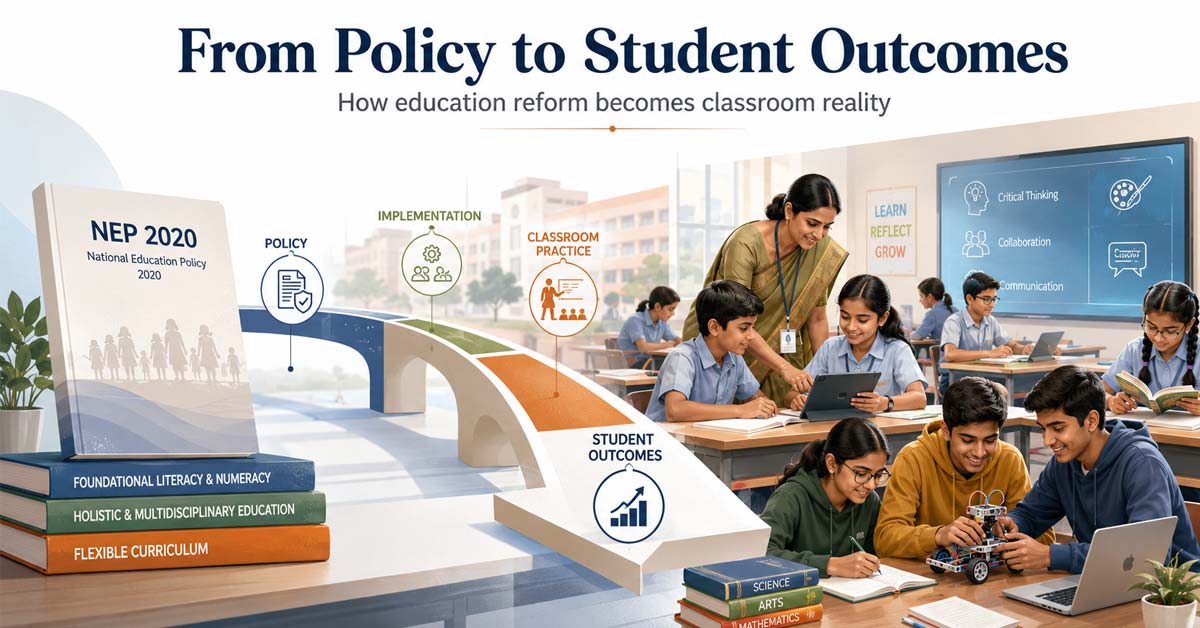
In this edition, we examine whether NEP 2020 is changing those realities. The policy has redesigned how India approaches school and higher education. But reform must eventually reach the classroom. Its real measure lies in learning, progression, equity and future opportunity.
NEP 2020 Changes the Indian Education System
India’s school system serves nearly 24.72 crore students and 1.03 crore teachers. For decades, school education followed the 10+2 curricular structure, shaped heavily by content and examinations. The NEP 2020 framework1 shifts that design toward developmental stages, competency and flexible learning.

The 5+3+3+4 structure reorganises school education around developmental stages: five foundational years, three preparatory years, three middle years and four secondary years. Introduced through NEP 2020, it replaces the earlier 10+2 curricular structure.
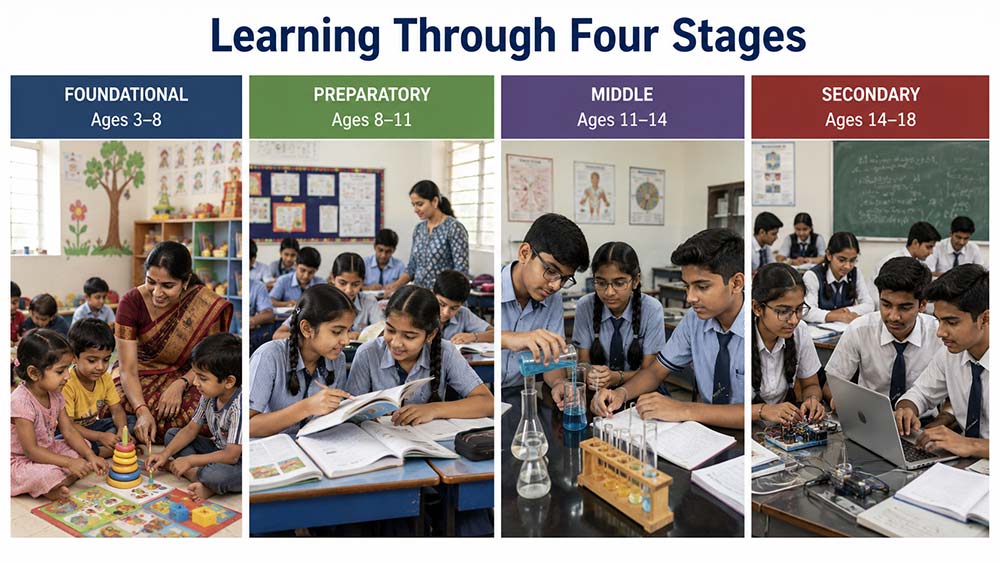
Source: Government of India’s National Education Policy 2020 defines the 5+3+3+4 school structure and its developmental stages. Download National Education Policy 2020 PDF
From 10+2 to Stage-Based School Education
The four stages follow how a child actually grows. NEP 2020 introduced the 5+3+3+4 structure, with subsequent curriculum frameworks translating that architecture into learning stages. The foundational stage covers five years, from age three to eight. Preparatory covers the next three, middle the three after that, and secondary the final four.
The important change sits at the start. NEP 2020 formally integrates ages three to six into the new curricular structure. Early childhood learning existed earlier, but remained outside the 10+2 structure. NEP 2020 brought it in, and later frameworks turned the policy into classroom design. Each stage now maps more closely to how children learn at that age.
Curriculum, Competency and New Learning Design
Structure is only half the shift. What a child is meant to learn has changed too. The New Curricular Design, shaped by NCF-SE 2023, moves away from memory and toward understanding.
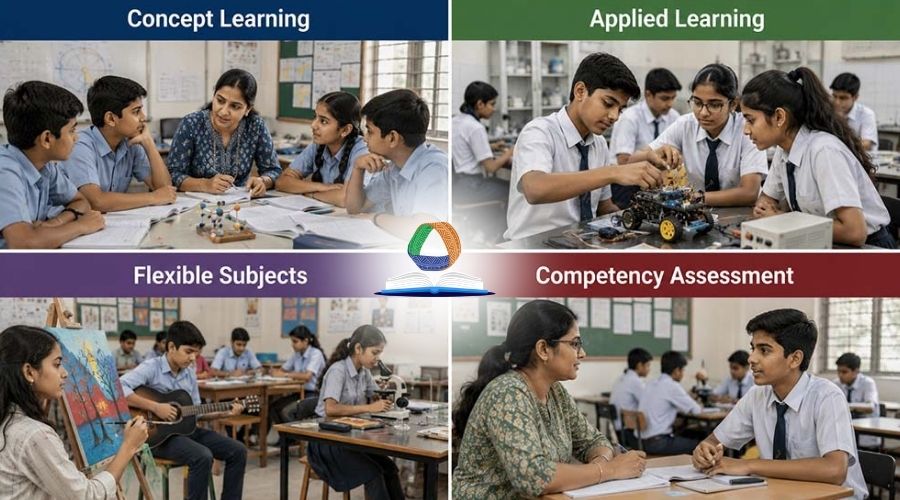
NIPUN Bharat prioritises foundational literacy and numeracy in the early years of schooling. NCERT’s national achievement surveys have tracked school learning since 2001. PARAKH: Rashtriya Sarvekshan 2024 extends national assessment into NEP-aligned competency-based education. Subject choices grow more flexible as students move up, so a child can apply what they learn rather than carry it only to an exam hall.
NEP 2020 has changed the architecture and learning philosophy of the Indian education system. The harder test is whether that change produces stronger learning outcomes across classrooms and states.
Learning Outcomes Reveal India’s Education Gap
Reform redrew the system. The student’s reality has moved more slowly. India has expanded infrastructure, with internet connectivity now reaching 67.4% of schools. Yet the remaining gap reflects a persistent digital divide. Wider access has not translated evenly into stronger learning. The real educational issues emerge in the distance between participation, progression and what a child actually learns.
Foundational Learning Remains the Critical Test
The ASER 2024 report and UDISE+ evidence show where progress in access starts to separate from progress in learning.
- Foundational reading gap: ASER 2024 found only 23.4% of Class III government-school children could read a Class II text.
- Participation gap: Secondary GER reached 81.5%, while the net enrolment ratio stayed far lower at 50.8%
- Progression risk: Dropout and age-grade distortion keep weakening foundational literacy and numeracy through secondary education.
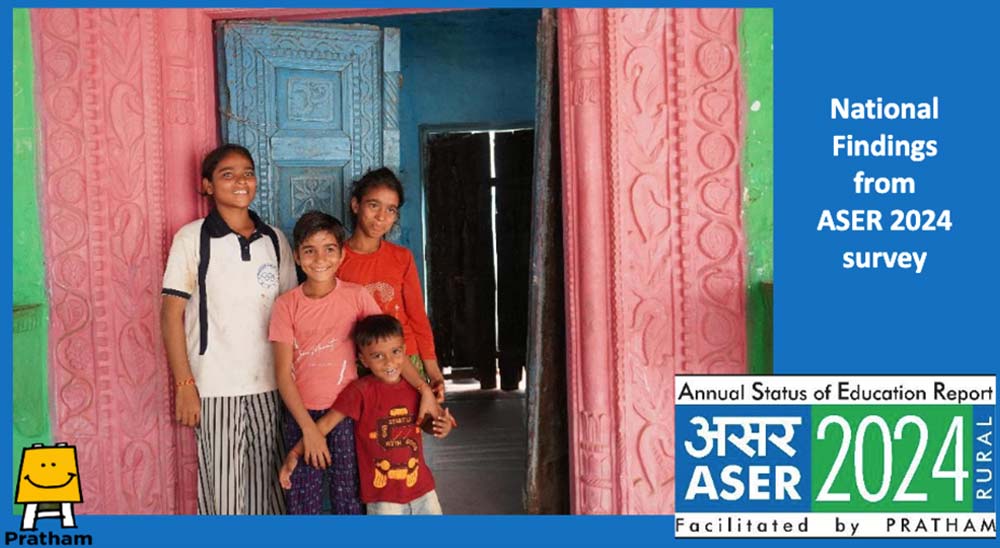
Access, Progression and Learning Measure Different Outcomes
Rising enrolment or better infrastructure alone cannot tell us whether the education system in India is delivering better education.
- Access: Enrolment measures whether children enter and participate in formal education.
- Progression: Retention shows whether students advance through school at the appropriate stage.
- Learning: Outcomes reveal whether students gain the knowledge, skills and competencies expected of them.
The July 2026 protests and the minister’s resignation belong here as a signal. They show real concern around education governance and institutional accountability. They are not proof that NEP 2020 has failed.
India has made measurable progress in bringing students into the system. The harder challenge is helping students progress appropriately and leave each stage with the learning it was designed to deliver.
NEP 2020 Implementation Varies Across Indian States
NEP 2020 provides one reform direction, but implementation differs across India. Teacher capacity, infrastructure and socioeconomic conditions vary widely, making state education disparity in India critical to understanding outcomes.
A strong education system does more than enrol students. It helps them learn, progress and prepare for future opportunities. Literacy and enrolment reveal access, while teaching quality, institutional capacity and equitable outcomes reveal how effectively education works.
State Capacity Shapes Education Outcomes
NEP 2020 implementation depends on states turning national reform into classroom delivery. That work depends heavily on local capacity. Teacher capability shapes what happens inside the classroom. Infrastructure and digital access determine the resources schools can provide. Retention and socioeconomic conditions influence whether students remain in education.
The level of education in India cannot be read through national indicators alone, because the national number is an average of very unequal parts.
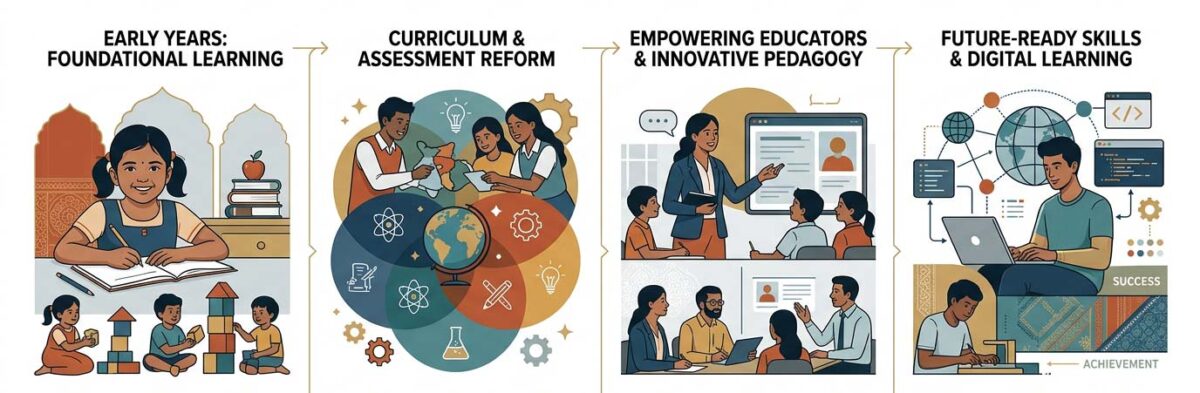
How Do Kerala and Bihar Education Outcomes Compare?
Kerala records secondary and higher-secondary GERs of 99.4 and 91.9. Compared with Bihar’s 53.1 and 42.1, alongside 9% upper-primary dropout. The contrast reveals how participation and progression can differ sharply within the same national education system.
A common framework does not guarantee common outcomes. NEP 2020 implementation will ultimately depend on whether states can improve learning and progression while narrowing these gaps.
Three Year vs Four Year Degree Debate
The reform question moves from school into higher education. The NEP 2020 framework opens up undergraduate study, giving students a choice between three-year and four-year degrees. The real issue is not the extra year itself. It is whether that year creates genuine educational value for the student.
Under the NEP 2020 framework, a three-year bachelor’s degree requires at least 120 credits, while a four-year programme requires 160 credits. The additional year2 can support honours, research, interdisciplinary study and greater flexibility for postgraduate progression.
The Choice Based Credit System3 gives students greater flexibility in course selection, interdisciplinary learning and academic progression within higher education.
Credit Framework Expands Undergraduate Pathways
The four-year undergraduate program (FYUGP) extends undergraduate study through honours or honours-with-research pathways. The additional year creates space for research, multidisciplinary learning and deeper subject work.
A four-year honours graduate can move into a one-year master’s pathway, creating greater flexibility in postgraduate progression. The three year vs four year degree choice sets the pace of a student’s academic journey, though a longer route is not automatically the stronger one.
Degree Value Depends on Learning Outcomes
Extra credits matter when institutions turn additional time into stronger learning, research exposure, practical capability and better preparation for what comes next.
- Learning opportunity: Four years can deepen research, interdisciplinary study, internships and academic flexibility.
- Student cost: Another year adds time and financial commitment before postgraduate study or work.
- Employment value: Stronger outcomes depend on faculty, research facilities, supervision and real industry exposure.
The education-to-employment gap in India remains significant: graduate employability is around 55%, yet only 8.25% work in roles aligned with their qualifications. A degree alone cannot close it. Burning Glass Institute reports that young graduates face rising unemployment and underemployment despite holding bachelor’s degrees. Where institutions lack strong labs, supervision and employer links, an additional year may add cost without delivering equal value.
The debate is about educational value, not duration. Extra credits matter when institutions turn additional time into stronger learning, research exposure, practical capability and better preparation for what comes next.
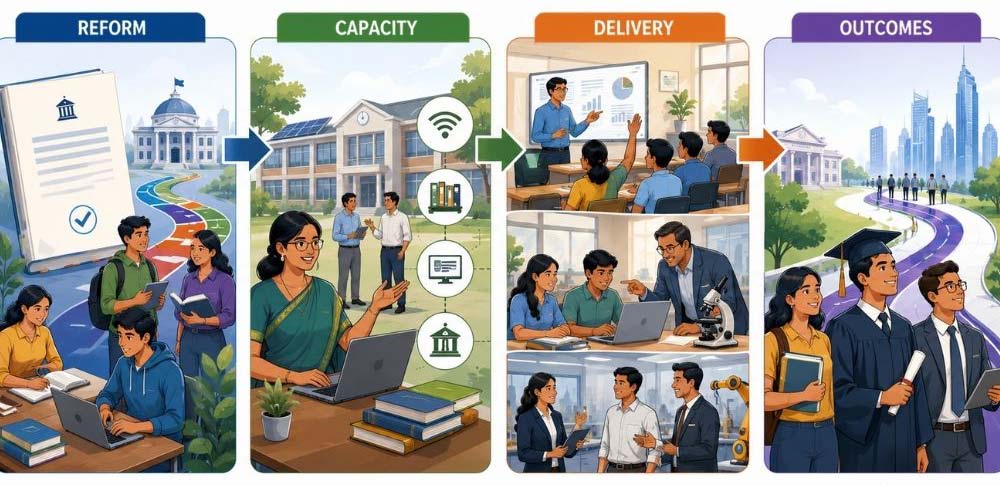
Future Roadmap for the Indian Education System
India already has the reform architecture. The next phase of NEP 2020 implementation must move from policy adoption to consistent delivery, backed by spending closer to NEP’s 6% of GDP aspiration4.
Infographic placement
- Learning before expansion: Make foundational literacy and numeracy measurable before gaps compound across later stages.
- Progression without exclusion: Reduce dropout, age-grade gaps and unequal transitions through secondary and higher-secondary education.
- Teachers as reform enablers: Equip educators for competency-based learning, assessment, inclusion and changing classroom expectations.
- Local solutions for state gaps: Direct resources and support toward state-specific learning, infrastructure and capacity deficits.
- Education that leads somewhere: Connect higher education with research, skills, industry exposure and stronger employment pathways5.
The answer is not another redesign. India already has the policy direction it needs. The real test is whether governments, states, schools, universities and teachers can turn that direction into measurable gains in learning, progression, equity and future readiness.

FAQs: Indian education system
The 5+3+3+4 structure was introduced through India’s National Education Policy 2020. It replaced the earlier 10+2 model, reorganising school education around four developmental stages, from the foundational years to the secondary years, to match how children learn as they grow.
NEP 2020 has changed the architecture of Indian education, including school stages, curriculum and assessment. Improvement in learning outcomes remains uneven so far. The real gains depend on how consistently states and schools translate the policy into classroom delivery.
Kerala is among India’s strongest-performing states on literacy, enrolment and school participation indicators. However, no single measure defines the best education system. Learning outcomes, progression, equity, teacher capability and future readiness must also be considered.
Conclusion
NEP 2020 has changed the architecture of the Indian education system. The 5+3+3+4 structure, competency-based learning and flexible higher education pathways signal a different direction. Yet structural change alone cannot tell us whether education itself has improved.
The harder work begins where policy meets classrooms. NEP 2020 implementation must strengthen learning outcomes, student progression and institutional capacity across states. Otherwise, reform risks moving faster on paper than it does for students.
Perhaps that is the real measure of the education system in India. Not how extensively we redesign it, but how effectively students learn, progress and prepare for what comes next. Reform succeeds when a changed system creates changed possibilities.
This is the conversation I continue through TrendVisionz Featured, where Culture, Society & Modern Living explores how changing systems reshape the choices, opportunities and realities of everyday life.
Additional Resource:
- Rani, P., & Rohitash. (2024). The Indian higher education system’s NEP 2020: A framework change towards research, innovation and entrepreneurship. International Journal of Applied and Behavioral Sciences. ↩︎
- Kumar Naresh. (2023). A Study of the Holistic and Multidisciplinary Education and Its Major Challenges in the Special Perspectives of National Education Policy, 2020. Shodh Sari- An International Multidisciplinary Journal, 02(01), 44–53. ↩︎
- Aithal, Sreeramana & Kumar P M, Suresh. (2016). Analysis Of Choice Based Credit System In Higher Education. International Journal of Engineering Research and Modern Education (IJERME) ISSN (Online): 2455 – 4200. 1. 28-284. 10.5281/zenodo.161046. ↩︎
- Khare, Mona & Dubey, Sandhya. (2024). India’s NEP 2020 Goal of 6% GDP on Education: Alternate Scenarios for Post Covid-19 Pandemic. ↩︎
- Kaur, H. (2024). National Education Policy (Nep) 2020: Skill Enhancement Through Vocational Education. Edumania-An International Multidisciplinary Journal, 2(1), 23–32. https://doi.org/10.59231/edumania/9015 ↩︎
About Anuj Mahajan
Anuj Mahajan is a media entrepreneur, author, filmmaker, and Managing Director of Nuteq Entertainment. With more than 32 years of experience across media, communication, leadership, and business growth, he writes about communication architecture, human behaviour, leadership, mindfulness, business transformation, and decision-making.
He is the Co-Founder of TrendVisionZ, author of three books, creator of the StoryforBusiness podcast, and publisher of the Transforming Lives newsletter.
Explore the Ecosystem
- Explore my work: Nuteq Entertainment | TrendVisionz | Author Profile
- Read my newsletters: Transforming Lives | BizTech Chronicle | Nuteq Newsline
- Guest writer: BizCatalyst360 | Praja Today
- Books: Go Mindfulness: Practices for Professionals Coached
- Join the community: LinkedIn Group – Digital Marketing & Content Creation World
- Connect with me: LinkedIn | Twitter | #StoryforBusiness
- Share your review: Leave your review on Google — your feedback helps us grow.
- Listen on Spotify: Leadership Podcast | Guided NLP (7 Episodes) | Daily Motivation – 21 Episodes
Believe. Practice. Perform.


