
It was during a recent webinar when one of the attendees, Ajay, asked me a simple but important question: “If anyone can publish online today, what actually makes a digital publication credible?” The question stayed with me for a while because publishing online has become remarkably easy.
A website can go live in hours, and articles can appear every day. Yet frequency alone does not create authority. The Reuters Institute Digital News Report 2026 shows AI chatbots becoming a growing route to news and information, adding another layer to how digital publishing is discovered.
Having spent more than three decades across broadcast and digital media, I have seen this shift from scheduled communication to always-on publishing at close quarters. While building TrendVisionz, the real challenge was not producing more content. It was giving that content a clear structure, stronger alignment and a connected editorial purpose
In this edition, I will help you judge your publishing model. You will see what builds real editorial authority. The discussion is for founders, content marketers
and publishers who want their work understood and trusted by readers and AI search systems.
Digital Publication: Purpose, Structure and Editorial Identity
From my years of media and broadcasting experience, I can say publishing online is easy. Building a recognisable publication is harder. Digital publishing improves distribution, but authority still needs structure and continuity. The difference is whether readers can recognise your subjects, your voices and the editorial pattern behind them.
A digital publication is an online editorial property. It covers defined subjects through credible sourcing and recurring coverage. An organised archive connects related articles over time. This helps readers, search engines and AI systems understand what the publication consistently covers.

Publishing Online Does Not Automatically Make a Publication
I often ask teams a simple question: if I removed your branding from the website, would I still understand what you consistently stand for? The answer tells you a great deal.
A general website may primarily explain a company, product or service. A blog usually publishes articles around selected interests or business goals. An online magazine brings together editorial stories, often across several subjects. Publishing platforms provide the technology used to create or distribute content. A digital publication can borrow elements from all of them, but its identity comes from the editorial system connecting that content.
That distinction became clearer while building TrendVisionz. Publishing another article was never the difficult part. The harder question was whether each new piece strengthened something readers could recognise over time.
Editorial Structure Turns Content Into a Recognisable Publication
Recognition develops when readers begin seeing the same editorial intent across different stories. Defined subject territories tell readers what to expect. Named authors give ideas a human voice. Credible sources support trust. Structured archives help earlier and newer articles remain connected rather than disappearing after publication.
When those pieces work together, content starts behaving like accumulated knowledge. A reader can enter through one article and understand where to explore next.
Publishing volume can fill a website. Editorial purpose is what begins turning that website into a publication. Once that identity becomes clear, the next question is harder: how does a publication earn authority within the subjects it chooses to own?
Editorial Authority Comes From Consistent Subject Ownership
Publishing more does not automatically build authority. I have seen platforms produce hundreds of articles without becoming known for anything specific. Authority develops when a publication repeatedly adds value within subjects it genuinely understands.
A useful test is simple: what subjects would readers naturally associate with your publication? If the answer is unclear, publishing volume alone will rarely solve the problem.
Named Authors Build Trust Through Topic Consistency
Readers do not only remember publications. They also begin recognising the people whose thinking repeatedly helps them understand a subject.
That makes three things important:
- Author-topic consistency: Authors return to subjects where they can develop deeper perspective.
- Credible sourcing: Important claims are supported by evidence readers can verify.
- Publication standards: Common editorial principles create consistency across different voices.
At TrendVisionz, this thinking influences how we align authors with recurring subject territories. The objective is not to restrict writers. It is to let expertise become visible through continuity.
Original Interpretation Builds Authority Over Time
Consistency alone is not enough. Publishing the same information repeatedly creates volume, not authority.
Strong editorial coverage keeps moving forward:
- Editorial continuity: Key subjects are revisited as new evidence, behaviours and perspectives emerge.
- Information gain: New articles contribute fresh interpretation, evidence or useful connections.
- Accumulated depth: Related coverage gradually creates a deeper body of knowledge.
This is where editorial judgement matters. A publication should not ask only, “What can we publish next?” A better question is, “What can we add that makes our existing knowledge more useful?”
Authority therefore needs more than expertise. It needs a clear architecture that links expertise across subjects, authors and articles.
Topic Clusters Build Structure Inside a Digital Publication
As publishing expands, organisation becomes as important as output. Broad coverage can quickly become fragmented without clear subject relationships. Topic clusters solve this by connecting categories, related articles and deeper areas of expertise within a digital publication.
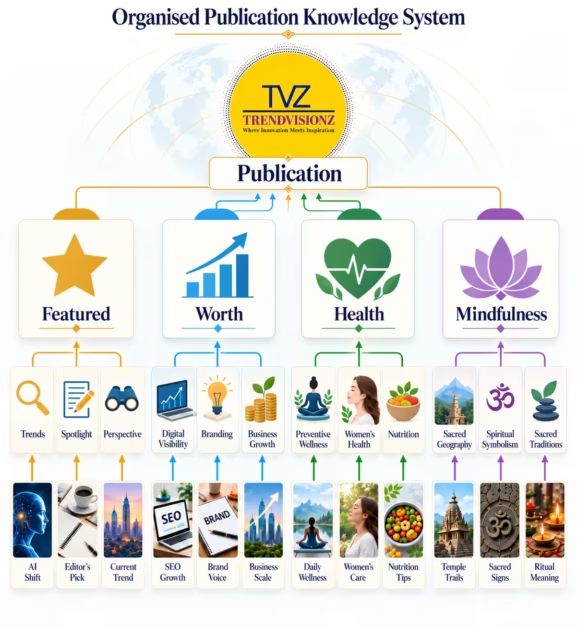
Topic Clusters Create Depth Without Narrowing Coverage
We faced this question while structuring TrendVisionz. Nine categories gave us broad editorial territories. But categories alone could not reveal where deeper subject expertise was taking shape.
That led us to 27 topic clusters. Each cluster creates a more focused area within a broader category. For example:
- Worth → Digital Visibility
- Mindfulness → Sacred Geography
- Sports → Sports Business
- Health → Preventive Wellness
The logic is simple. Articles strengthen a cluster through connected coverage. Clusters then strengthen the category around them. Over time, categories build a clearer publication identity.
This structure also improves internal linking. Related articles stop behaving like isolated pages. They begin supporting one another around recognised subjects.
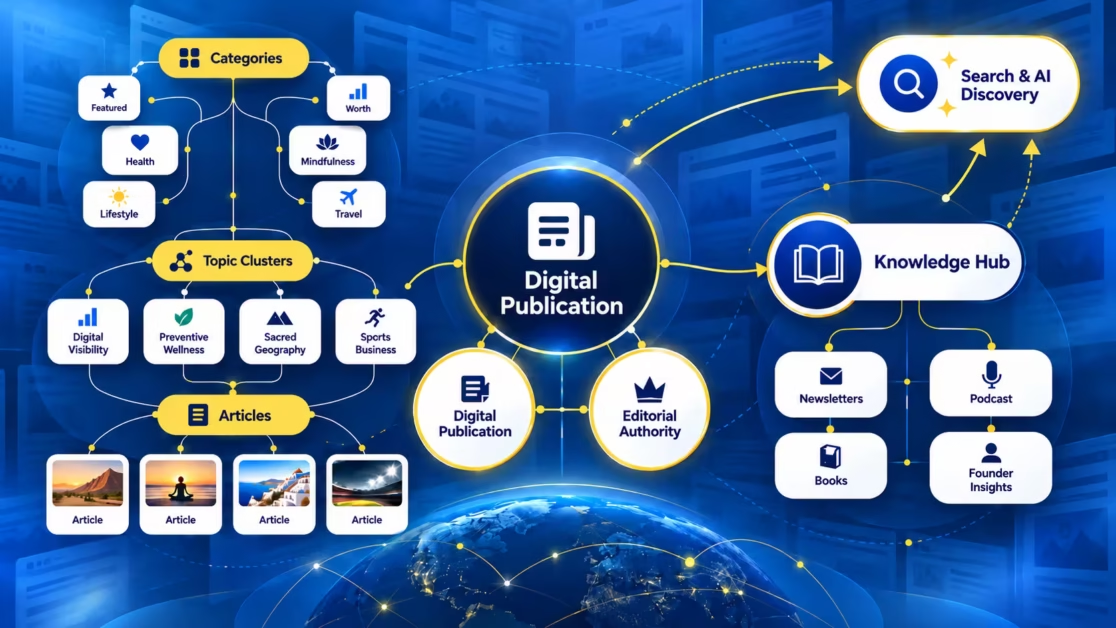
TrendVisionz uses its Knowledge Hub differently. Topic clusters organise article authority. The Knowledge Hub connects wider assets, including newsletters, podcasts, books and founder insights.
How Do Topic Clusters Strengthen a Digital Publication?
Topic clusters organise related articles around one defined subject. They help readers explore deeper coverage. They also give search engines and AI systems clearer signals about relationships, subject depth and consistent expertise.
Strong publication architecture therefore does more than organise content. It turns individual articles into connected knowledge that readers and discovery systems can understand more easily.
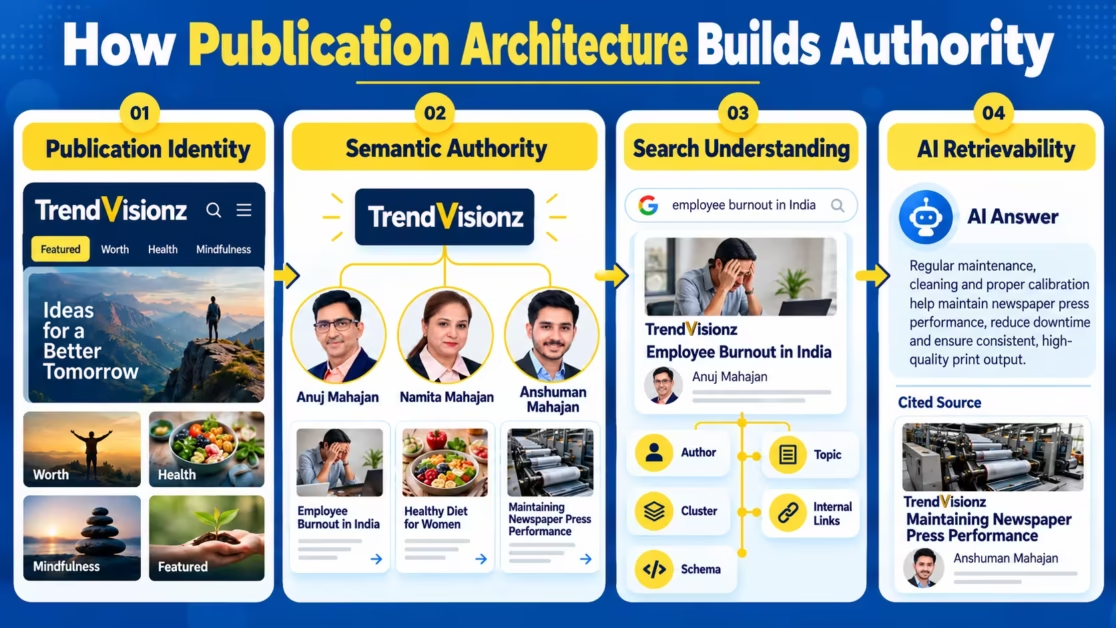
Connected Publication Architecture Strengthens Search and AI Discovery
Search engines and AI search systems do not interpret a publication through one page alone. They read connected signals across topics, authors, links and structured data. That is why publication architecture matters beyond navigation.
For digital publishing, these connections help establish what a publication covers, who contributes to it and how its knowledge is organised. At TrendVisionz, that architecture works across five connected layers:
- Digital publication identity: A defined editorial purpose tells systems what the publication represents and where its authority sits.
- Category breadth: Nine categories establish the major knowledge territories covered across the publication.
- Topic cluster depth: Twenty-seven clusters organise deeper subject relationships inside those broader categories.
- Article authority: Individual articles add evidence, interpretation and information gain. Internal links connect that knowledge across related pages.
- Knowledge Hub discovery: The Knowledge Hub connects newsletters, podcasts, books and founder insights beyond the core category-cluster structure.
Google uses structured data to better understand page content. Schema can clarify authors, articles and organisational entities, although it does not guarantee rankings. Google for Developers
For LLMs, clear entities and connected context improve interpretation. Direct answers, original insight, credible sourcing and self-contained passages also improve citation readiness.
TrendVisionz → Digital Publication → Editorial Authority → Categories → Topic Clusters → Articles → Knowledge Hub → Search and AI Discovery
Conclusion
A modern digital publication is not defined by how often it publishes. Its strength comes from editorial structure, clear subject ownership and the ability to build knowledge consistently around defined themes.
Credible authors, focused categories, topic clusters and connected archives turn individual articles into a stronger body of knowledge. That structure helps readers navigate with confidence. It also gives search engines and AI systems clearer signals about expertise, relationships and editorial depth.
The more important question is whether your publishing builds a clear body of knowledge. It is whether your content builds a clear body of knowledge. When readers can recognise your subjects, trust your authors and move easily between related ideas, authority becomes easier to earn and sustain.
With a focus on clarity, authority and discoverability, TrendVisionz explores how modern publishing earns trust. Explore more from our Worth category and continue through Marketing, Growth & Digital Visibility. Discover wider ideas across the Knowledge Hub.
FAQs: Digital Publication
What is a digital publication?
A digital publication is an online editorial property with a defined purpose, subject focus and publishing structure. Named authors, credible sourcing and organised archives help create continuity across its coverage.
What does E-E-A-T mean for a digital publication?
E-E-A-T means Experience, Expertise, Authoritativeness and Trustworthiness. For a digital publication, these signals come from credible authors, reliable sourcing, consistent subject coverage and transparent editorial standards.
How do AI search tools choose which publications to cite?
There is no single public formula for AI citations. Clear answers, credible sourcing, original information, identifiable expertise and self-contained passages can make content easier for AI systems to understand, retrieve and reference.


