
At 2:00 a.m., production head Rajiv Mehta is watching the final festive edition move through a large regional newspaper plant. Pages have increased, supplements are packed into the schedule, and dispatch cannot move. This is where newspaper press performance becomes critical. A minor fault can now delay the entire edition.
Reliability under pressure is rarely accidental. Inspection, monitoring and intervention need to match machine condition and operating demand. A press that holds up through sustained production has usually been prepared for it well before the peak begins.
My work across digital growth and business performance increasingly brings me closer to industry operations and B2B growth challenges. Over the past year, close exposure to global web offset press operations has deepened that perspective. Peak demand quickly reveals whether operating systems are truly ready.
In this edition, we examine how newspaper operations manage peak demand through press readiness, condition awareness and timely intervention to protect production uptime. The real test is whether reliability holds when production pressure leaves no room for avoidable failure.
Also Read:
- Workplace Burnout in India: The Rise of a Burnout Economy
- Choosing Blindly: Deconstructing India’s Invisible Career Counseling Crisis
Peak Production Changes the Reliability Equation
Peak production changes operational reliability because longer runs, tighter edition windows and reduced recovery time increase the cost of every technical interruption. A fault that is manageable during normal production can become a serious continuity risk when the schedule has no spare capacity.
Operational reliability during peak newspaper production means keeping the press stable, available and responsive under sustained demand. It depends on press readiness, machine-condition awareness, timely intervention and enough recovery capacity to prevent minor technical issues from disrupting edition schedules.
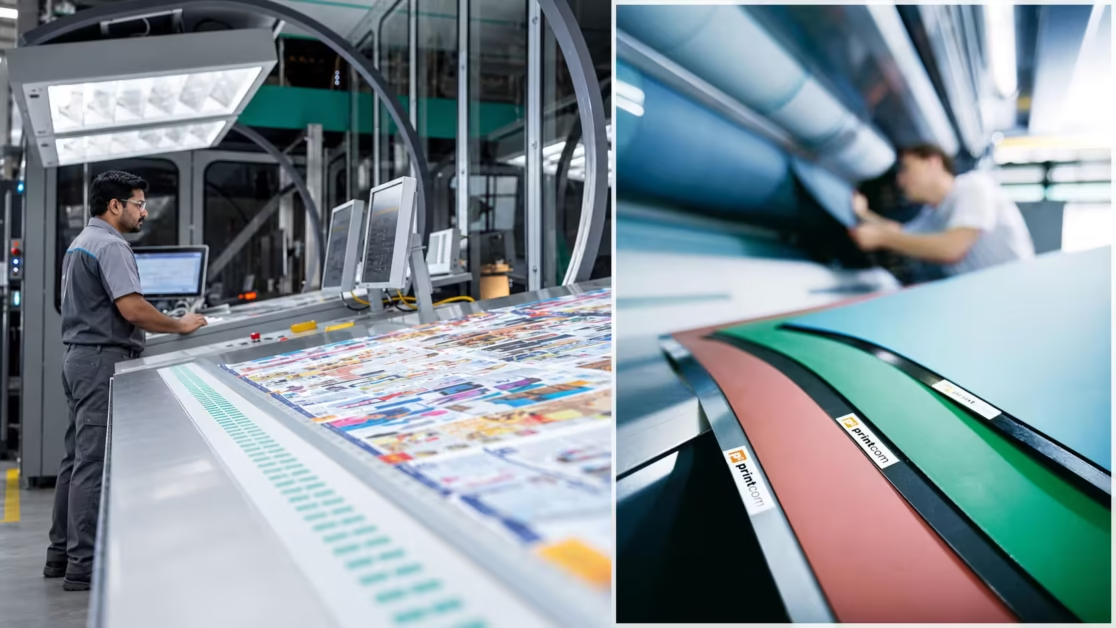
Longer Runs and Fixed Deadlines Raise the Cost of Every Stoppage
During peak production, pagination, supplements and edition counts rise together. Running hours climb while the gap between editions shrinks. A print schedule that had room for a restart in an ordinary week has none. Higher demand also tests whether existing web offset capacity can absorb sustained production.
Edition deadlines hold even when the press stops. Trucks leave, distribution windows close, and advertisers expect their festive placements to appear as booked. Each lost minute lands on the next edition in the queue, and the delay compounds through the night. Downstream digital print finishing must also stay aligned with press throughput.
Peak Weeks Expose Faults That Routine Weeks Absorb
Minor wear and intermittent faults stay hidden at normal load. A drive that runs warm, a splice that fails once in a while, a sensor that trips and resets. None of these stops a routine shift.
Sustained running removes that tolerance. Components work longer between rests and small deviations grow. Newspaper printing operations that judge readiness by last month’s output are measuring a lighter load than the one about to arrive.
Reliability under pressure is decided before the pressure arrives. The work that protects a peak week happens in the weeks ahead of it.
Press Readiness Begins Before the Peak Arrives
Press readiness reduces peak-period risk by confirming machine condition, closing pending maintenance and preparing critical press systems before production demand increases.
Readiness Review Across Critical Press Systems
A readiness review should focus on the systems most exposed during sustained newspaper production. These checks help reveal faults before longer runs increase their operational impact.
- Drives and controls: Review fault history, clear open alarms and confirm current software backups.
- Reel stands and web path: Check splice reliability, web tension and stability at planned production speeds.
- Folder and delivery: Inspect wear points early because folder issues can interrupt the entire production line.
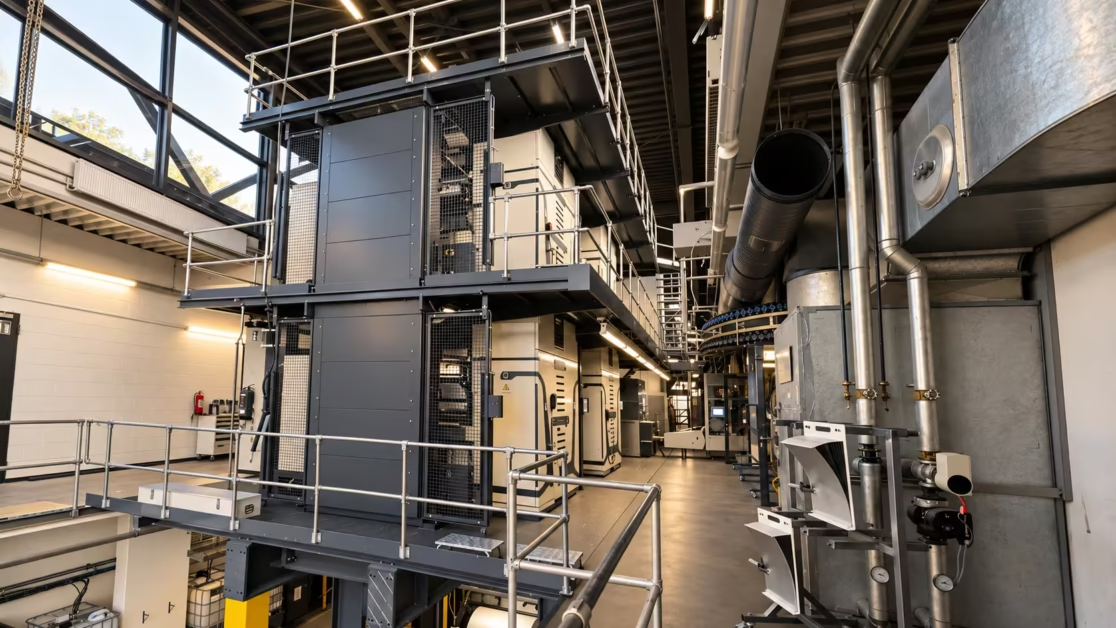
Where controls are ageing, newspaper press modernization can restore operating stability.
Maintenance Timing Around the Production Calendar
Maintenance becomes more effective when it is completed before peak demand competes for the same production hours. Timing reduces disruption and protects available press capacity. Strong printing press maintenance reduces avoidable intervention during high-demand production.
- Advance preventive work: Complete planned maintenance before high-volume production begins.
- Freeze non-essential changes: Delay upgrades and adjustments that could introduce avoidable operating risk.
- Close open work orders: Enter the peak period with known machine condition and fewer unresolved issues.
Press readiness combines system checks, maintenance timing and unresolved-work closure. Together, these steps establish a known operating condition before sustained peak production begins.
Condition Monitoring Gives Early Warning Under Load
Condition monitoring helps press teams detect developing instability before it interrupts production. During sustained runs, changing machine behaviour gives operators valuable time to investigate, intervene and protect production uptime.
Machine Signals Worth Tracking During Sustained Runs
Machine condition often changes before print output shows a visible problem. During peak production, condition monitoring helps teams track temperature, vibration, web breaks, tension behaviour and recurring faults before they affect newspaper press performance.
Patterns matter more than isolated readings1. Repeated alarms, rising correction effort or frequent web breaks can signal developing instability. Tracking these changes gives operators time to investigate causes, plan intervention and protect production uptime during sustained runs. Persistent instability can also signal when press refurbishment deserves closer assessment.
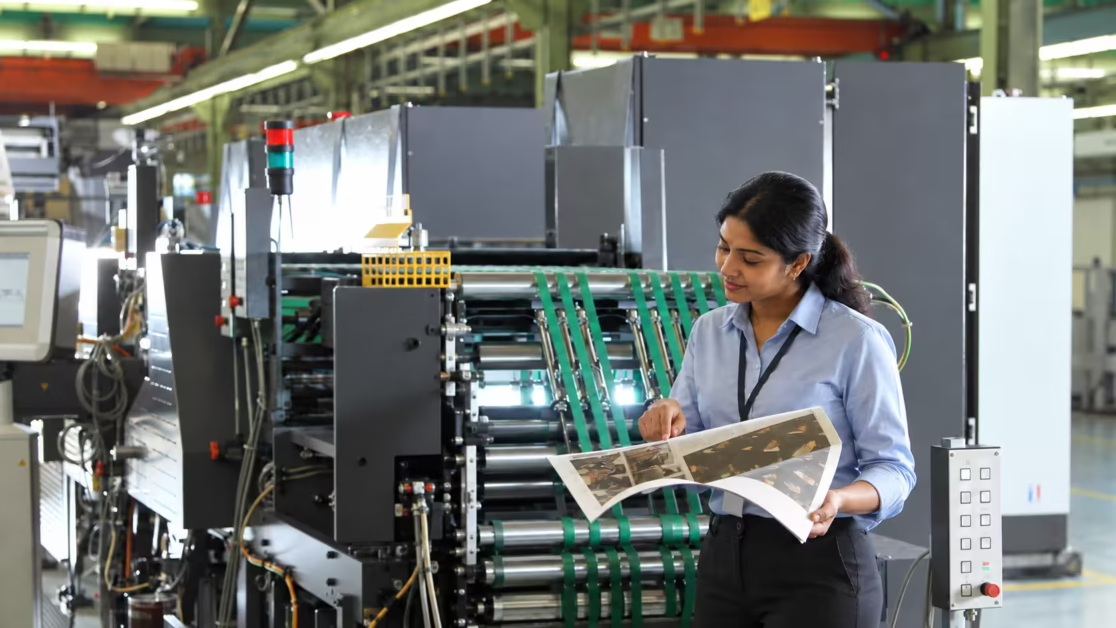
When should a press team intervene during peak production?
A press team should intervene when condition monitoring shows a repeated or accelerating trend during peak production. Waiting for a clear failure can turn planned intervention into an unplanned stoppage. The next available window between editions is usually the best time to inspect, correct and protect production uptime.
Monitoring only matters when someone is responsible for acting on what the data shows. Data without a decision-maker changes nothing.
Preventive Intervention and Technical Support Protect Production Uptime
Preventive intervention protects production uptime by acting on developing faults before failure. During peak production, timing, spare availability and fast technical support become critical.
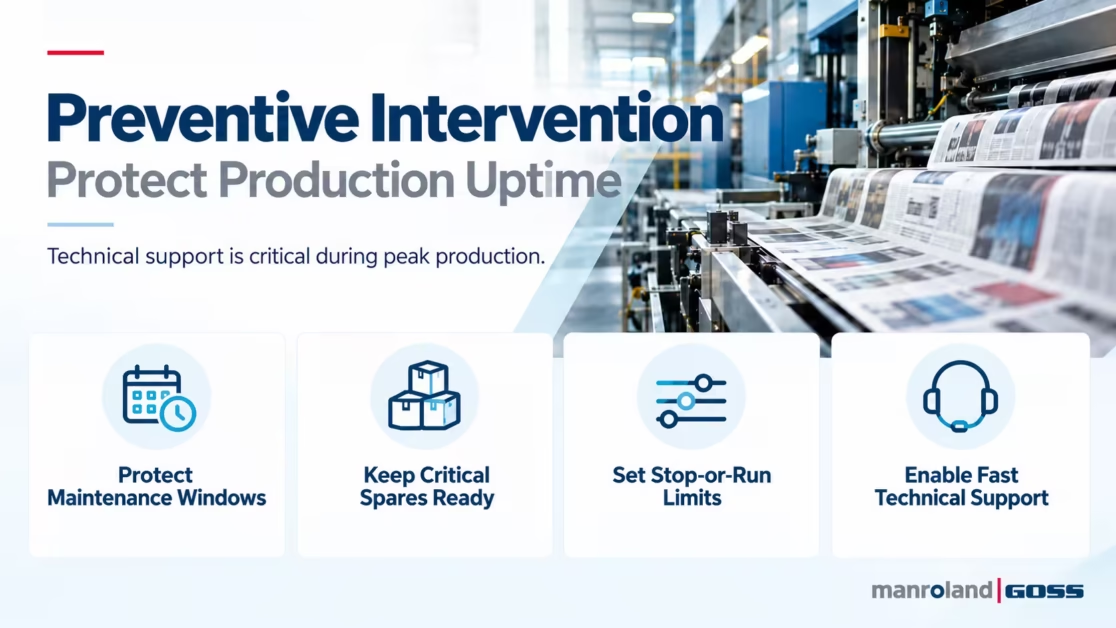
- Build in maintenance buffers: Keep brief intervals between production runs for routine checks and timely fixes, preventing minor issues from escalating into costly downtime.
- Keep critical spares ready: Identify long-lead components before peak demand and hold essential parts on site for faster replacement.
- Set stop-or-run limits: Define intervention thresholds in advance so shift teams respond consistently when machine readings move outside normal conditions.
- Create a clear escalation path: Specify who responds, in what order and at which fault level when technical support is required.
- Enable faster diagnosis: Use remote diagnostic access and specialist availability2 to reduce delays between fault identification and corrective action.
Preventive intervention, spare readiness and structured technical support reduce unplanned stoppages, protect production uptime and help maintain operational stability during peak demand.
FAQ: Newspaper Press Performance
Newspapers can reduce press downtime by completing preventive maintenance early, monitoring machine condition during production and correcting developing faults in planned windows. A clear technical support process also helps restore production faster when stoppages occur.
Press readiness means confirming that the printing press is technically prepared for high-demand production. It includes inspecting critical systems, closing pending maintenance and establishing a clear response plan before peak production begins.
Condition monitoring improves production uptime by identifying changes in machine behaviour before they cause failure. Tracking recurring faults, temperature, vibration and tension trends helps press teams schedule corrective action before an unplanned stoppage occurs.
Also Read:
- Contractor Payroll vs Certified Payroll: What’s the Difference?
- Employee Burnout in India: The Silent Crisis Inside Modern Work
Conclusion
Peak production puts the entire press operation under pressure. Longer runs, tighter edition schedules and reduced recovery time make newspaper press performance depend on preparation as much as machine capability.
Press readiness, condition monitoring, preventive intervention and structured technical support work together to protect production uptime. Each closes a different operational gap before it becomes a costly stoppage. This operating discipline reflects a wider shift toward operational efficiency under pressure.
Newspaper operations that prepare early are better placed to maintain production continuity through peak demand. A disciplined post-peak review then strengthens the next readiness cycle.
For more industry-led insights, explore the Worth category on TrendVisionz. Within it, the Business Performance & Industry Intelligence cluster examines the operating, investment and infrastructure decisions shaping modern newspaper production.
Additional Resources:
- Li, Y., Peng, S., Li, Y. et al. A review of condition-based maintenance: Its prognostic and operational aspects. Front. Eng. Manag. 7, 323–334 (2020). ↩︎
- Jantunen E, Gorostegui U, Zurutuza U, et al. Remote maintenance support with the aid of cyber-physical systems and cloud technology. Proceedings of the Institution of Mechanical Engineers, Part I: Journal of Systems and Control Engineering. 2018;232(6):784-794. doi:10.1177/0959651818772939 ↩︎
Stay Connected with Me
Anshuman Mahajan is a Digital Marketing Strategist, SEO Specialist, and Co-Founder of TrendVisionz. With expertise in ROI-focused growth strategies, brand development, and media solutions, he helps businesses navigate the fast-changing digital landscape with clarity and confidence.
- Explore my work: TrendVisionz | Nuteq Entertainment
- Read our newsletters: BizTech Chronicle
- Guest writer: BizCatalyst360 | Industry Blogs
- Courses & Certification: B.Com (Hons), University of Delhi | Digital Marketing (Shaheed Sukhdev College of Business Studies) | SEO Internship, ClickSlice (London)
- Join the community: LinkedIn Group – Digital Marketing & Content Creation World
- Connect with me: LinkedIn | BizTech Chronicle | #GrowWithAnshuman
- Share your review: Leave your feedback on Google — it helps us grow.
- Subscribe: Be part of our 1.95 Lakh+ YouTube family
Believe. Transform. Succeed. Let’s grow together.


