
When was the last time you asked, “Am I eating well?” You plan meals, remember everyone’s preferences, and worry about their nutrition. Yet, on busy days, you eat whatever is convenient—or simply eat last. A healthy diet for women often gets lost somewhere between work, family, and everyday responsibilities.
But your body does not need the same nutrition forever. Adolescence, menstruation, pregnancy, motherhood, and menopause each bring different demands. What supports you in your twenties may not be enough later. Nutrition needs to move with your life, not remain fixed.
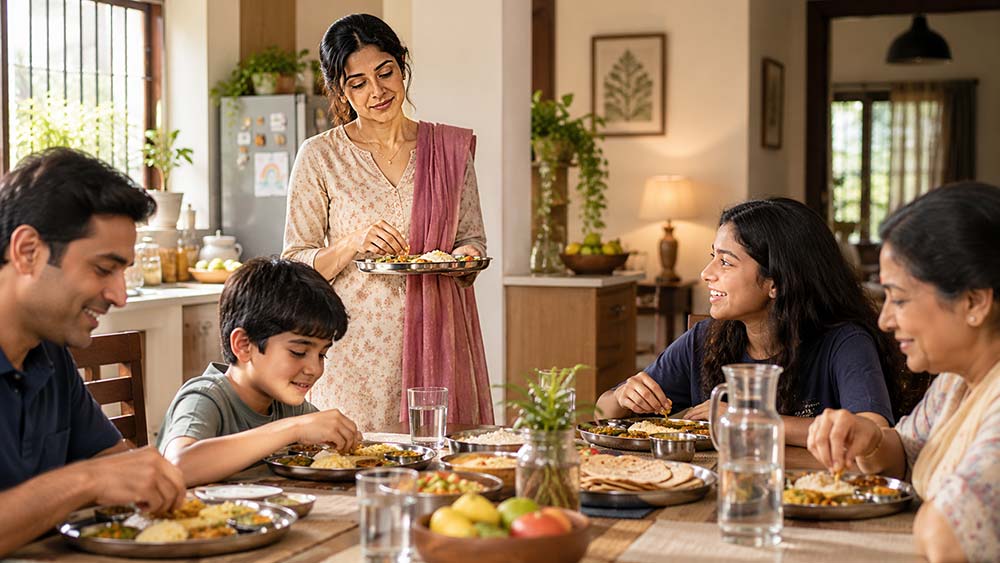
Over the years, as a media professional, I’ve worked closely with healthcare professionals and followed women’s health stories across different life stages. One pattern stands out: women often pay close attention to their family’s nutrition while quietly placing their own needs last.
In this edition, we explore how women’s nutritional needs change through life. We look at essential nutrients, pregnancy nutrition, motherhood, menopause, and practical healthy eating. The goal is not a perfect plate. It is knowing what your body needs at each stage.
Also Read:
- The New Face of Childbirth in India: What NFHS-6 Is Really Telling Us
- AI in Dentistry: Transforming Modern Dental Care
A Woman’s Nutrition Changes at Every Life Stage
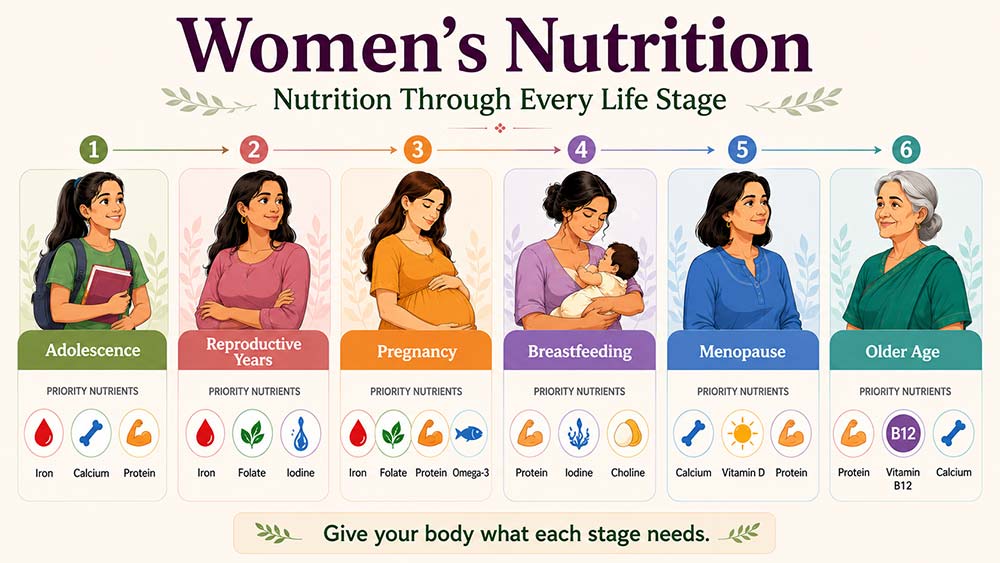
A healthy diet for women cannot remain unchanged throughout life. The body has different nutritional priorities1 during growth, menstruation, pregnancy, breastfeeding, and menopause. Understanding these shifts is central to women’s health and nutrition, rather than following one fixed idea of healthy eating.
A healthy diet for women changes across life. Adolescence builds reserves, menstruation raises iron needs, pregnancy demands more micronutrients, breastfeeding shifts them again, and menopause increases focus on bone and muscle. Food should evolve with each stage.
The Early Years That Set a Woman’s Foundation
Adolescence is a critical period for growth and building bone reserves. Menstruation also introduces regular iron loss. Girls aged 14–18 need around 15 mg of iron and 1,300 mg of calcium daily, making adequate nutrition especially important during these years.
Reproductive years bring different demands. Menstrual blood loss keeps iron important, while folate, calcium, protein, vitamin B12, and iodine support women’s health. Restrictive diets can create nutritional gaps even when calorie intake appears sufficient. Nutrition is one part of understanding adolescent health in girls more fully.
The Later Years That Change the Rules
Pregnancy brings another nutritional shift. Blood volume expands while the placenta and growing baby increase demand for selected nutrients. The focus moves towards greater nutrient density, not simply larger portions.
Breastfeeding changes these needs again. Iron requirements generally fall, while iodine and choline needs rise. With menopause, declining estrogen affects calcium absorption and bone health. Protein, calcium, vitamin D, and regular movement become increasingly important for maintaining bone strength, muscle health, and overall wellbeing.
A growing teenager and a menopausal woman clearly cannot have identical nutritional priorities. Paying attention to these changes early helps women nourish the body they have today, rather than waiting until nutritional gaps begin affecting everyday wellbeing.
The Nutrients That Carry the Most Weight for Women
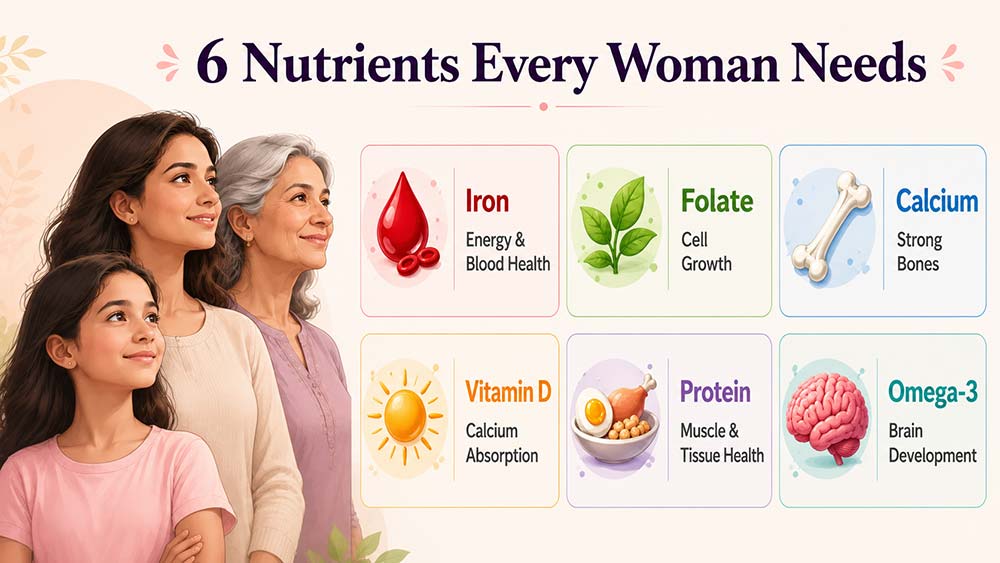
Women need many nutrients, but some become especially important because of menstruation, pregnancy, bone health, and ageing. A food-first approach helps meet these changing needs2 through everyday meals, rather than depending unnecessarily on supplements.
The Everyday Nutrients Women Miss Most
- Iron: Iron supports haemoglobin formation and oxygen transport. Menstruating women need regular dietary sources such as dal, beans, leafy greens, sesame, and iron-fortified foods. Pairing plant-based iron with vitamin C from amla, guava, oranges, or lemon can improve absorption.
- Folate: Folate supports cell division and becomes particularly important before and during early pregnancy. Beans, lentils, leafy vegetables, citrus fruits, and fortified grains are useful sources. Adequate intake matters even before a woman knows she is pregnant.
- Calcium and protein: Calcium supports bones, muscles, and nerve function, while protein supports muscle and tissue health. Curd, paneer, ragi, sesame, dal, eggs, soya, beans, nuts, and seeds can make both easier to include across regular meals.
The Nutrients That Work Together
- Iron and vitamin C: Eating iron-rich foods is only part of the picture. Vitamin C helps the body absorb non-heme iron from plant foods more effectively.
- Calcium and vitamin D: Calcium cannot protect bones alone. Vitamin D helps calcium absorption, while weight-bearing activity provides another important stimulus for maintaining bone strength.
- Iodine, omega-3 and vitamin B12: Iodine supports thyroid function, omega-3 fatty acids contribute to brain health, and vitamin B12 supports blood and neurological function. Their importance can change with pregnancy, dietary patterns, and age.
The bigger lesson is simple: nutrients work within an overall eating pattern. Supplements may help when specifically needed, but they cannot compensate for a diet consistently lacking variety, nutrient-dense foods, and adequate nourishment.
Pregnancy Needs More Nutrition, Not More Food
Pregnancy changes nutritional needs, but it does not mean eating twice as much. Iron needs rise from 18 to 27 mg daily, while iodine increases from 150 to 220 mcg. Calcium remains unchanged. Healthy pregnancy nutrition is about nutrient density, not larger portions.
Anaemia in Pregnancy and the Importance of Iron Nutrition
Pregnancy increases blood volume and red-cell production, raising iron requirements. Low haemoglobin may cause tiredness, weakness, or dizziness. However, anaemia in pregnancy is not always caused by iron deficiency alone.
When choosing food to eat during pregnancy, nutrient quality matters. Iron-rich foods during pregnancy include dal, beans, leafy greens, and eggs. Vitamin C helps improve plant-based iron absorption. Good prenatal nutrition complements routine antenatal screening. Supplements should follow qualified healthcare guidance.
Which nutrients matter most during pregnancy?
Iron, folate, iodine, calcium, protein, and choline matter during pregnancy. Their requirements change selectively, not uniformly. A varied diet alongside doctor-advised prenatal supplementation supports these needs more effectively than simply eating larger portions.
Good nutrition builds the foundation for pregnancy, but it works alongside regular antenatal care. Eating well, attending routine check-ups, and discussing nutritional concerns early help support both maternal and fetal wellbeing.
Motherhood and Menopause Ask for Different Foods
A woman’s nutritional needs continue changing after pregnancy. Breastfeeding places new demands on maternal nutrition, while menopause shifts attention towards protecting bones and muscles. Both stages show why women’s health nutrition must evolve with the body.
Breastfeeding Shifts the Balance Again
Breastfeeding does not simply extend pregnancy nutrition. Iron requirements generally ease after delivery, while iodine and choline needs rise to support breast milk and infant development. Adequate protein and fluids also remain important during this stage.
Rather than avoiding entire food groups without reason, focus on dietary variety. Dal, vegetables, fruits, whole grains, dairy or suitable alternatives, eggs, nuts, seeds, and other familiar foods can help provide broader nourishment during breastfeeding.
Menopause Turns the Focus to Bone and Muscle
- Protect bone health: Declining estrogen changes calcium absorption and increases bone loss. Calcium-rich foods such as curd, paneer, ragi, and sesame become particularly valuable alongside adequate vitamin D.
- Preserve muscle strength: Protein becomes increasingly important for maintaining muscle with age. Dal, beans, eggs, dairy, soya, nuts, and seeds can help distribute protein across everyday meals.
- Prioritise nutrient density: Energy needs may gradually decrease, but nutritional needs do not disappear. Choosing nutrient-dense foods and staying physically active helps support bone, muscle, and overall health through menopause and beyond.
Motherhood and menopause bring very different nutritional demands. Paying attention as those needs change helps women support their health proactively, rather than waiting for tiredness, weakness, or other concerns to appear.
Making a Healthy Diet Work in a Real Woman’s Day
Knowing what to eat is often not the real challenge. Work, family, caregiving, and countless daily decisions compete for attention. Healthy diet for women becomes easier when good choices require less planning, not more effort.
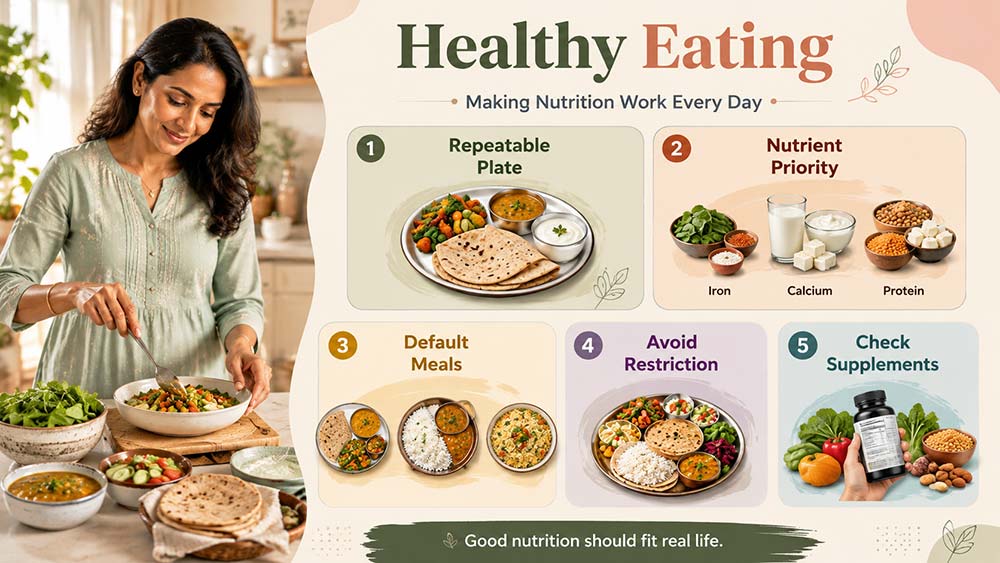
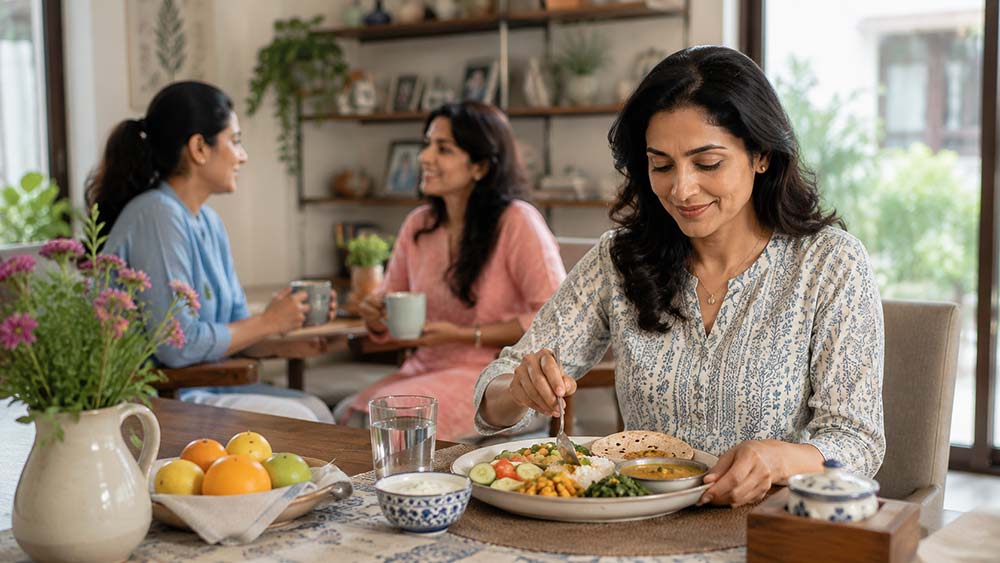
- Build a repeatable plate: Combine vegetables, protein, whole grains or pulses, and a calcium source or healthy fat. A dal-roti-sabzi meal, curd-rice combination, or simple thali already provides a practical foundation3.
- Prioritise what you may be missing: Nutritional priorities change with life stages. Build meals around iron, calcium, or protein when these nutrients need greater attention.
- Reduce daily food decisions: Keep a few balanced meals as regular defaults. Familiar choices reduce planning without sacrificing dietary variety.
- Avoid restrictive diets: Cutting entire food groups or eating too little can reduce iron, calcium, protein, essential fats, and overall energy intake.
- Look beyond supplements: Read labels and understand what a supplement actually provides. A multivitamin may support specific needs, but it cannot replace varied, nutrient-dense food.
Healthy eating does not need perfect meals every day. Small choices that fit naturally into your routine are easier to sustain and ultimately matter more than short periods of dietary perfection.
FAQs: Healthy Diet for Women
Nutrition matters throughout pregnancy, but the earliest weeks are especially important because major fetal development begins before many women know they are pregnant. Folate, iron, iodine, protein and other nutrients remain important as pregnancy progresses.
Yes. Maternal nutrition supports fetal growth, brain development, blood formation and healthy tissue development. Poor nutritional intake can affect both mother and baby, which is why pregnancy nutrition should focus on nutrient quality alongside regular antenatal care.
Yes. Anaemia in pregnancy is not always caused by poor diet or iron deficiency. Blood-volume expansion, vitamin deficiencies, absorption problems or other causes may contribute. Regular antenatal screening helps identify when nutrition alone may not explain low haemoglobin.
Also Read:
- Medical Aesthetic Clinics: A Modern Approach to Dental, Skin, and Hair Care
- Muscle Loss in Women: Why Strength Matters After 40
Conclusion
A healthy diet for women is not one fixed plan. Nutritional needs change through adolescence, reproductive years, pregnancy, motherhood, menopause, and later life. What matters is recognising those changes and responding to them early.
Through years of following women’s health stories, I have seen how easily women place themselves last. Better nutrition does not demand perfection. It begins with consistent food choices that reflect what your body needs today.
Your health deserves the same attention you give everyone around you. Explore more evidence-led insights in our Health category and Women, Pregnancy & Family Health cluster.
Editorial Note: This article provides general nutrition and wellness information for educational purposes. Individual needs vary. Please consult a qualified healthcare professional for personalised dietary advice, supplementation, or health concerns.
Additional Resource:
- Harak, S. S., Shelke, S. P., Mali, D. R., & Thakkar, A. A. (2025). Navigating nutrition through the decades: Tailoring dietary strategies to women’s life stages. Nutrition, 135, 112736. https://doi.org/10.1016/j.nut.2025.112736 ↩︎
- Mukherjee, R., Bansal, P. G., Lyngdoh, T., Medhi, B., Sharma, K. A., Prashanth, T., Pullakhandam, R., Chowdhury, R., Taneja, S., Yadav, K., Madhari, R., Arora, N. K., Bhandari, N., Kulkarni, B., Nair, K. M., & Bhatnagar, S. (2024). Recommendations for India-specific multiple micronutrient supplement through expert consultation. Indian Journal of Medical Research, 159(6), 547–556. ↩︎
- Sipilä, S., Törmäkangas, T., Sillanpää, E., Aukee, P., Kujala, U. M., Kovanen, V., & Laakkonen, E. K. (2020). Muscle and bone mass in middle-aged women: Role of menopausal status and physical activity. Journal of Cachexia, Sarcopenia and Muscle, 11(3), 698–709 ↩︎
Stay Connected with Me
Namita Mahajan is a Lifestyle Influencer, Digital Strategist, and Womenpreneur empowering self-reliance and creativity through storytelling and digital presence.
As Director of Nuteq Entertainment Pvt. Ltd. and Co-Founder of TrendVisionz, she brings together media experience, empathy, and innovation to build purposeful brands.
- Explore our work: Nuteq Entertainment | TrendVisionz | About the Authors
- Read our newsletters: Transforming Lives | BizTech Chronicle | Nuteq Newsline
- Guest writer: BizCatalyst360 | Praja Today
- Join the community: Go Mindfulness: Practices for Professionals Coached
- Connect with me: LinkedIn | Twitter | #StoryforBusiness
- Share your review: Leave your review on Google — your feedback helps us grow.
- Listen on Spotify: Leadership Podcast | Guided NLP | Daily Motivation
Believe. Practice. Perform. Let’s create impact together.
✍️ A Note from the Editor
At TrendVisionz, we craft every article with intention—guided by insight, empathy, and the belief that stories can empower change. Our content remains open and free, because knowledge should be accessible to everyone.
If our work inspires you, we’d be deeply grateful for your support. Even $10/month helps us continue creating stories that inform, uplift, and inspire.
💛 Support our work: Contribute via PayPal or write to us at anujmahajan@trendvisionz.com to set up your monthly support.
Thank you for believing in independent storytelling. — Editor


