
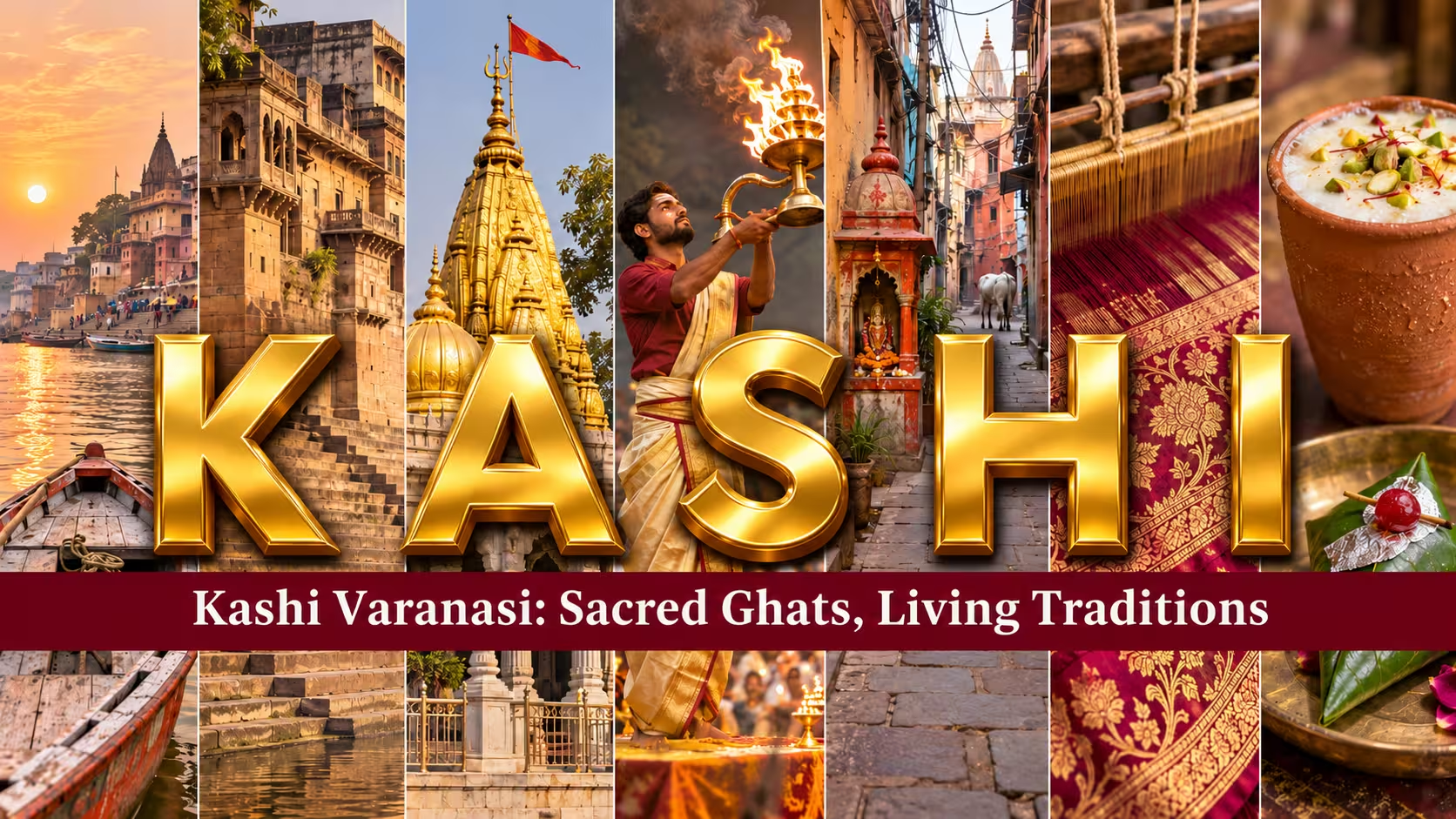
“Khaike Paan Banaras Wala,” the iconic song from Don, starring Amitabh Bachchan, made Banaras familiar long before I walked its famous galliyan. Friends… it is said “Aap Kashi jaate nahi, Mahadev aapko bulate hain.” In Kashi Varanasi, that feeling stayed with me during early-morning Mangla Aarti at Shri Kashi Vishwanath.
Widely regarded as India’s spiritual capital, Kashi stands among the world’s oldest living cities. The history of Kashi spans over 3,000 years of learning and civilisation along the Ganga’s crescent-shaped banks. In this city of 84 ghats, people greet Maa Ganga with prayer, gather for aarti and bid farewell to loved ones.
My media work has taken me across much of India. This family trip to Kashi brought those journeys into a more personal chapter. My family and I have vowed to visit all 12 Jyotirlingas together.
In this edition, we explore how faith and culture shape Kashi’s enduring appeal. Its living traditions invite readers to understand devotion, reflect on mortality and discover belonging through the city’s ghats, temples and everyday life.
Kashi Varanasi Unfolds Along Its Sacred Ghats
To understand Kashi Varanasi, spend time beside the Ganga. Across the Varanasi ghats, worship shares space with everyday routines. The sacred geography of Kashi becomes easier to understand when you follow these steps and shrines.
Varanasi’s 6.5-kilometre riverfront forms a chain of 84 ghats, linking the Ganga with temples and historic buildings above. These steps remain active spaces for worship, festivals and rituals, carrying the city’s sacred traditions into everyday life — UNESCO World Heritage Centre
Namo to Assi Traces the Modern Riverfront
Begin the 4 Mile journey on the eastern edge at Namo Ghat, a modern addition to a riverfront traditionally described through its 84 ghats. The riverfront’s architecture 1reflects successive periods of patronage, rebuilding and heritage conservation
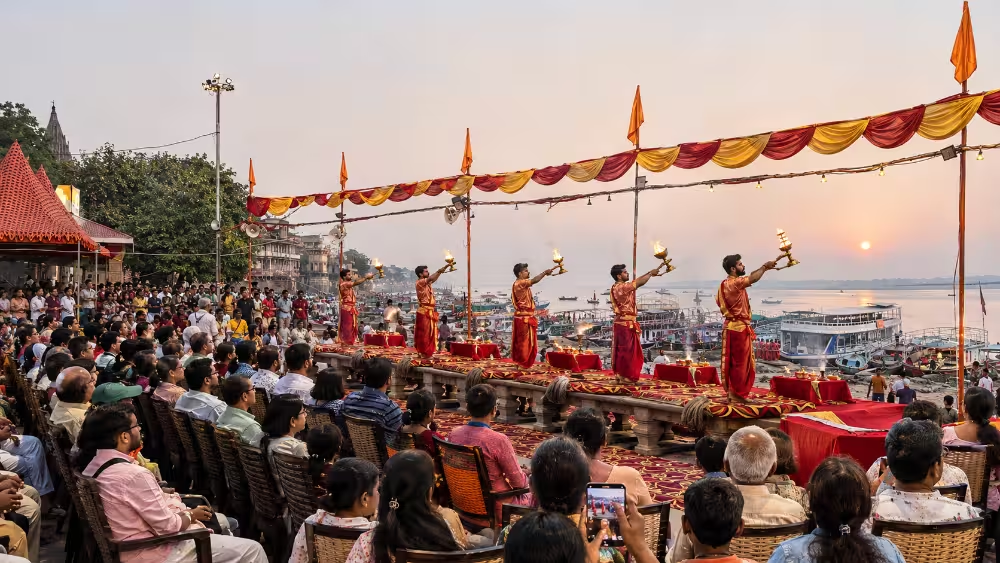
Travelling towards Assi, you pass Manikarnika Ghat before reaching Dashashwamedh Ghat, where devotees gather for evening worship. Further along, Kedar Ghat’s steps lead towards Shir Gauri Kedareshwar Temple, dedicated to Lord Shiva. For devotees unable to reach Kedarnath, tradition accords worship here a comparable sacred significance. Through this tradition, the Himalayan sacred landscape of Kedarnath and nearby Chorabari Tal finds a connection with Shiva worship beside the Ganga in Kashi.
At Assi Ghat, the riverfront opens into neighbourhoods where a temple visit can become part of your walk. Further inland, beyond the ghats, Sankat Mochan Hanuman Temple draws devotees seeking courage and relief from troubles through Lord Hanuman. Kashi’s river worship also belongs to a wider pilgrimage landscape. Upstream, the Panch Prayag mark five sacred confluences along the Alaknanda, connecting Himalayan waters with the Ganga revered here.
Worship of the Ganga Shapes Life Along Kashi’s Ghats
For worshippers, she is Maa Ganga, approached with the affection and reverence reserved for a mother. Folded hands, offerings and ritual bathing give that relationship a daily expression. A pilgrim may arrive carrying a prayer held for years; someone living nearby returns to the same steps each morning. Both find room beside the river.
Ganga Aarti gives this devotion a shared voice, from morning worship at Assi to evening lamps at Dashashwamedh. During our family visit, the aarti at Assi continued through rain. That sight stayed with me: worship carried on despite the weather. The musical refrain “Har Har Gange” feels especially close when remembering that devotion beside the water.
Beyond the riverbank, this faith finds expression in Kashi’s learning, music and craftsmanship. Following those connections helps explain why its cultural traditions remain so personal.
Spiritual and Cultural Traditions Define Kashi
Kashi’s identity grows through prayer, study and work handed down across generations. Its temples draw pilgrims, while classrooms, music rooms and workshops sustain a culture that reaches well beyond the riverfront.
Manikarnika Ghat and Kashi’s Traditions of Moksha
People come to Kashi with different beliefs and hopes. Understanding these connections gives its rituals meaning beyond what visitors first see.
- Sacred traditions: Hindu worship shares Kashi’s history with Buddhism at nearby Sarnath, Jain Tirthankara traditions and Guru Nanak’s visit. The Panchakroshi Yatra carries Hindu pilgrims around a sacred circuit of shrines.
- Moksha and Lord Shiva: Moksha in Hindu tradition means liberation from the cycle of birth and rebirth. Kashi’s devotional traditions hold that Lord Shiva grants liberation to those who die here.
- Manikarnika and impermanence: At Manikarnika Ghat, families perform cremation rites2 and bid farewell to loved ones. Watching from our boat late one evening, I saw life continuing beside these rites. It brought questions of attachment, surrender and impermanence close to home.
Learning, Music and Craft Sustain Banaras’s Heritage
Kashi’s cultural inheritance also lives in what people teach, practise and make. Each generation has work to do in keeping it alive.
- Learning and literature: Vedic studies, Sanskrit scholarship, philosophy and Yoga remain part of Kashi’s learning traditions, alongside Banaras Hindu University (BHU). Kabir’s verses, Tulsidas’s devotional writing and Premchand’s stories offer different ways of understanding faith and society.
- Music and spiritual devotion: Banaras Gharana, Bismillah Khan’s shehnai and Ravi Shankar’s sitar belong to the city’s musical heritage. Khan’s riyaaz at Balaji Mandir and beside the Ganga gave music an intimate connection with its sacred surroundings.
- Weaving and craftsmanship: Banarasi silk, zari weaving, wooden toys and metalware carry skills learned through years of practice. Wooden lacquerware and toys received GI recognition in 2015, acknowledging these living traditions of Banaras.
For me, exploring Kashi with my family brought its cultural heritage closer to our own faith. Visiting its temples deepened our connection with Shiva and Shakti through moments of worship.
Shiva and Shakti Shape Kashi’s Sacred Identity
In Kashi, devotion to Shiva and Shakti draws pilgrims to Vishalakshi Temple. Families return with prayers for their loved ones, carrying forward a bond with the city nurtured across generations.
Devotion to Lord Shiva Defines Kashi’s Sacred Heritage
Vishwanath means “Lord of the Universe.” At Kashi Vishwanath Temple, the Kashi Vishwanath Jyotirlinga is revered among India’s 12 Jyotirlingas, sacred manifestations of Shiva’s light. The temple’s history includes destruction and rebuilding: Aurangzeb ordered its demolition in 1669; Ahilyabai Holkar built the present temple nearby in 1780.
At Kashi Vishwanath Temple,3 the Jyotirlinga is revered among India’s 12 Jyotirlingas, sacred manifestations of Shiva’s light. Darshan offers a moment in the deity’s presence. Rudrabhishek honours Shiva through ritual bathing and sacred chants, while Mangla Aarti opens the temple’s daily worship before dawn. Religious tradition also tells of King Divodasa, whose rule required the gods to leave Kashi. Shiva’s eventual return expresses his enduring attachment to the city. Kashi’s stories of Shiva reminded me of my visit to Patal Bhuvaneshwar Cave, where sacred legends gave meaning to the rock formations I saw.
Shiva worship extends to Birla Temple, also known as New Vishwanath Temple at BHU. At Maha Mrityunjay Temple, devotees pray for wellbeing and longevity. Its well holds a special place in local tradition, which attributes healing properties to its water.
Shakti Worship Holds a Sacred Place in Kashi
Near Mir Ghat, Vishalakshi Temple is revered within the Shakti Peeth tradition. Devotees approach the goddess as a mother whose blessings offer protection. This reverence for the Divine Mother also extends to the nine forms of Durga. At Annapurna Devi Temple, nourishment becomes an expression of divine care. The tradition of Shiva receiving food from Annapurna gives the simple act of feeding someone a sacred meaning.
Kaal Bhairav, revered as Kashi’s guardian or Kotwal, is also the Bhairava associated with Vishalakshi’s Shakti Peeth tradition. Many devotees seek his blessings before visiting other shrines. We followed this Kaal Bhairav-first sequence on our family trip, beginning our darshan with a prayer to the city’s guardian.
Together, these shrines give devotion familiar human expressions: seeking protection, offering nourishment and praying for loved ones. Shiva and Shakti remain part of everyday Kashi.
Lanes of Varanasi and the Flavours of Banaras
Walking through the lanes of Varanasi with my family, we made time for Blue Lassi and Dina Chaat Bhandar between temple visits. After Mangla Aarti, tea at Laxmi Chaiwala gave us a welcome pause before continuing our morning.
Everyday Life in the Banarasi Gallis
A shopkeeper attends to customers while someone stops to pray at a roadside shrine. These living traditions of Banaras give the gallis their character. “Banarasiya” feels at home here, its musical playfulness recalling the city’s affectionate portrayal in popular culture.
Beyond the old lanes, Tulsi Manas Temple brings devotional literature into view through verses from the Ramcharitmanas inscribed on its walls, celebrating the life of Shri Ram. Words heard in homes and recitations become part of the temple visit. Back in the gallis, devotion shares the day with the familiar question: what shall we eat next?
Banarasi Food Traditions Fill the Gallis
Banarasi food traditions begin with breakfast queues and continue through creamy lassi, savoury meals and sweets that follow the seasons. For readers exploring food choices during pilgrimage, satvik travel offers a broader perspective.
- Kachori-sabzi: At Ram Bhandar, crisp, stuffed kachoris meet spicy vegetable gravy, with jalebi adding a sweet finish to breakfast.
- Banarasi lassi: Try malai lassi at Rajaram or dry-fruit lassi at Blue Lassi, served thick and creamy in earthen cups.
- Baati chokha: At Baati Chokha Restaurant, roasted baati comes with mashed vegetable accompaniments, smoky flavours and ghee.
- Banarasi chaat: Dina Chaat Bhandar and Kashi Chaat Bhandar serve tangy tamatar chaat alongside other local favourites.
- Banarasi malaiyo: Shreeji Sweets serves this delicate, airy milk foam, traditionally associated with winter mornings.
Why is Banarasi paan so famous?
Banarasi paan owes its appeal to tender betel leaves and carefully balanced fillings, prepared to individual taste. Leaves may come from Bengal, Bihar or Odisha. Offering paan is part of local hospitality; tasting it at at Kashi completed our food trail.
From tea after Mangla Aarti to paan at Gama, these flavours became part of our family’s Kashi memories. I would happily return to those lanes and enjoy them all again.
Five Reasons Kashi Keeps Calling You Back
Kashi stays with you through devotion, the Ganga, thoughts about life, familiar gallis and remembered flavours. Each gives you a personal reason to return someday.
- Mahadev’s call: Darshan can become a deeply personal reason to return. For me, worship at Kashi Vishwanath belongs to our family’s vow to visit all twelve Jyotirlingas, with time for prayer together. A Mahakaleshwar and Omkareshwar pilgrimage brings two more Jyotirlingas into that wider journey.
- Maa Ganga’s presence: Beside the river, you can sit without needing to fill every minute. Watching worship unfold offers a pause, and perhaps that unhurried time becomes something you miss once you return home.
- Life’s impermanence: Seeing Manikarnika from our boat brought everyday worries into perspective. Such encounters can leave you considering what deserves your attention, what you hold too tightly, and whom you want more time with.
- The familiarity of the gallis: A conversation over tea or directions offered at a turning can make unfamiliar lanes feel welcoming. On another visit, you may recognise a shopfront and feel pleased to know your way.
- The taste of Banaras: Sometimes a remembered flavour is enough to bring a place back. You want another serving, another conversation across the counter, and another morning with no hurry to leave the table yet.
I left Kashi grateful for the time we had together, yet wishing for another morning by the Ganga. Some journeys leave you wanting to return before you reach home.
Carrying Kashi Home
My visit to Kashi Varanasi deepened my understanding of pilgrimage. Praying alongside my family made me appreciate the time we had set aside for faith and for one another.
Give yourself time to understand what you encounter here. Listen to the stories behind a shrine, respect unfamiliar customs, and allow your own response to emerge without expecting a revelation.
You may leave Kashi with questions still unanswered. I came home grateful that we had made this journey together, with a stronger commitment to continuing our family’s pilgrimage.
Explore more TrendVisionz insights on Sacred Geography & Spiritual Heritage of India, and discover how faith shapes places, communities and everyday life. Visit our Mindfulness section for reflections on spiritual traditions and mindful living.
Additional Resources:
- Singh, Rana & Rana, Pravin. (2023). [784.23]. Singh, Rana P.B., and Rana, Pravin S. (2023), The Riverfrontscapes of Varanasi, India: Architectural symbolism, transformation, and heritagization. EdA Esempi di Architettura, International Journal of Architecture and Engineering [2/yr since 2004; ISSN [print]: 2384-9576 – MIUR E211002, ISSN [e-version]: 2035-7982– MIUR E199789, Rome], Vol. 10 (no° 2), February 16th, 2023: pp. 244-269.. 10. 244-269. 10.53136/97912218053761. ↩︎
- Parry, J. (1980). Ghosts, greed and sin: The occupational identity of the Benares funeral priests. Man, 15(1), 88–111 ↩︎
- Lazzaretti, V. (2013). Banaras jyotirliṅgas: Constitution and transformations of a transposed divine group and its pilgrimage. Kervan – International Journal of Afro-Asiatic Studies, 17, 1–19 ↩︎
About Anuj Mahajan
Anuj Mahajan is a media entrepreneur, author, filmmaker, and COO of Nuteq Entertainment. With more than 32 years of experience across media, communication, leadership, and business growth, he writes about communication architecture, human behaviour, leadership, mindfulness, business transformation, and decision-making.
He is the Co-Founder of TrendVisionZ, author of three books, creator of the StoryforBusiness podcast, and publisher of the Transforming Lives newsletter.
Explore the Ecosystem
- Explore my work: Nuteq Entertainment | TrendVisionz | Author Profile
- Read my newsletters: Transforming Lives | BizTech Chronicle | Nuteq Newsline
- Guest writer: BizCatalyst360 | Praja Today
- Books: Go Mindfulness: Practices for Professionals Coached
- Join the community: LinkedIn Group – Digital Marketing & Content Creation World
- Connect with me: LinkedIn | Twitter | #StoryforBusiness
- Share your review: Leave your review on Google — your feedback helps us grow.
- Listen on Spotify: Leadership Podcast | Guided NLP (7 Episodes) | Daily Motivation – 21 Episodes
Believe. Practice. Perform.
FAQs: Kashi Varanasi
Are Banaras, Kashi and Varanasi the same city?
Yes. Varanasi is the official name, Banaras a familiar alternative, and Kashi the ancient sacred name, commonly interpreted as “the shining.” The phrase “Banaras Kashi” combines two names for the same city.
Why does the Ganga flow north in Kashi?
The Ganga’s natural course bends northward along Kashi’s riverfront. This stretch is called Uttarvahini, meaning “north-flowing,” and is revered in Hindu pilgrimage traditions. The description applies to this local stretch, rather than the river’s entire course.
Which part of Maa Sati fell at Vishalakshi Temple in Kashi?
Accounts differ within Shakti Peeth traditions. Vishalakshi Temple is associated with Maa Sati’s earrings in some accounts and her eyes or face in others. These descriptions express religious beliefs, with no single version shared across all traditions.


