
A decade ago, a premium pour in India usually meant an imported label. Today, the bottle on the shelf is just as likely to be a homegrown craft spirit, made in small batches with native botanicals and a story of place. What changed was not the drink. It was the drinker.
India’s alcoholic beverage industry is undergoing rapid premiumisation. A study published in The Lancet 1reported that India’s per capita alcohol consumption increased by 38%, rising from 4.3 litres to 5.9 litres per adult annually. Consumers are increasingly choosing premium over familiar. Women founders are helping shape that shift in a traditionally male-dominated alcobev industry.
Over the years, as a media professional, I’ve closely observed changing consumer behaviour and evolving social attitudes. I’ve always been drawn to stories of women breaking barriers. This story brings those two perspectives together through the journeys of women founders building India’s next generation of craft spirits brands.
Their journeys reveal changing aspirations, stronger homegrown brands, and a new generation of consumers choosing authenticity over familiarity. What began as a handful of women entering a closed industry now signals where India’s premium spirits are headed next.
Also Read:
- Best Breathable Activewear Fabrics for Indian Summers
- Women Riders in India Changing the Biking Landscape
Craft Spirits and the Rise of Premium Drinking in India
India’s drinking culture is moving up, not out. The alcobev industry is headed for roughly ₹5.3 lakh crore this year. This reflects the rise of affordable luxury in India, where consumers seek better quality, distinctive experiences, and stronger brand stories without entering ultra-luxury segments. This evolving consumer mindset is redefining how India discovers, values, and chooses premium spirits.
Premiumisation is the consumer shift from mass-market alcoholic beverages to premium spirits that offer superior quality, authentic ingredients, distinctive flavour profiles, and compelling brand stories. It reflects changing consumer preferences towards experience, craftsmanship, and value rather than volume.
Consumers increasingly prefer premium quality, authentic ingredients, regional heritage, and distinctive flavours over mass-produced alcoholic beverages. This evolving preference explains why craft spirits have become one of the strongest expressions of India’s premiumisation trend.
From Volume to Value: Why Premium Spirits Are Growing
India’s overall spirits market volume is growing at around 5–6%, while revenue is rising faster at 8–10%. The World Health Organization (WHO) highlights how economic development and social factors influence alcohol consumption patterns. A recent secondary analysis of NFHS-52 data also highlights evolving alcohol consumption patterns among young Indians, reflecting broader demographic changes in drinking behaviour. Research on alcohol consumption patterns3 in Southern India has highlighted long-term changes in drinking behaviour. However, the bigger shift is not only how much Indians drink, but how they choose to drink.
This value-led growth is reshaping brand strategies. According to CRISIL, premium and luxury spirits priced above ₹1,000 per 750ml are expected to grow by 15% in FY26. The segment is projected to contribute nearly 38–40% of total spirits revenue. Brands are competing through quality, provenance, craftsmanship, and experience instead of volume-led pricing.
The New Priorities Behind a Premium Bottle
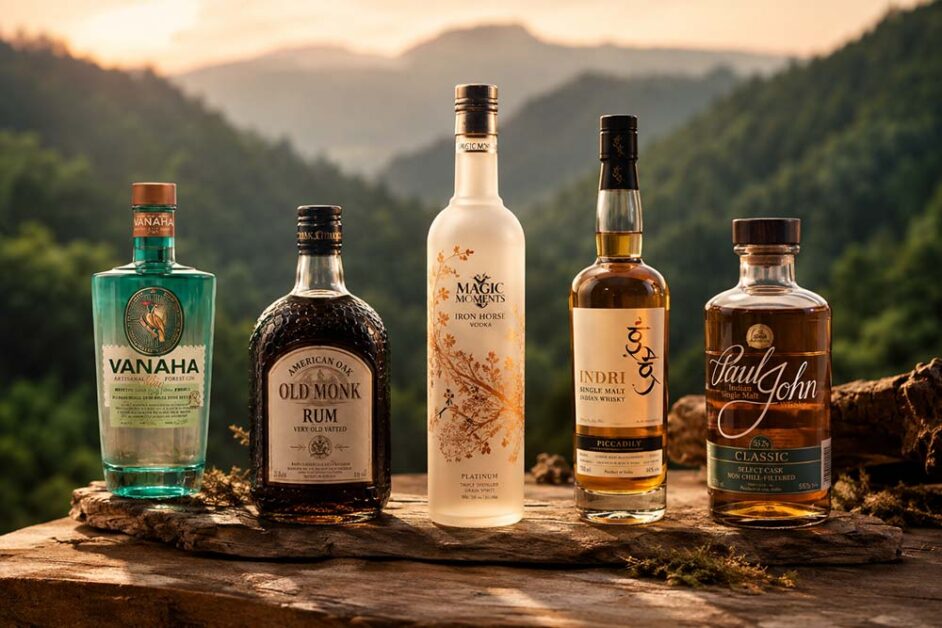
Ask a buyer what they want and price is rarely the first answer. Consumers are looking for distinctive flavours, authentic makers, and stories connected to origin and craftsmanship. A forest gin like Vanaha, a craft rum like Maka Zai, or Indri, a single malt shaped by Himalayan influences, represents more than a drink. These premium Indian spirits represent identity, discovery, and a connection with the people behind the brand.
To me, as an industry expert, this reflects a larger shift in India’s consumption culture. Growing interest in Indian craftsmanship, homegrown brands, and founder-led stories shows that premiumisation is becoming about meaning as much as quality.
Women Building India’s Premium Spirits Brands
Over the years, I have seen that not every founder takes the same road into spirits. Meeting founders across industries has shown me that different journeys demand the same qualities. It requires conviction, patience, and the confidence to challenge one of India’s most male-dominated industries.
Building Through Different Business Models
There was no single blueprint for success. Women founders entered India’s premium spirits industry through different business models, shaped by vision, resources, and long-term ambition.
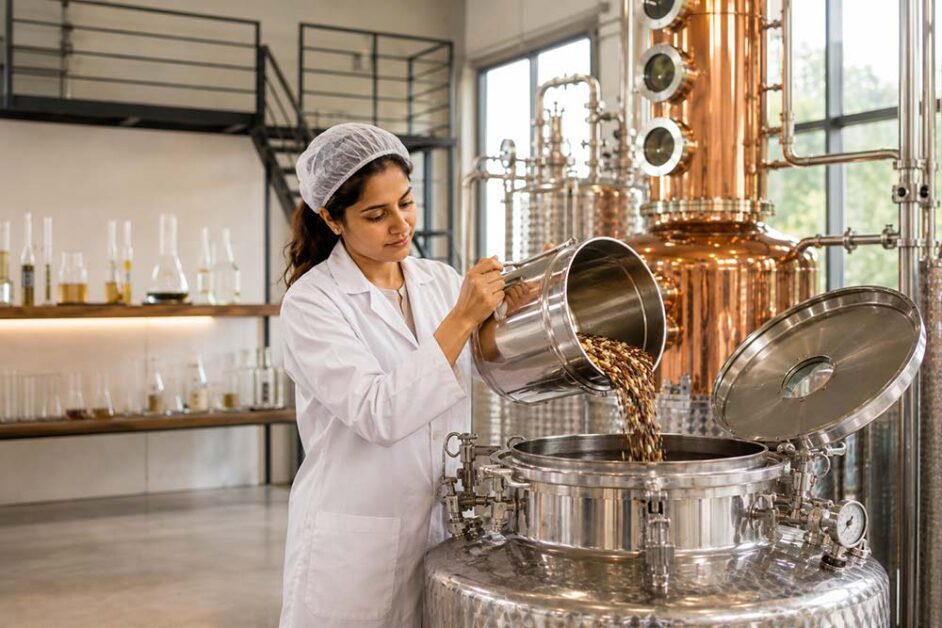
How do women entrepreneurs build premium spirits brands in India?
Women entrepreneurs typically follow one of two business models. Some establish or control distilleries before launching a brand, while others build the brand first and gradually expand production. Both approaches prioritise long-term ownership, craftsmanship, and sustainable growth over rapid scale.
- Distillery-first: Some founders built or controlled distillation from the start, investing in production before scaling the brand.
- Brand-first: Others established the brand first, using partner production before expanding across the value chain.
- One shared ambition: Different routes, same goal—building lasting premium spirits brands through greater ownership and control.
Neither approach guaranteed success. One prioritised ownership from day one. The other validated the market first. What united these founders was conviction, not the business model they chose.
Women Entrepreneurs Behind India’s Premium Spirits Brands
Their journeys span gin, rum, vodka, and independent distillation, reflecting the diverse paths women entrepreneurs have taken into India’s premium spirits sector. Each brought a distinct vision. Together, they are broadening leadership and redefining the country’s premium spirits landscape.
Vaniitha Jaiin – Owning the Craft Before the Brand
Many entrepreneurs launch a brand before building production. Vaniitha Jaiin chose the harder route. She wanted to build the distillery behind the brand, not simply become another face in the spirits business. After years in marketing, WSET studies, and spirits consulting, she founded Revelry Distillery in Goa and launched Vanaha Gin in 2025, entering one of India’s most capital-intensive industries.
The new Indian consumer takes pride in what is Indian, not just in terms of being manufactured in India but something that speaks of India in its identity- Vaniitha Jain
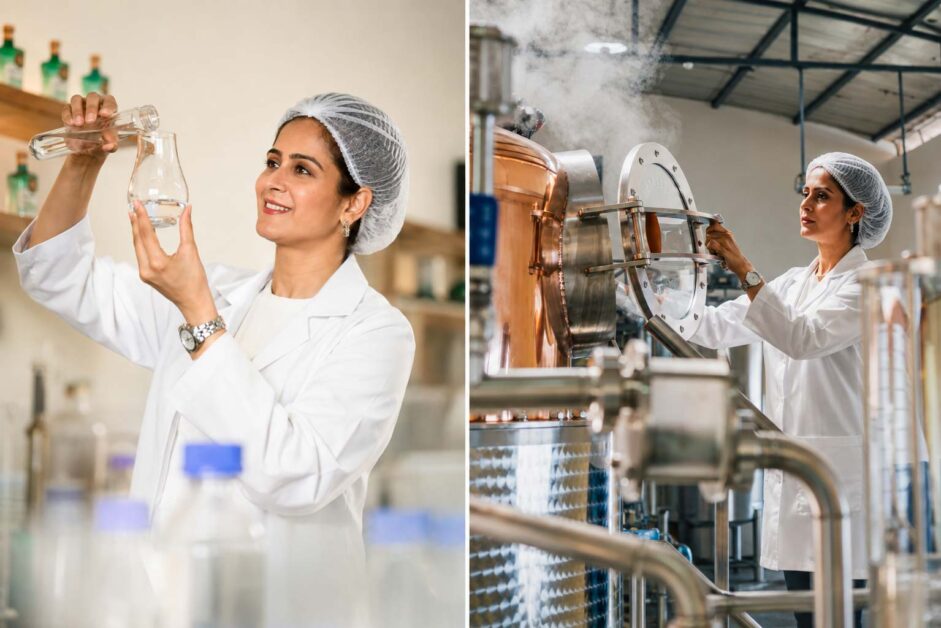
Built around a forest-to-bottle philosophy, Vanaha uses 24 botanicals and a proprietary five-step distillation process. Within two-and-a-half months, it reached over 150 retail stores and later won a Silver Medal at the World Gin Awards 2026.
Sakshi Saigal – Spotting the Opportunity Others Missed
While studying in Barcelona, Sakshi Saigal noticed premium bars serving spirits infused with Indian botanicals, yet none were distilled in India. She returned, trained in distillation, and co-founded Third Eye Distillery in 2018, challenging scepticism around premium Indian gin in a highly regulated, male-dominated industry.
When we launched Stranger & Sons Gin, we set out to build a house of premium Indian brands, never shying away from pushing boundaries- Sakshi Saigal
Stranger & Sons generated US$1 million in its first year and was projected to exceed US$7 million in 2024. Today, it reaches 11 Indian and 17 international markets, helping establish Indian craft gin as a globally respected category.
Kasturi Banerjee – Backing Rum When Gin Dominated the Conversation
Leaving a successful banking career in 2018, Kasturi Banerjee entered an industry where craft gin dominated conversations. Instead of following the trend, she founded Stilldistilling Spirits and launched Maka Zai in 2020, determined to reposition Indian rum as a premium sipping spirit inspired by Goa’s heritage.
Starting with just 200 cases, Maka Zai grew to nearly 2,000 within two years before expanding across multiple Indian markets. Her journey proved that conviction and category creation can be as powerful as following consumer trends.
Varna Bhat: Giving Indian Vodka a Distinct Identity
Imported labels long defined the premium vodka category. That perception inspired a different approach. Rahasya Vodka emerged from Blisswater Industries’ vision of translating Indian ingredients and cultural narratives into a modern premium spirit. Backed by ₹2.48 crore in seed funding, the brand reflected growing investor confidence in premium Indian spirits.
Nidhi Kedia: Building a New Premium Spirits Brand
Entering an already competitive premium spirits market required clear differentiation from the outset. Nisaki launched in 2024 with a distinct premium positioning and quickly attracted strategic investment from actor Amol Parashar. The backing reflected growing confidence in a new generation of women entrepreneurs building Indian craft spirits brands beyond established legacy players.
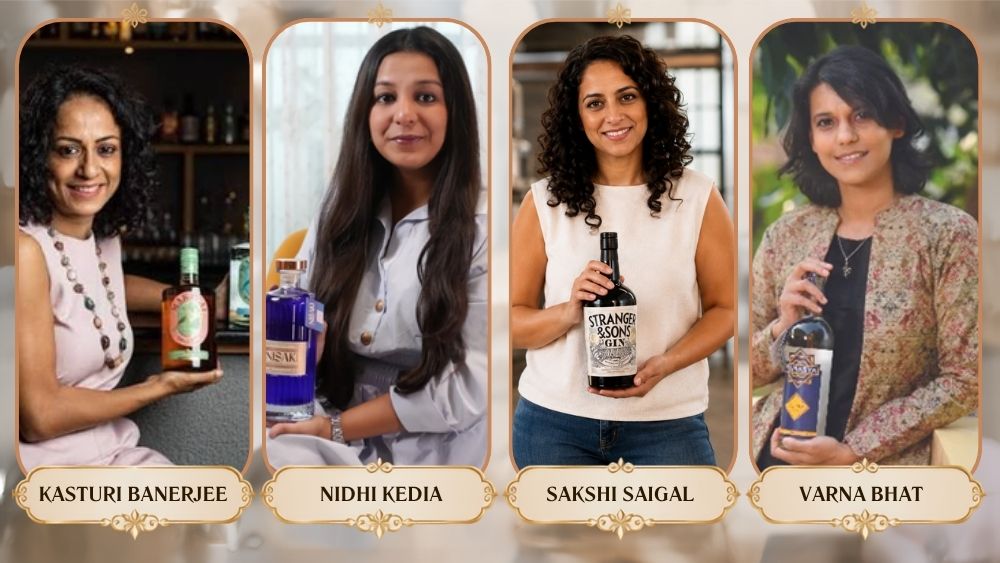
These entrepreneurs followed different paths, built different categories, and challenged different assumptions. Together, they are expanding women’s leadership while shaping the future of India’s premium spirits industry through innovation, craftsmanship, and entrepreneurial conviction.
Craft Spirits and India’s Botanical Advantage
India’s advantage lies in its land. Native botanicals, spices, citrus, and grains give craft spirits an identity that imported recipes simply cannot replicate. Many of these botanicals have long been valued in India’s food, wellness, and tea traditions, reflecting a broader culture of natural ingredients and mindful consumption.
What are craft spirits?
Craft spirits are alcoholic beverages produced by independent distilleries in small batches using carefully selected ingredients and distinctive distillation methods. Unlike mass-produced spirits, they prioritise craftsmanship, authenticity, local sourcing, and product character over production scale.
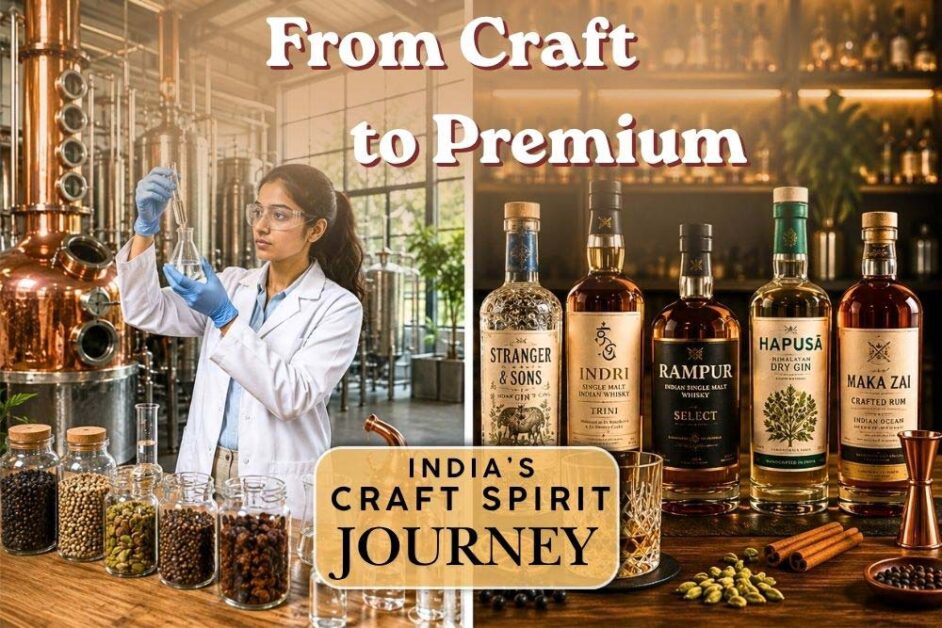
A distillery is a specialised facility where fermented ingredients are distilled into spirits, combining production expertise with craftsmanship to create distinctive premium alcoholic beverages.
Every successful premium spirit begins with craftsmanship. What transforms it into a recognised premium brand is the distinctive identity created through ingredients, provenance, and production philosophy.
Native Ingredients as a Competitive Advantage
India’s craft spirits stand apart by expressing place rather than imitation. Native botanicals, regional grains, and local ingredients have become strategic assets.
- Native botanicals: Indian spices, citrus, and forest botanicals helped Indian women founder led brands create globally distinctive flavour profiles instead of replicating London Dry gin.
- Category innovation: Premium founders expanded beyond gin by repositioning Indian rum and vodka, proving overlooked categories could command premium positioning.
- Global recognition: Awards such as the World Gin Awards and international market expansion demonstrate that Indian ingredients now compete on quality, not novelty.
- Provenance advantage: Authentic regional sourcing gives Indian craft spirits a sense of place that imported recipes and mass-produced brands cannot easily replicate.
This is why the world is looking. Indian distilleries are earning global recognition by transforming indigenous ingredients into world-class spirits.
Building Premium Brands in a Complex Market
Creating an exceptional spirit is only the beginning. Building a premium brand in India demands consumer trust, patient market development, and the ability to navigate one of the world’s most fragmented alcohol regulatory environments.
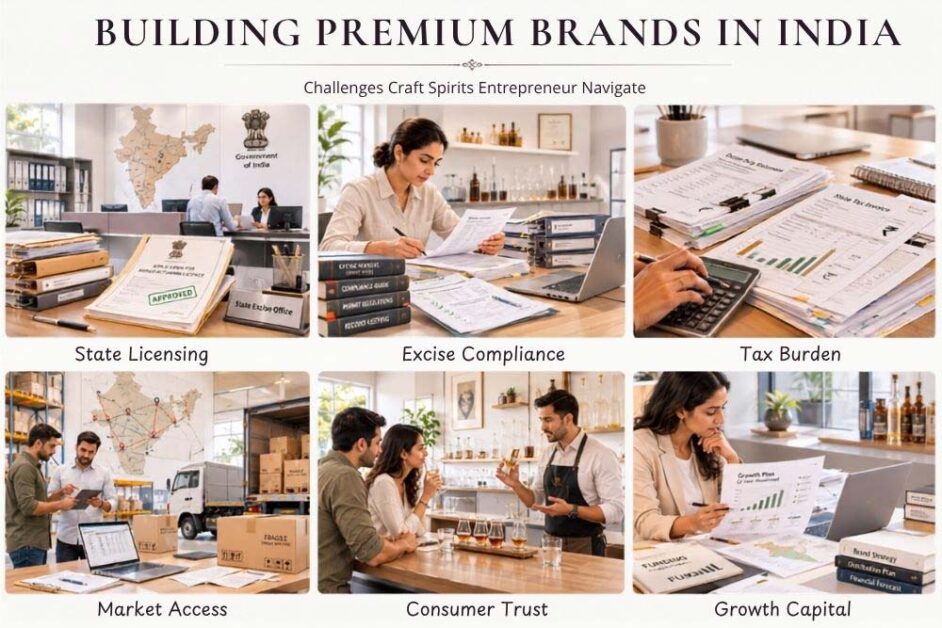
Behind every successful premium spirits brand lies a series of commercial and regulatory hurdles that demand resilience, strategic planning, and sustained investment.
Early momentum often came from bartenders, restaurants, and word-of-mouth recommendations rather than large retail campaigns. In premium spirits, credibility compounds gradually. Consumers return because the experience matches the promise, turning trust into long-term brand equity.
Navigating India’s Regulatory Landscape
For many women founders, crafting the spirit is only the beginning; the harder journey lies in building a place for it in the market. Every Indian state follows its own excise regulations, licensing procedures, registration requirements, and tax structures. A successful launch in one state offers little advantage when entering the next, making expansion both capital-intensive and time-consuming.
This fragmented system demands patience alongside entrepreneurship. Compliance costs often arrive long before commercial returns, particularly for independent brands. Yet these founders continued expanding market by market, proving that sustained conviction can overcome one of the industry’s highest barriers to entry.
How do premium spirits brands build consumer trust in India?
Premium spirits brands build consumer trust by combining product quality, transparent sourcing, strong brand storytelling, and consistent consumer experiences. In a crowded market, trust grows when buyers understand the origin, craftsmanship, and values behind every bottle.
Exceptional spirits may earn the first purchase, but trust and perseverance build enduring brands. India’s premium spirits pioneers succeeded because they invested in credibility long before they achieved meaningful scale.
Beyond the Founders: Women Shaping India’s Premium Spirits Culture
The movement now extends beyond founders. Women are shaping India’s premium spirits culture through education, hospitality, advocacy, and consumer influence.
“For wine lovers to indulge their passion, they need to know where to go and what to ask for. The aim is to take this pan-India.” — Sonal Holland
- Education and expertise: Sonal Holland, India’s first Master of Wine, Shatbhi Basu, India’s first female bartender, and spirits educator Sherry Cranberry are helping consumers understand, appreciate, and experience premium craft spirits.
- India’s premium reputation: Homegrown brands and single malts such as Amrut, Indri, Rampur, and Godawan are strengthening India’s position as a producer of globally recognised premium spirits.
- Changing consumer culture: Provenance, craftsmanship, and authentic brand stories increasingly influence buying decisions, making premium craft spirits part of gifting, fine dining, cocktail culture, and experiential consumption.
The women entrepreneurs opened the door. Today these visionaries are carrying the movement forward. Shaping a premium spirits culture that is distinctly Indian and increasingly recognised worldwide.
FAQs : Craft Spirit
Women entrepreneurs are introducing innovative business models, premium positioning, and homegrown brands that align with India’s growing demand for authenticity, craftsmanship, and differentiated consumer experiences.
Yes. Indian craft spirits are gaining international recognition through native botanicals, award-winning distillation, and premium positioning, demonstrating that locally produced brands can compete on quality, authenticity, and global appeal.
Also Read:
- Nude Makeup in 2026: The Rise of Intelligent Beauty
- The Modern Fauji Wife: Entrepreneurs of Grace and Grit
Conclusion
Craft spirits represent a lasting shift in India’s premium spirits market. Consumers increasingly value quality, authenticity, and homegrown craftsmanship over mass-produced labels, making premiumisation a defining trend in the alcobev industry.
Women entrepreneurs are driving this transformation through distinct business models, native botanicals, and small-batch production. Their brands demonstrate that provenance, craftsmanship, and compelling stories have become powerful competitive advantages for premium spirits.
From Goa’s independent distilleries to Rajasthan’s award-winning spirits, Indian craft brands are earning global recognition while reshaping consumer expectations at home. India’s premium spirits industry is no longer following global trends—it is confidently creating its own.
Premium brands reflect changing consumer behaviour as much as changing markets. Explore more stories in our Lifestyle category or dive deeper into the Food, Culture & Experiences cluster to discover the people, ideas, and experiences shaping modern India.
Editorial Note: This article explores India’s premium spirits industry from an entrepreneurship, craftsmanship, and business perspective. Trendvisionz encourages responsible and lawful consumption of alcoholic beverages in accordance with applicable regulations.
Additional Resources:
- Bryazka D, Reitsma M, Griswold M et al. Population-level risks of alcohol consumption by amount, geography, age, sex, and year: a systematic analysis for the Global Burden of Disease Study 2020. The Lancet, 400, 185-235 ↩︎
- Palai, A. K., Kulkarni, M. M., Kamath, V. G., Anil, M., Kumar, P., Bantwal, P., … Bhojani, U. (2026). Alcohol consumption among youth of India: a secondary data analysis of NFHS-5 data. Journal of Substance Use, 1–7. https://doi.org/10.1080/14659891.2026.2613255 ↩︎
- Gowri SM, Belavendra A, Vasan SK, Keerthi S, Andreasson S. Prevalence and long-term change in alcohol consumption: results from a population-based cohort in Southern India. Int J Ment Health Syst. 2024 Oct 10;18(1):30. doi: 10.1186/s13033-024-00650-w. PMID: 39390493; PMCID: PMC11465489. ↩︎
Stay Connected with Me
Namita Mahajan is a Lifestyle Influencer, Digital Strategist, and Womenpreneur empowering self-reliance and creativity through storytelling and digital presence.
As Director of Nuteq Entertainment Pvt. Ltd. and Co-Founder of TrendVisionz, she brings together media experience, empathy, and innovation to build purposeful brands.
- Explore our work: Nuteq Entertainment | TrendVisionz | About the Authors
- Read our newsletters: Transforming Lives | BizTech Chronicle | Nuteq Newsline
- Guest writer: BizCatalyst360 | Praja Today
- Join the community: Go Mindfulness: Practices for Professionals Coached
- Connect with me: LinkedIn | Twitter | #StoryforBusiness
- Share your review: Leave your review on Google — your feedback helps us grow.
- Listen on Spotify: Leadership Podcast | Guided NLP | Daily Motivation
Believe. Practice. Perform. Let’s create impact together.
✍️ A Note from the Editor
At TrendVisionz, we craft every article with intention—guided by insight, empathy, and the belief that stories can empower change. Our content remains open and free, because knowledge should be accessible to everyone.
If our work inspires you, we’d be deeply grateful for your support. Even $10/month helps us continue creating stories that inform, uplift, and inspire.
💛 Support our work: Contribute via PayPal or write to us at anujmahajan@trendvisionz.com to set up your monthly support.
Thank you for believing in independent storytelling. — Editor


