
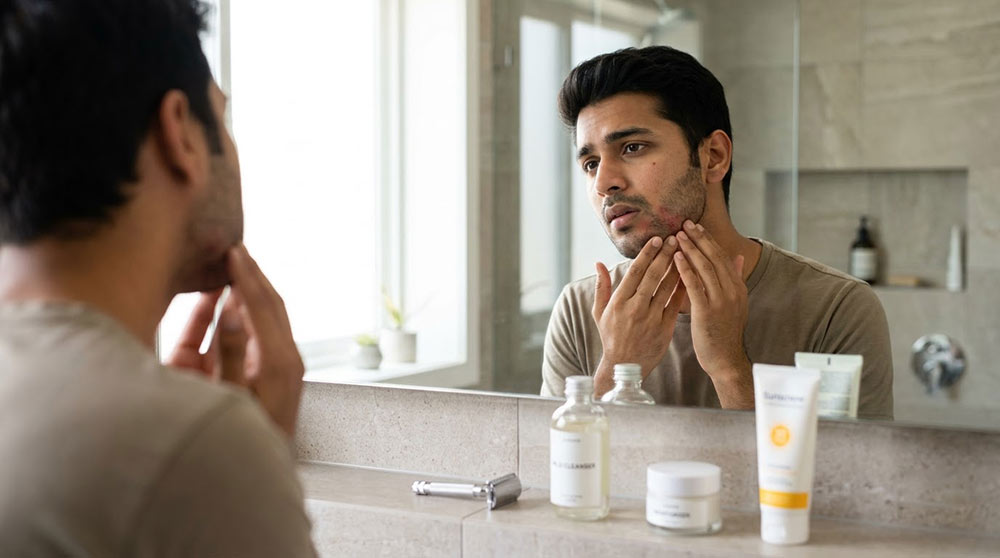
Most men notice skincare only when their skin starts pushing back. Razor bumps, dryness, excess oil or irritation suddenly make the problem difficult to ignore. That is usually when skin care for men stops feeling optional and starts becoming practical.
The behaviour is changing quickly. The global male skincare market is valued at about $17.6 billion in 2025. India’s men’s grooming market was valued at about $2.64 billion. Skincare and beard care are increasingly moving beyond occasional grooming and becoming part of regular self-care.
Working with skincare brands on growth and scale has given me a closer view of what happens before a product reaches the consumer. You start seeing how formulations are built, why certain ingredients are chosen, and how positioning shapes buying decisions. Younger male consumers are also becoming more ingredient-conscious, with clean ingredients influencing skincare buying decisions.
In this edition, I look at what men’s skin actually needs without making skincare more complicated than it has to be. We will focus on skin type, shaving habits, facial hair and daily exposure. This is for men who want a practical routine that makes sense, rather than one built around every new skincare trend.
Read More
- Everyday Skincare for Urban Living and Busy Lifestyles
- Cologne in Summer? Here’s Why You Might Be Skipping It All Wrong
Men’s Skincare Is Becoming Everyday Self-Care
For years, grooming meant getting ready for something. A shave before work, cologne before an evening out. Men’s skincare now sits in the same category as brushing your teeth, done daily whether anyone is watching or not. Men’s skincare is not a taboo anymore.
Skin care for men should start with cleansing, moisturising and daily sun protection. The right routine depends on skin type, shaving habits, facial hair and exposure to heat, sweat and pollution. A simple skincare routine works better when products are chosen for actual skin needs, not routine length.
Men’s Grooming Shifted From Occasion to Everyday Habit
For decades, men’s grooming was largely occasion-based. A closer shave for a wedding, fresh cologne before a date, or extra attention before an interview. The routine was reactive, minimal, and usually built around soap, a razor and fragrance.
| Earlier approach | Everyday approach |
| Grooming mainly before events | Regular daily maintenance |
| Soap, razor and fragrance | Cleanser, moisturiser, SPF and beard care |
| Reactive appearance fixes | Preventive skin and grooming habits |
| Limited product awareness | More ingredient and skin-type awareness |
That shift has been gradual. Changing social norms, wider product choice and greater everyday visibility have made men’s grooming more intentional. The routine is no longer only about looking prepared for an occasion. It is increasingly about maintaining skin, beard and overall appearance consistently.
Gen Z Helped Normalise Preventive Skincare
Facial skincare has become increasingly mainstream among younger men. A skincare industry report estimates that 68% of Gen Z men aged 18–27 use facial skincare products, reflecting how firmly skincare has entered everyday male self-care.
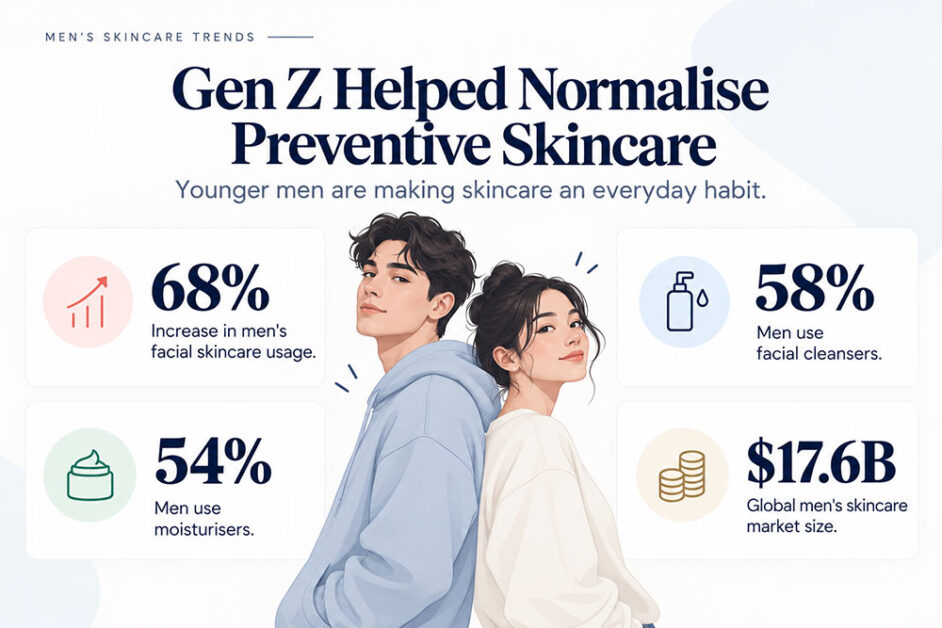
What changed is the entry point. Gen Z grooming starts before a problem appears, not after. Self-care culture made that unremarkable for younger men, who tend to see prevention as ordinary rather than excessive.
That shift is now shaping men’s skincare culture online. Preventive routines increasingly outperform extreme appearance hacks in both relevance and staying power.
Men’s skincare is no longer about chasing perfection. The stronger trend is preventive self-care: simple routines, healthier skin, better grooming habits, and confidence built through consistency rather than extremes.
A habit becoming normal does not make it effective. The real advantage comes from choosing products around skin type, shaving habits and daily exposure, not simply following what everyone else has started doing.
Skin Type Matters More Than Gendered Products
A product labelled “for men” tells you who it is marketed to, not whether it will suit your skin. Skin type, sensitivity, shaving habits and specific concerns are far better starting points when choosing what actually belongs in a routine. Male and female skin1 can differ biologically in areas such as thickness, sebum production and ageing patterns.
Male and female skin can differ biologically in areas such as thickness, sebum production and ageing patterns.
Five Skin Types Need Different Product Choices
Most skin broadly falls into five types: normal, oily, dry, combination and sensitive. Acne-prone skin is better understood as a concern that can appear across different skin types.
- Oily and combination: A lighter non-comedogenic moisturiser can provide hydration without feeling unnecessarily heavy. Avoid cleansers that leave skin excessively tight or dry.
- Dry and sensitive: Gentle cleansing and stronger barrier support usually matter more than adding multiple active ingredients.
- Normal: Keep the balance with straightforward cleansing, moisturising and daily sun protection.
This is where personalised skincare becomes useful. Once you understand how your own skin behaves, product selection becomes less about recommendations and more about suitability.
Gendered Labels Do Not Define Formulation Suitability
Working with leading private-label skincare manufacturers and interacting with founders scaling their brands has shown me how differently products are formulated for specific consumer needs. Packaging may define the audience, but formulation decides whether a product actually suits your skin.
- Fragrance: Strongly fragranced products may feel uncomfortable on sensitive or freshly shaved skin.
- Texture: Oilier skin may prefer lighter textures, while dry skin often benefits from richer moisturising support.
- Ingredients: Useful skincare ingredients respond to skin needs; they do not work differently because a product is marketed to men.
Choosing by skin type removes much of the guesswork. Once you understand your skin through a personalised skincare routine, the next question becomes much simpler: how few products can do the job well?
Skin Care for Men Starts With Three Products
A good routine does not need a crowded bathroom shelf. For most men, a simple skincare routine starts with three basics: a facial cleanser, moisturiser and broad-spectrum SPF. Consistency matters more than product count.
A practical men’s skincare routine usually needs a gentle facial cleanser, suitable moisturiser and broad-spectrum sunscreen. Beard or shaving care can be added when required, while serums and exfoliants should address a defined concern and suit the person’s skin type.

Three Products Build the Daily Base
The American Academy of Dermatology recommends a simple foundation built around cleansing, moisturising and sun protection.
- Cleanse: Use a mild facial cleanser instead of harsh bar soap.
- Moisturise: Apply daily to maintain hydration and support the skin barrier.
- Protect: Use broad-spectrum sunscreen outdoors to reduce UV damage and premature skin ageing2
In my own routine, I keep the base simple too. Cleanser, moisturiser and sunscreen do most of the daily work, and I only add something else when there is a clear reason for it. Daily sunscreen helps protect exposed skin from UV damage and premature ageing.
For the Indian climate, heat, humidity, sweat and urban pollution can influence texture choices. Oily or combination skin may prefer lighter formulations, while dry skin may need stronger barrier support.
Targeted ingredients such as Vitamin C can come later when a specific concern justifies them. The base routine should work first.
Do Men Need a Separate Skincare Routine?
No. Men do not automatically need products labelled specifically for men. Skin type, shaving pattern, facial hair and individual concerns matter more. A gentle cleanser, suitable moisturiser and broad-spectrum SPF provide a practical foundation for most adult men.
The routine should earn complexity rather than begin with it. Add another product only when your skin or a defined concern gives you a reason.
Shaving and Facial Hair Change Skin Care Needs
Shaving is one of the oldest grooming habits for men, but it is also one of the easiest ways to irritate the skin. Shaving irritation, razor bumps and ingrown hairs are skin concerns, not just grooming inconveniences.
Better Shaving Reduces Irritation and Razor Bumps
A razor does more than remove hair. Repeated friction, shaving against hair growth, dull blades and too much pressure can disturb the skin barrier and increase redness, razor bumps and ingrown hairs.3
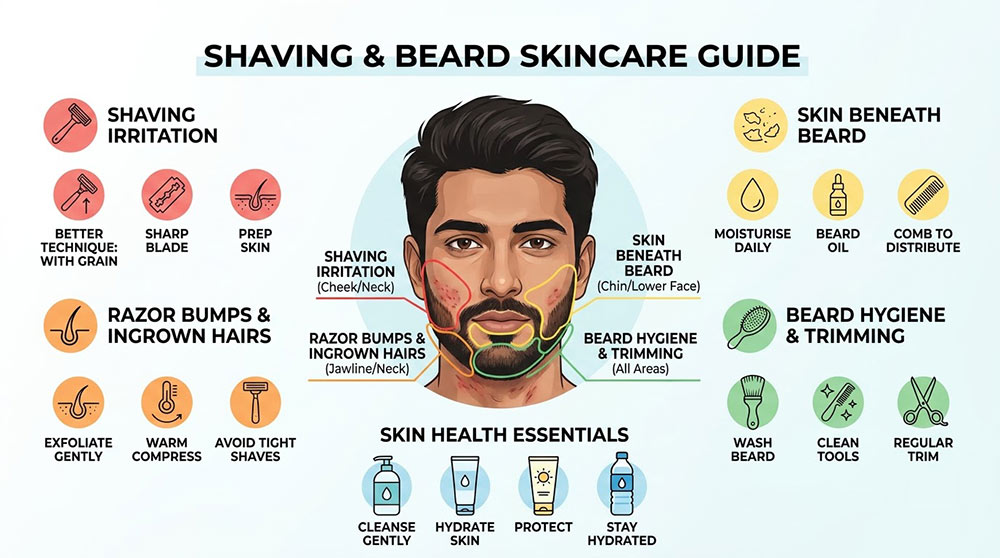
The American Academy of Dermatology recommends softening facial hair first, using a moisturising shaving product, shaving in the direction of hair growth and replacing dull blades. I have found that technique matters as much as the product itself. A better blade and less pressure can make a noticeable difference to how skin feels afterwards.
Beard Care Should Start With the Skin Beneath
A beard does not remove the need for skincare. The skin underneath facial hair still deals with sweat, dryness, product buildup and irritation.
- Skin beneath the beard: Cleanse regularly and keep the underlying skin moisturised.
- Beard care: Washing and softening can help reduce flaking and trapped sweat.
- Trimming: Clean, sharp tools reduce avoidable friction and irritation.
For me, this is the practical way to look at beard care: skin first, hair second. A well-kept beard starts with keeping the skin underneath comfortable and balanced.
Shaving and beard care are daily skin decisions. Once irritation is controlled and the basic routine works, additional products should only enter when there is a clear reason.
Advanced Care Should Follow a Defined Need
A routine should only become more advanced when the skin gives you a reason. Pigmentation, uneven texture or persistent dryness can justify another product. Adding something because it appeared in a reel usually adds complexity before it adds value.
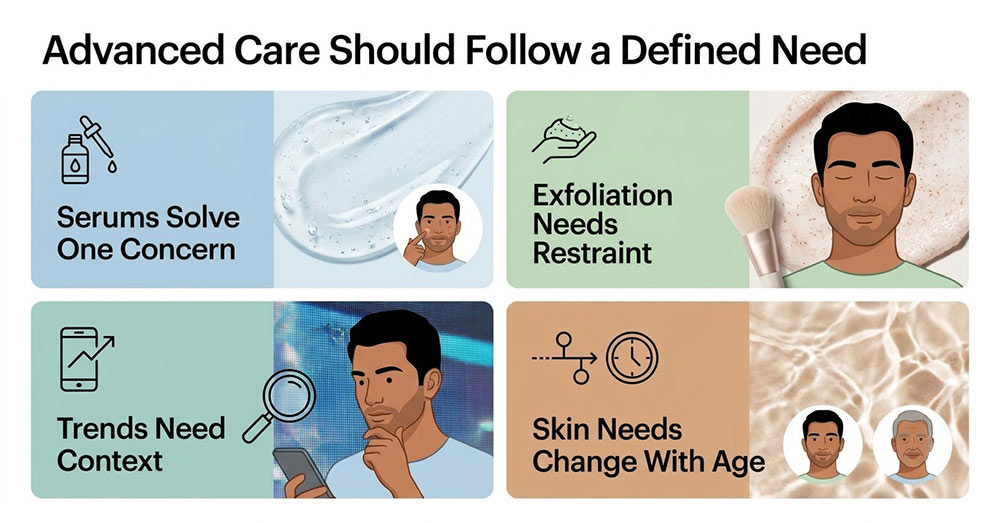
Four situations may justify changing or expanding the routine:
- Serums should solve one concern: Add them for a defined need such as pigmentation, dullness or uneven tone. Vitamin C is one example of a targeted active, not a compulsory step for everyone.
- Exfoliation needs restraint: More exfoliation does not mean faster results. Overuse can weaken the skin barrier and increase sensitivity. Frequency should follow tolerance, not product strength.
- Trends need context: A structured men’s skincare routine only helps when you already understand your skin. Skin cycling can provide structure, but it should not become a formula copied without considering skin type or sensitivity.
- Skin needs change with age: Oil production, tolerance, hydration and visible concerns can shift over time. The routine should adapt with those changes rather than simply become longer.
This is where I prefer to stay selective. If the basic routine is working, I would rather add one product for one clear reason than keep layering products without knowing what each one is meant to improve.
Advanced care should be about adaptation, not accumulation. Change the routine when your skin, age or concerns change, not simply because another product or trend appears.
FAQs: Skin Care for Men
Most men should wash their face once or twice daily with a mild facial cleanser and lukewarm water. Cleanse again after heavy sweating when needed. Men with dry or sensitive skin may need less frequent cleansing to avoid irritation.
Yes. Daily sunscreen for men should provide broad-spectrum SPF 30 or higher on exposed skin. Reapply about every two hours outdoors and after swimming or heavy sweating. Regular use helps reduce sunburn, dark spots and premature skin ageing.
To reduce razor bumps, soften facial hair with warm water, apply a moisturising shaving product and shave in the direction of hair growth. Avoid stretching the skin, rinse the razor regularly and replace dull blades before they begin causing irritation.
Softmaxxing is a lower-risk form of looksmaxxing focused on skincare, grooming, fitness and sleep rather than extreme appearance hacks. In men’s skincare, it reflects the shift toward preventive, routine-based self-care.
Read More
- Neurocosmetics: The New-Age Skincare Revolution for Stress-Free, Healthy Skin
- Your Ultimate Guide to Luscious Locks: Hair Care Secrets for Healthy, Vibrant Hair
Conclusion
Skin care for men works best when it stays simple and responds to what your skin actually needs. Skin type, shaving habits, facial hair and daily exposure should guide the routine far more than product count or gendered packaging.
Build the routine around the same principle that shapes skincare, grooming & everyday beauty. For men everyday care should adapt to skin type, lifestyle and changing needs. A gentle cleanser, suitable moisturiser and broad-spectrum SPF should come before targeted actives or trend-led additions.
Prevention and consistency matter most. Good shaving technique, thoughtful beard care and support for the skin barrier can do more than an overloaded routine. The goal is not to use more products, but to make better choices consistently.
Explore more Lifestyle insights on Wellness, Habits & Everyday Living on Trendvisionz. Build everyday care around clarity, not complexity.
Stay Connected with Me
Anshuman Mahajan is a Digital Marketing Strategist, SEO Specialist, and Co-Founder of TrendVisionz. With expertise in ROI-focused growth strategies, brand development, and media solutions, he helps businesses navigate the fast-changing digital landscape with clarity and confidence.
- Explore my work: TrendVisionz | Nuteq Entertainment
- Read our newsletters: BizTech Chronicle
- Guest writer: BizCatalyst360 | Industry Blogs
- Courses & Certification: B.Com (Hons), University of Delhi | Digital Marketing (Shaheed Sukhdev College of Business Studies) | SEO Internship, ClickSlice (London)
- Join the community: LinkedIn Group – Digital Marketing & Content Creation World
- Connect with me: LinkedIn | BizTech Chronicle | #GrowWithAnshuman
- Share your review: Leave your feedback on Google — it helps us grow.
- Subscribe: Be part of our 1.95 Lakh+ YouTube family
Believe. Transform. Succeed. Let’s grow together.
Additional Resource:
- Rahrovan, S., Fanian, F., Mehryan, P., Humbert, P., & Firooz, A. (2018). Male versus female skin: What dermatologists and cosmeticians should know. International Journal of Women’s Dermatology, 4(3), 122–130. ↩︎
- Hughes, M. C. B., Williams, G. M., Baker, P., & Green, A. C. (2013). Sunscreen and prevention of skin aging: A randomized trial. Annals of Internal Medicine, 158(11), 781–790. ↩︎
- Gray, J., & McMichael, A. J. (2016). Pseudofolliculitis barbae: Understanding the condition and the role of facial grooming. International Journal of Cosmetic Science, 38, 24–27. ↩︎


