
Every repeated register correction costs a newspaper plant more than a few spoiled copies. Operators lose time, paper goes to waste, and deadlines remain unchanged. Can inline register control reduce these losses, and how much do they cost per shift?
Paper drives most of the answer. WAN Report estimate that newsprint makes up roughly half the cost of producing a newspaper. Every spoiled copy carries that cost with it. Repeated corrections are an operating expense the plant pays on every run.
My work on growth and operating economics starts with one habit. Before I look at new equipment, I look for money that leaves a business without producing anything saleable. In a pressroom, repeated register correction is one of the first places that leak shows up.
In this edition, we examine how repeated register corrections raise operating costs. We trace the losses and identify their causes. Plant heads can then judge which corrective investments deliver measurable savings and justify their cost.
Also Read:
Repeated Register Corrections Carry a Hidden Operating Cost
Repeated register corrections cost a newspaper plant paper, ink, press time and operator hours on every run. Crews often treat them as routine adjustments. Added up across a month, they become one of the plant’s steadiest operating losses.
Print register is the alignment of the printed image on the web. Colour register keeps each colour aligned with the others. Cutoff register keeps the image in the right place on the cut page. Each repeated correction uses material, press time and operator attention.
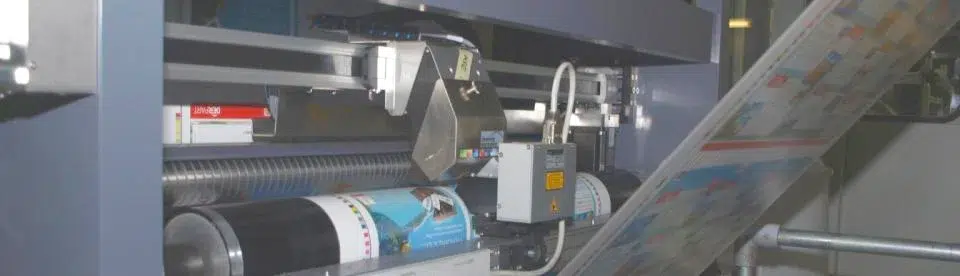
Every Correction Consumes Paper, Ink and Press Time
Each correction follows the same cycle. The crew spots drift, adjusts the press, checks the result and waits for copies to settle. Copies printed in that window are spoiled, along with the newsprint and ink on them. The same inputs shape print quality in other ways, as our look at pressroom consumables shows. Research demonstrates how targeted process improvements1 increase printing yield
A plant can estimate correction loss by adding three figures. The first is the cost of spoiled material. The second is the cost of added intervention. The third is the financial value of lost press time. That figure needs care, because lost time costs money only when the plant could have used it. Not every lost minute is lost revenue.
Waste Raises the Cost of Every Saleable Copy
The clearest measure is cost per saleable copy. Divide the relevant production cost by the number of accepted copies. When spoilage rises, the same cost spreads over fewer good copies, so each one costs more. Labour and machine costs already in production cost should not be counted again as correction loss. The effect grows during peak production, when longer runs leave less room to recover.
Lost capacity counts only when the plant could have sold the missing copies. The same logic shapes web offset capacity planning. The harder question is why the corrections keep coming back.
Recurring Register Problems Trace Back to Root Causes
Recurring register problems usually trace back to a cause the crew keeps correcting around. Each manual adjustment treats the symptom. The register variation returns because its source is still there, and that source decides which fix will work.
Web Tension and Substrate Behaviour Shift Register
Newsprint changes shape on press. It stretches, takes up water and shifts as it moves through the printing units. Research on paper web offset printing2 explains how moisture-related deformation and mechanical stresses contribute to register instability
- Web tension: Uneven tension stretches or slackens the web between units and moves the image.
- Newsprint behaviour: Paper grows or shrinks across its width as its moisture content changes.
- Dampening balance: Changes in moisture exposure affect paper stability and add to fan-out across the web.
Equipment makers name fan-out as a main cause of colour register deviation. Tension control and dampening control are separate functions that help keep these conditions steady. Neither one replaces register correction. Research on lateral paper web shifting3 identifies fibre orientation as a factor influencing web stability during offset printing
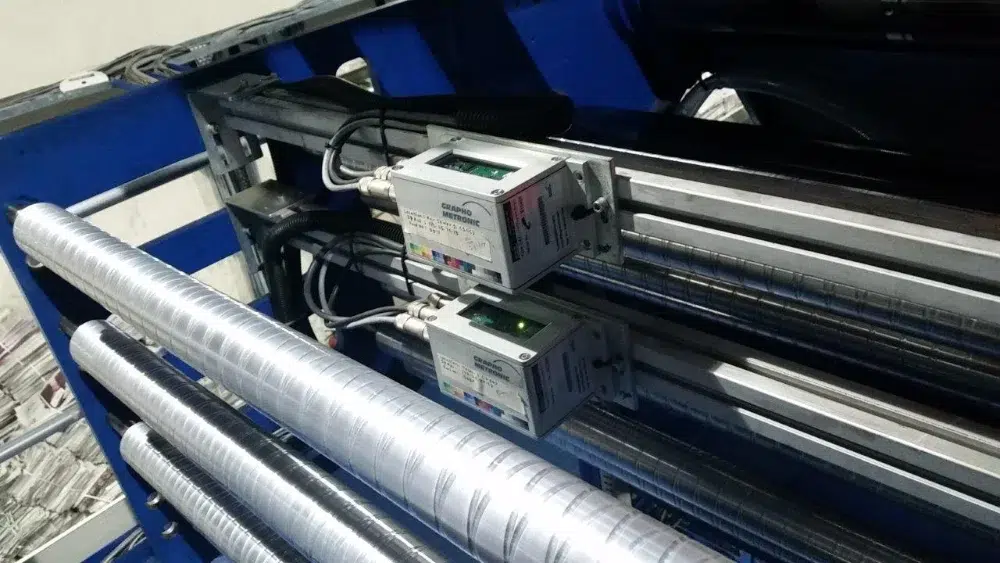
Press Condition Sets the Limit of Consistency
A press in poor mechanical condition cannot hold register steadily. Careful adjustment by operators cannot fully make up for it.
- Worn components: Rollers, bearings and drives can lose precision over time and let register wander.
- Maintenance gaps: Deferred maintenance often shows up first as drift the crew keeps chasing.
- Press condition: Inspection and maintenance records identify the cause. Press age alone proves very little.
Not every deviation points to worn machinery. Where they show wear, printing press maintenance or newspaper press modernization deals with the cause directly.
Diagnosis comes first. Once the cause is known, a plant can see what an automated system can correct. The rest needs direct work on the press.
Inline Register Control Corrects Variation Within Its Range
Inline register control reads register marks during the run and adjusts position automatically. It cuts manual intervention where the variation is controllable. The causes described above still need their own fixes.
Inline register control is an automated system that measures register while the press runs and corrects it without stopping production. It reduces correction time, spoiled copies and operator workload. These gains apply only within the functions the installed system covers.
Automatic Correction Reduces Manual Intervention
Inline control is a group of separate functions. Each one handles a different kind of production variation.
- Register control: Keeps the printed colours aligned with each other through the length of the run.
- Cutoff control: Uses camera feedback and roller adjustments to hold the cutting position steady.
- Fan-out control: Compensates for paper expansion across the web before it shifts colour register.
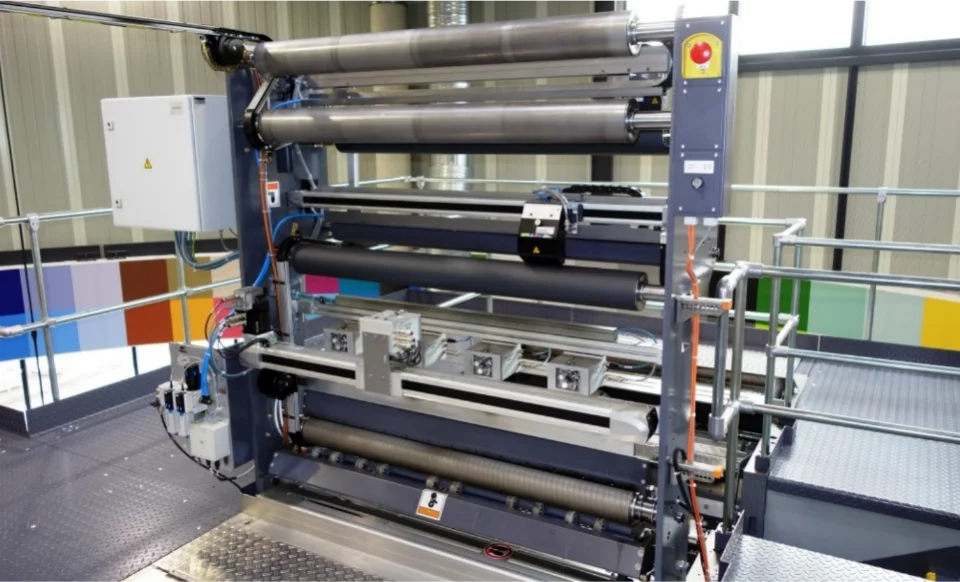
Where these functions match the problem, the system corrects drift before the crew would notice it. Fewer copies are spoiled while the error is found, and operators stop chasing the same adjustment. Configurations differ, and not every installation includes all three functions. Savings also vary from plant to plant. Our earlier discussion of inline and offline print finishing examines a separate production decision: integrating finishing operations or handling them independently.
For existing newspaper presses, automatic register control systems demonstrate how colour and cutoff register can be measured and corrected during production. The suitability of these functions depends on press configuration and operating conditions
Can inline register control fix every register problem?
No. Inline register control corrects variation within the installed system’s capabilities. It cannot resolve every mechanical, material or process fault on its own. Persistent problems need root-cause diagnosis, maintenance, a substrate assessment or broader corrective action before further investment.
The system does its best work on a stable press. That leaves the decision every plant head faces: whether the savings justify the spend.
Correction Costs Should Decide the Investment
The measured loss should decide whether inline control is worth buying. Without that number, the purchase is a cost looking for a reason. Speed and output gains are separate questions with their own business cases.

Four decisions set the order of action, and each one depends on the decision made before it.
- Measure the Loss First: Track spoiled copies, correction time and operator hours on every run for several weeks.
- Fix Root Causes Before Adding Control: Resolve tension, maintenance and material faults that automation cannot correct on its own.
- Match Control to Configuration: Confirm which function the press needs, its compatibility and its condition before choosing.
- Compare Payback Against Wider Options: Weigh inline control against upgrade, refurbishment or replacement economics over the press’s remaining life.
Take a plant that logs every correction for a month. If most spoilage traces to fan-out on wide webs, fan-out control is the obvious candidate. If it traces to a worn drive, the money belongs in maintenance first.
Some plants will find the loss small once root causes are fixed. Others will find that inline control pays back quickly. The measurement tells each plant which group it belongs to.
Also Read:
- How Fast Can an Emergency Department Fill an Urgent Staffing Need?
- What Changed in Google’s December 2025 Core Update—and What Indian Creators Should Do
Conclusion
Repeated register corrections are more than routine pressroom adjustments. Each correction can consume newsprint, ink, operator hours and valuable press time. These recurring losses increase operating costs and affect the cost of every saleable copy.
Reducing these losses begins with understanding their causes. Web tension, newsprint behaviour and press condition can create different forms of register variation. Inline register control may reduce repeated interventions, but maintenance, material adjustments or broader corrective action may be necessary.
The investment decision should follow the evidence. Measure recurring losses, identify which corrections are avoidable and compare potential savings against the cost of intervention. The objective is not automation for its own sake, but lower operating costs through financially justified corrective action.
Explore more industry perspectives in TrendVisionz’s Worth category. Our Business Performance & Industry Intelligence connects production challenges with cost optimization, operational efficiency and smarter infrastructure investment decisions.
Additional Resource:
- Pingale, R.R., Altay, B.N. Reducing waste and increasing yield in roll-to-roll printing: a case study with global scalability. Int J Adv Manuf Technol 141, 4139–4153 (2025). ↩︎
- Lif, J. O. (2006). Hygro-viscoelastic stress analysis in paper web offset printing. Finite Elements in Analysis and Design, 42(5), 341–366. ↩︎
- Shields, G., Pekarovicova, A., Fleming, P. D., & Pekarovic, J. (2020). Lateral paper web shifting during commercial heat set web offset printing. Journal of Print and Media Technology Research, 9(3), 163–173. ↩︎
FAQs: inline register control
What causes register problems in newspaper printing?
Most register problems come from changes in web tension, newsprint behaviour, dampening balance or press condition. Moisture can make paper stretch or shrink across the web. Worn parts and deferred maintenance also make register harder to hold during long runs.
How does inline register control reduce waste?
Inline register control reads register marks while the press runs. It then corrects position automatically, within the functions the system covers. This reduces manual corrections and the copies spoiled while operators find the error. Savings depend on how often register drifts.
When is inline register control worth the investment?
It is worth it when register corrections recur and the cause is controllable variation. First measure the waste, time and labour lost per run. Then fix mechanical and material faults. If losses remain high, compare system cost against yearly savings.


6 comments
[…] Posts Inline Register Control: Cutting Press Adjustments From Diapers to Toilet: A Gentle Guide to Potty Training Ayodhya Darshan: Shri Ram’s […]
[…] Posts Inline Register Control: Cutting Press Adjustments From Diapers to Toilet: A Gentle Guide to Potty Training Ayodhya Darshan: Shri Ram’s […]
[…] Posts Inline Register Control: Cutting Press Adjustments From Diapers to Toilet: A Gentle Guide to Potty Training Ayodhya Darshan: Shri Ram’s […]
[…] Posts Inline Register Control: Cutting Press Adjustments From Diapers to Toilet: A Gentle Guide to Potty Training Ayodhya Darshan: Shri Ram’s […]
[…] Posts Inline Register Control: Cutting Press Adjustments From Diapers to Toilet: A Gentle Guide to Potty Training Ayodhya Darshan: Shri Ram’s […]
[…] Posts Inline Register Control: Cutting Press Adjustments From Diapers to Toilet: A Gentle Guide to Potty Training Ayodhya Darshan: Shri Ram’s […]